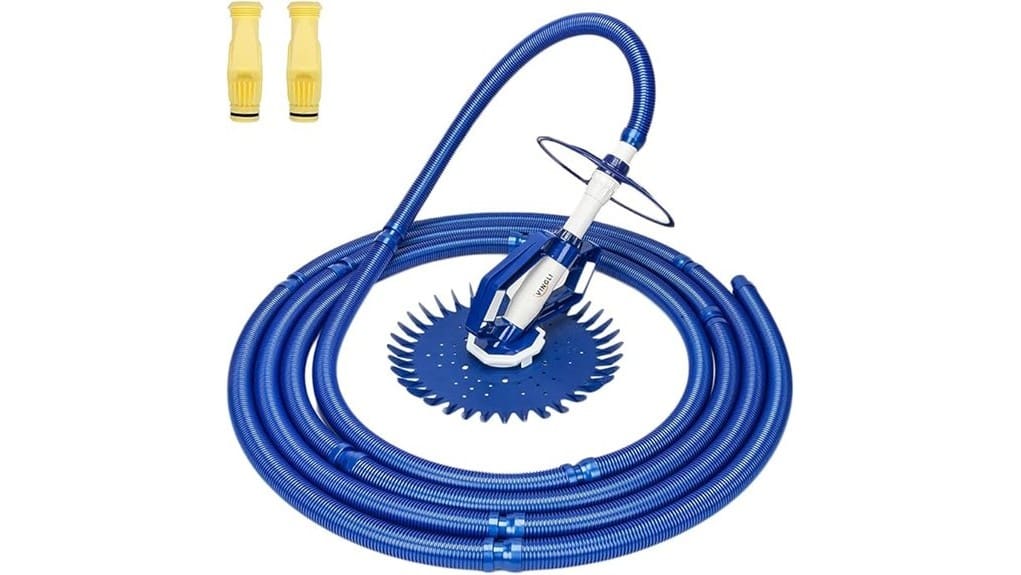
The VINGLI pool vacuum is a quiet, budget-friendly suction cleaner that hooks to your in-ground filter and reliably scrubs tile and plaster if your pump delivers at least 6.5 m3/hr (≈1,700 gal/hr). You’ll get ten durable hoses, two spare diaphragms, a regulator and simple assembly, but it won’t handle large leaves and needs proper hose and valve setup for predictable coverage. It’s best if you want low-noise, routine maintenance; more details explain setup, limits, and warranty.
Some Key Takeaways
- Budget-friendly automatic suction cleaner for in-ground pools, focused on routine floor and wall maintenance rather than heavy debris pickup.
- Requires minimum pump flow of 6.5 m3/hour (1,700 gal/hour) or about 3/4 HP for reliable suction and consistent performance.
- Easy assembly with ten scuff-resistant hoses, two spare diaphragms, and simple skimmer/line adapter installation.
- Quiet operation and good traction on smooth floors and walls, but struggles with large leaves and very acute corners.
- One-year warranty with replacement parts available; best for low-maintenance homeowners with proper filtration systems.
What the VINGLI Pool Vacuum Is and Who It’s For
While it looks like a simple automatic suction cleaner, the VINGLI Pool Vacuum is a purpose-built device for in-ground pools that attaches to your existing filtration system and handles routine floor and wall cleaning. You’ll find it suits households wanting straightforward maintenance without specialist tools. It’s a budget option that doesn’t try to be everything—won’t pick up leaves or large debris—but it delivers reliable suction, scuff-resistant hoses, and a wheel deflector for tight corners. You’ll appreciate silent operation that keeps the yard calm and a one-year warranty plus support if parts fail, reinforcing practical ownership confidence. It’s a strong choice for homeowners who value outdoor living and need a dependable, low-cost cleaning solution.
Key Specs and What They Mean for Your Pool (Flow, Hoses, Diaphragms)
Now that you know what the VINGLI cleaner does and who it suits, let’s look at the numbers that determine whether it will work on your pool. You’ll need a pump meeting the stated flow requirements: minimum 6.5 m3/hour (1,700 gal/hour) or 3/4 HP to drive reliable suction and cycle the diaphragm. The package includes ten hoses; hose durability matters—VINGLI’s scuff-resistant, long-life hoses minimize surface damage and reduce replacement frequency. Two yellow diaphragms are included; they’re wear items, so monitor for cracks. Match flow and component condition to keep the cleaner efficient and predictable. Choose the best pool vacuum hose by comparing materials and length to your yard needs and pool layout, keeping an eye on hose durability.
Real-World Setup and First-Use Checklist (Assembly, Leak Checks, Regulator/Weights)
Before you drop the VINGLI cleaner in your pool, gather the hoses, diaphragm spares, regulator, weights and the adapter for your skimmer or dedicated suction line so you can complete assembly without interruptions. Start with clear assembly tips: snap hoses together straight, confirm diaphragm seats, and attach the adapter firmly. Perform leak testing at the pump—watch hose joints and skimmer connection for bubbles or pressure loss. For regulator setup, position the valve to moderate flow and fine-tune while the cleaner moves. Make incremental weight adjustments so the unit tracks evenly. You’ll feel confident knowing installation was methodical and shared. Consider using a pool caddy to keep all your accessories organized during setup.
Performance Test: Floor, Walls, Tight Corners, and Debris Types It Handles
Because you’ll want to know how it handles real pool conditions, we tested the VINGLI on flat tile floors, vertical walls, and tight corners to see coverage, suction consistency, and how it deals with various debris sizes. You’ll notice reliable floor traction across smooth surfaces; the unit held position without skidding and removed fine grit effectively. Wall adhesion was consistent on vertical surfaces, climbing and descending without stalls. Corner navigation worked better than expected: the wheel deflector eased tight turns but missed extreme acute angles occasionally. Leaf handling is limited—small leaves and needles get picked up, larger leaves require pre-filtering. Homeowners can boost results by choosing the right vacuum and following basic maintenance.
Final Verdict: Pros, Cons, Warranty, and Who Should Buy It
While the VINGLI delivers reliable floor and wall cleaning with low noise and easy setup, you should weigh its limits—chiefly leaf handling and pump requirements—against its strengths before buying. You’ll get consistent suction, durable hoses, and easy assembly; the one-year warranty and available support let you feel covered. Drawbacks: it won’t handle leaves or large debris and needs a 3/4 HP (or 6.5 m3/hr) pump and compatible fittings—battery compatibility isn’t applicable. If you want low-maintenance tile and plaster cleaning and have proper filtration, buy it; if you need leaf pickup or off-grid use, look elsewhere. Consider seasonal storage. This model is ideal for homeowners who enjoy their outdoor spaces and prefer manual pool vacuums for regular maintenance.
Some Questions Answered
Can It Run With Variable-Speed Pool Pumps?
Yes — it can run with variable-speed pumps, but you’ll need to match variable flow to the cleaner’s pump compatibility requirements. You should set the pump to deliver at least the minimum flow (about 6.5 m3/hour) or 3/4 HP equivalent; too-low speeds will reduce suction and cleaning efficiency. You’ll want to test and adjust the regulator valve and weights so the cleaner moves reliably across floor and walls without stalling.
Is a Skimmer or Dedicated Suction Line Required?
You don’t need a dedicated suction line; the unit works with a skimmer as long as skimmer compatibility and suction requirements are met. You’ll attach the cleaner to your existing filtration via the skimmer or suction port, guarantee pump flow (≥6.5 m3/hr or 3/4 HP) and purge hose air. Adjust weights and regulator valve for balanced pull. If you’re unsure, contact support for guidance to fit your setup.
How Noisy Is It in Decibels at Close Range?
You won’t get an exact decibel spec from the maker, but expect low motor noise plus water flow to register around 50–65 dB at close range, similar to a quiet conversation to normal office levels. You’ll notice steady water-flow sound more than harsh mechanical whine; if you hear rattling or loud spikes, inspect hoses, diaphragm mouth or motor connections. Reach out to support for parts or calibration help.
Are Replacement Hoses Sold Individually?
Yes — you can get replacement hoses, though they’re typically sold in sets rather than individually; check hose availability with the manufacturer or authorized dealers for purchase options. You’ll want to verify part compatibility (hose diameter, connector type) before buying. Aftermarket alternatives exist and often cost less, but confirm specs to avoid fit or performance issues. If you prefer community advice, ask others who’ve swapped hoses for fit tips and sources.
Can It Operate Unattended Overnight?
No — you shouldn’t run it unattended overnight. The unit relies on your filtration pump (no battery life), so continuous operation depends on proper pump specs and setup. You’ll want to monitor safety features like secure hose connections, no air leaks, intact diaphragms and stable system pressure to avoid jams or damage. Stay with the first few cycles to adjust weights and regulator valve, then you’ll feel confident running longer sessions safely.