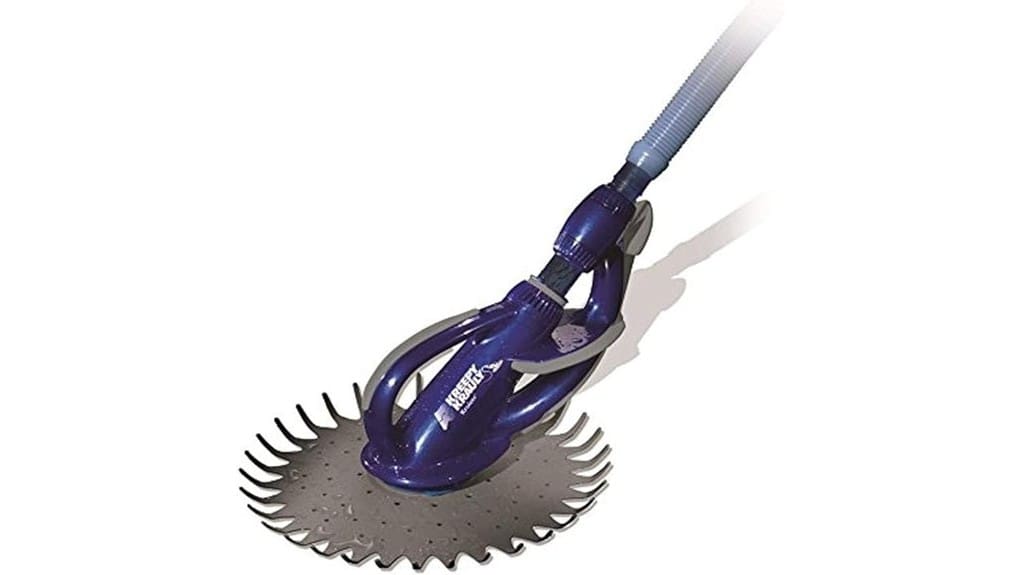
You’ll get a tool-free, suction-side inground cleaner that pairs strong suction with an extra-wide mouth and engineered seal slits to pick up both large and fine debris better than older suction models. You can connect via skimmer or vacuum line to trade ease of hookup for steadier suction, and the bumper plus balanced drive reduces hang-ups around steps and ladders. It’s low-maintenance and cost-effective; keep seals and hoses inspected, and keep reading for detailed setup, performance and alternatives.
Some Key Takeaways
- Tool-free, automatic inground suction cleaner offering straightforward installation via skimmer or vacuum line.
- Extra-wide mouth and strong suction capture large debris and maintain consistent lift for effective cleaning.
- Engineered seal slits and durable fingers provide reliable seal integrity and long-term performance.
- Balanced bumper and self-correcting drive ensure predictable mobility around steps, ladders, and corners.
- Best for homeowners wanting low-maintenance, proven suction cleaning; less effective on very fine silt than pressure cleaners.
What the Kreepy Krauly Kruiser Is and Who It’s Best For
Although it borrows proven elements from the industry’s most popular suction-side cleaners, the Pentair Kreepy Krauly Kruiser is a tool-free, automatic inground pool cleaner engineered for straightforward installation and robust debris removal. You’ll find it combines superior vacuum power, an extra-wide mouth, and engineered seal slits for consistent suction. Compared to competitors, it emphasizes reliable mobility around obstacles and uninterrupted operation. Ideal buyers are owners seeking hassle-free, effective cleaning who value proven design and community-tested performance. You’ll appreciate concise maintenance tips: inspect seals, clear the mouth, and monitor hose condition to sustain peak efficiency and shared confidence. Designed for homeowners who enjoy relaxing outdoor living, it fits seamlessly into well-maintained backyard spaces and routine pool care outdoor enjoyment.
How Installation and Setup Actually Work (Skimmer vs. Vacuum Line)
When you set up the Kreepy Krauly Kruiser, you’ll choose between connecting it to your skimmer or to a dedicated vacuum line—each option alters hose routing, suction strength, and debris handling. You’ll find skimmer compatibility broad; the cleaner clamps to common skimmer throats without tools. A vacuum line gives steadier suction and cleaner hose routing but may require matching fittings. Use supplied hose adapters to secure connections and minimize leaks. You’ll compare installation speed, suction consistency, and bypass risk: skimmer is fastest and more universal, vacuum line is steadier and cleaner. Choose based on plumbing layout and performance priorities. Many homeowners find regular skimmer maintenance improves overall cleaner performance, especially when keeping the skimmer throat clear of debris.
Cleaning Performance: Suction, Debris Capture, and Seal Effectiveness
Evaluate the Kruiser’s cleaning performance by looking at three measurable areas: suction power, debris capture efficiency, and seal integrity. You’ll find the Kruiser delivers superior vacuum power compared with older suction-side models, offering high flow efficiency that sustains consistent lift. Its extra-wide mouth improves debris capture efficiency for both large and fine particles, reducing manual skim time. The specially engineered slits and fingers produce dependable seal integrity, promoting seal longevity under regular use. Compared to peers, the Kruiser balances strong suction with effective debris retention and durable seals, so you’ll feel confident joining others who rely on its consistent results. This makes it a reliable choice for homeowners who want to keep pump baskets working and enjoy their outdoor spaces.
Mobility and Obstacle Handling: Coverage Around Steps, Ladders, and Corners
Because the Kruiser uses a built-in bumper and a balanced drive profile, it navigates steps, ladders, and corners with predictable, continuous movement that maximizes coverage without frequent manual intervention. You’ll notice its movement is steady and self-correcting; the bumper absorbs impacts and redirects the unit, reducing hang-ups compared with rigid designs. Corner navigation remains methodical rather than aggressive, so you get consistent wall-to-floor changeover coverage. Its quiet operation minimizes pool-side disturbance while maintaining suction-driven mobility. In comparative terms, you get reliable, hands-free traversal of common obstacles, fostering confidence that your pool receives uniform cleaning. For homeowners who value their outdoor space, a well-chosen pool corner brush complements the Kruiser’s navigation to keep edges spotless.
Pros, Cons, and Buying Recommendation (Value, Alternatives, Maintenance)
Having demonstrated reliable obstacle handling, it’s useful to weigh the Kruiser’s strengths and weaknesses to see how it fits your needs and budget. You get robust suction, wide-mouth debris capture, simple tool-free installation, and a proven seal design—key pros for consistent pool hygiene. Cons include reliance on pool circulation for power and limited performance on very fine silt compared with pressure-side units. For value, perform a cost analysis against competitors; consider long-term savings via reduced manual cleaning. Check warranty details for coverage and duration. Recommendation: choose Kruiser if you want dependable, low-maintenance suction cleaning with community-backed reliability. Consider pairing it with an outdoor pool caddy to keep your cleaning tools and replacement parts organized and extend the life of your maintenance routine.
Some Questions Answered
Does It Void the Pool Warranty to Use This Cleaner?
Generally, using this cleaner doesn’t automatically voids warranty? You should check manufacturer approval; if the cleaner’s design and connections match your pool and you follow installation instructions, manufacturers typically allow suction-side cleaners. Compare your pool’s warranty terms and any listed approved accessories — lacking manufacturer approval or improper connection could risk coverage. You’ll feel more secure if you confirm compatibility with the pool maker or installer, fostering shared confidence and community support.
Can It Damage Pool Liners or Finishes?
Generally, you won’t damage liners or finishes if you follow manufacturer guidance and maintain proper suction and movement. The cleaner’s design emphasizes liner safety and minimizes surface abrasion compared with older suction-side units. You should still inspect seals, hoses, and pool surfaces regularly and avoid prolonged scraping against steps or sharp edges. If you’re unsure, test in a small area and consult your pool community or professional for compatibility and best practices.
How Long Is the Parts and Warranty Coverage?
You get a limited warranty typically covering one year for defects, with a replacement policy that supplies parts or unit exchange at manufacturer discretion. You’ll compare this to longer commercial warranties, noting it’s standard for residential automatic cleaners. You’ll want to register the product and retain proof of purchase to claim coverage. If you’re part of user communities, you’ll find collective guidance on filing claims and sourcing compatible replacement parts.
Is Any Additional Hose or Weight Required for Optimal Performance?
No, you typically won’t need extra hose or a weight kit for optimal performance; the cleaner connects tool-free and uses standard hose lengths. If your pool layout differs or your suction is weak, hose adapters can help guarantee a secure fit and correct length. Compared to many cleaners, you’ll only add weights if the unit skips or floats; most users in our group find factory balance sufficient without aftermarket weight kits.
Can Multiple Cleaners Be Used Together in Large Pools?
Yes — you can use multiple cleaners in large pools, provided you manage overlapping suction and confirm system compatibility. You’ll want coordinated scheduling to prevent competition for flow and to avoid reduced performance. Compared to a single unit, multiple cleaners increase coverage but require balanced suction distribution and possibly adjusted pump flow. You’ll feel part of a consensus-driven setup when you match cleaner counts to pump capacity and schedule them to operate harmoniously.