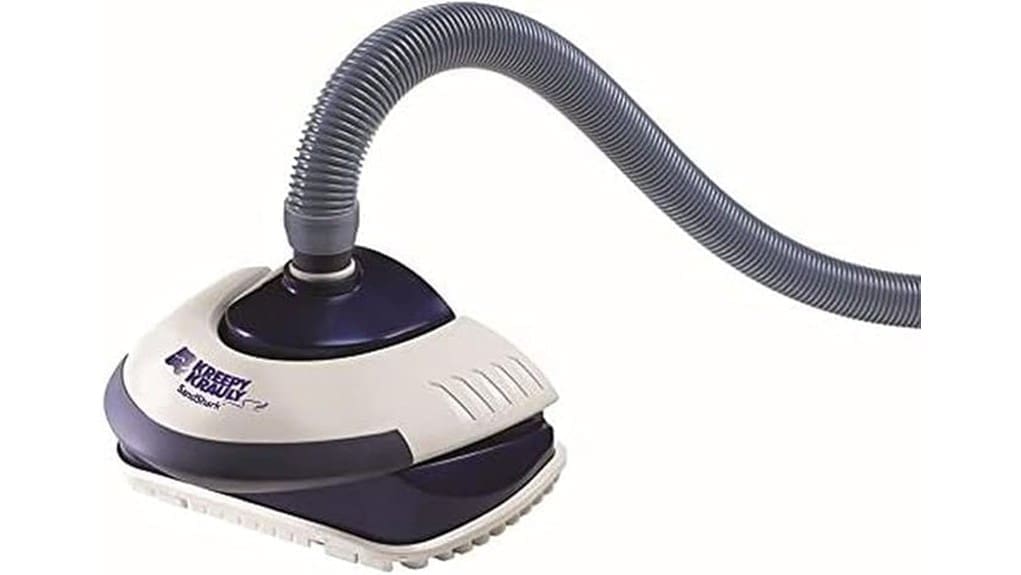
You’ll get deterministic, repeatable coverage with the Pentair Kreepy Krauly SandShark GW7900, which uses SmartTrac steering instead of random motion to boost area cleaned per hour and predict cycle times. It excels on sand and fine debris thanks to strong suction, but needs adequate skimmer/plumbing flow and may not suit delicate liners or multi-port setups without adjustments. Maintenance is straightforward, parts are available, and you’ll find comparisons to robotic and suction-side alternatives if you want more detail.
Some Key Takeaways
- SmartTrac steering delivers deterministic, repeatable coverage with fewer missed zones than random-pattern suction cleaners.
- Strong suction efficiently collects fine debris and sand, outperforming many suction-side competitors.
- Requires minimum reliable suction flow; incompatible with low-flow or some variable-speed pump setups.
- Durable construction with replaceable diaphragms and hoses, but routine maintenance and hose checks are necessary.
- Midrange price offering predictable coverage; consider robotics for superior coverage or suction-side units for simplicity.
How the SandShark GW7900 Actually Cleans Pools: Performance, Speed, and SmartTrac Steering
Because it uses a programmed steering routine rather than random motion, the SandShark GW7900 delivers systematically faster coverage of inground pools. You’ll notice its SmartTrac steering logic enforces repeatable passes, reducing overlap and missed zones compared with random-pattern cleaners. Performance metrics favor consistent wall-to-floor shifts and rapid debris pickup, aided by suction efficiency and optimized hose length. The cleaning pattern combines directed runs with obstacle negotiation, so you get predictable cycle times and fewer manual touches. Technically, the device trades stochastic search for deterministic coverage, improving speed and reliability when you evaluate area cleaned per hour against alternative suction cleaners. This makes the SandShark a strong option for homeowners looking to keep their pool pristine with robotic vacuum-style performance.
What’s in the Box and How to Install the SandShark on an Inground Suction System
Now that you understand how SmartTrac improves coverage and speed, let’s look at what arrives in the box and how to get the SandShark running on a typical inground suction system. You’ll find the cleaner, short leader, ten 40″ hose sections, weights, eyeball diverters, reducer cone, vac fitting, regulator, cap, and flow gauge. For installation, follow a concise startup checklist: assemble hose sections, attach leader, confirm vac fitting seating, set regulator and flow. Pay attention to hose placement to minimize kinks and drag; compare with random cleaners—SandShark needs structured routing. Practical installation tips improve reliability and suction performance. Above-ground users should note hose section compatibility when considering replacement parts.
Compatibility Checklist: Pool Types, Plumbing, and When the SandShark Won’t Be a Fit
When you evaluate whether the SandShark suits your pool, focus on pool type, suction-line configuration, and flow characteristics—these determine compatibility more than color or weight. You’ll find concrete pools, gunite, and fibreglass generally compatible; vinyl liner compatibility requires inspection for sharp folds, anchored seams, and recommended pressure limits. Check single vs. multiple suction lines: multi-port systems may need valve adjustments or a dedicated line to maintain required flow. Low-flow or variable-speed pumps that can’t reach the SandShark’s minimum suction will prevent operation. Avoid pools with delicate liners, insufficient plumbing access, or permanently obstructed skimmers. Also consider the condition and maintenance of your skimmer and plumbing to keep the SandShark performing reliably, since proper skimmer function is key to overall system performance and skimmer maintenance.
Real-World Pros and Cons After Hands-On Use: Suction, Maneuvering, Durability, and Maintenance
While the SandShark delivers markedly strong suction that tackles fine debris and sand better than many random-pattern suction cleaners, you’ll notice its performance depends on correct flow and hose setup—insufficient pump speed or improperly balanced multi-port suction can drop cleaning efficiency quickly. You’ll appreciate precise SmartTrac steering that maneuvers tight corners, though edges may need manual attention. Durable materials resist abrasion, but expect wear on diaphragms and quick-replacement spare parts. Regular hose checks and timely debris removal prevent filter clogging. Maintenance is straightforward; seasonal storage requires dry, shaded conditions. Manufacturer customer service and parts availability are adequate for repairs. It’s an excellent option for homeowners who want effortless pool cleaning and more relaxing outdoor living.
Is It Worth Buying? Price Expectations, Alternatives, and Final Recommendation
Because the SandShark pairs strong suction and SmartTrac steering with a midrange price point, you’ll get efficient, deterministic cleaning for inground pools if your pump and plumbing meet its flow requirements. Expect pricing trends that keep this model competitive versus premium robotic units; initial cost is lower but operational dependency on pool hydraulics affects total cost of ownership. Compare competitive alternatives like robotic cleaners for coverage and suction-side models for simplicity. Assess long term value by factoring maintenance, parts availability, and energy use. If you need predictable coverage at modest cost, buy; consider resale prospects modest due to heavy competition. For homeowners upgrading outdoor living spaces, consider how the cleaner integrates with your existing pool pump setup and overall yard design.
Some Questions Answered
Can the Sandshark Clean Vinyl Pool Steps and Shallow Shelves Safely?
Yes — you can use it on vinyl steps and shallow shelves, but exercise caution. You’ll get vinyl safe maneuvering thanks to SmartTrac steering and regulated suction, which reduces dragging and abrasion. Compared to random cleaners, it offers better step edge coverage, though delicate corners may need manual attention. Monitor suction and avoid prolonged contact with tight step seams; use regulator and vac port fittings to fine-tune pressure for safe operation.
How Loud Is the Sandshark During Operation From Poolside?
You’ll hear a low noise consistent with suction cleaners; it’s more motor hum than mechanical clatter. Compared to random-style models it registers lower poolside volume thanks to efficient flow and SmartTrac steering. In technical terms the unit offers quiet operation with reduced vibration transmission to the waterline, so ambient poolside sound stays modest. You’ll still notice steady hum at moderate distances, but it’s not intrusive for typical backyard use.
Are Replacement Hoses and Parts Readily Available Locally?
Yes — you can usually find replacement hoses and parts locally and via online marketplaces. You’ll get faster availability at local retailers carrying Pentair-compatible inventory, while online marketplaces offer broader selection, OEM and aftermarket options, and price comparisons. Compare part numbers, fittings and material specs; local retailers let you inspect compatibility, whereas online sources often stock rarer components. Keep manufacturer part numbers handy to make certain correct matches and avoid flow or fit issues.
Can the Unit Run Continuously Overnight Without Damage?
Yes — you can run it continuously overnight, but monitor for continuous operation limits and overnight safety concerns. Compared to pressure or robotic cleaners, suction units like this tolerate long cycles but rely on your pump and filter capacity; prolonged runs can stress pump seals, increase wear, and overload debris bags. You should check manufacturer specs, confirm proper flow, clean the system daily, and use timers or sensors to prevent excessive runtime and potential damage.
Does the Warranty Cover Motor or Regulator Failure?
Yes — the limited warranty can cover regulator failure and motor-related issues, but you’ll need to check specifics: many manufacturers list warranty exclusions for wear items and improper installation. You’ll compare terms to see if coverage is full or prorated; regulators and motors sometimes receive prorated coverage based on age and usage. You should document failure, proof of purchase, and notify manufacturer or retailer to confirm applicability and any required repair authorization.