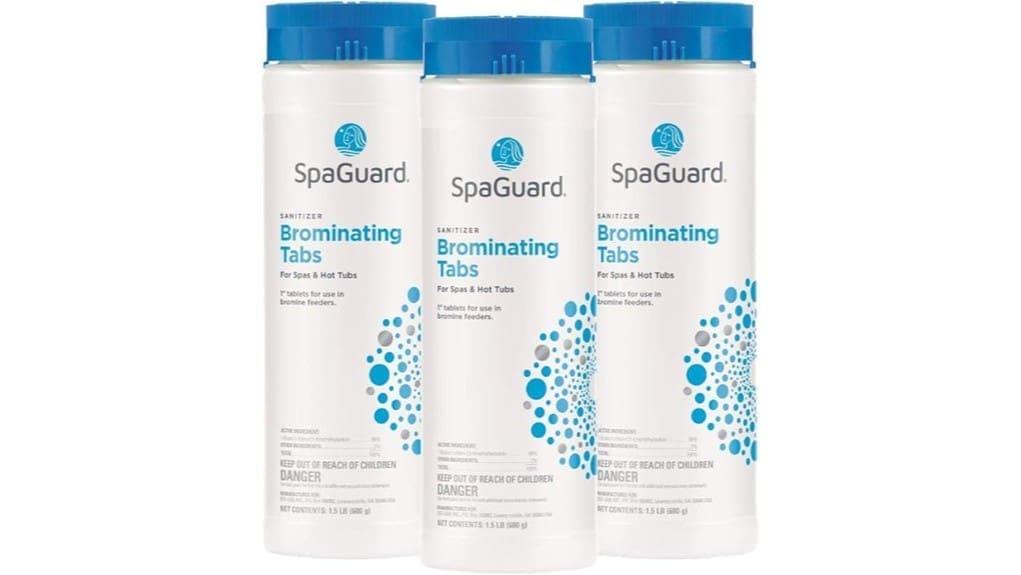
You’ll get concentrated, slow‑dissolving 1‑inch bromine tablets (96% BCDMH) that provide steady spa sanitation with low odor, but you’ll need strict pH and alkalinity control to avoid corrosion or irritation. Use a calibrated floater or brominator, avoid direct jets, and wear gloves/eye protection during handling. Monitor bromine residuals (2–4 ppm residential) and replace damaged feeders promptly. Continue below for full performance, dosing, and safety guidance.
Some Key Takeaways
- Tablets are slow‑dissolving 1‑inch bromine designed for steady residuals, suitable for floaters or brominators.
- Product is acidic (pH ~4.5) and contains high‑purity BCDMH for reliable sanitation and reduced chlorinous odor.
- Maintain bromine at 2–4 ppm residential (4–6 ppm commercial) using calibrated feeders and routine residual testing.
- Daily pH and total alkalinity monitoring required to prevent corrosion, irritation, and reduced bromine efficacy.
- Sold in 1.5 lb ×3 packs; convenient for heavy‑bather residential or small commercial use—verify compatibility and warranty.
Quick Verdict: Is SpaGuard Brominating Tablets Worth Buying?
While SpaGuard Brominating Tablets are a concentrated, slow‑dissolving bromine source designed for continuous spa sanitation, you should choose them only if you’re prepared to monitor pH and alkalinity frequently. You’ll get reliable microbial control, simplified dosing via a floater or brominator, and fewer odor complaints — improving customer satisfaction when you manage levels correctly. Tablets are acidic (pH 4.5) and contain 96% BCDMH, so you’ll test and adjust total alkalinity often to prevent corrosion or irritation. Consider storage, handling PPE, and disposal protocols to minimize environmental impact. Buy them when you’ll commit to active, safety‑focused maintenance. Keep in mind that pool and spa owners often also use pool opening chemicals to prepare water and equipment properly before the season starts.
Performance: Sanitation, Dissolution Rate, and Odor Control
Having decided you’ll monitor pH and alkalinity regularly, evaluate how SpaGuard Brominating Tablets perform on three fronts: sanitation potency, dissolution rate, and odor control. You’ll find robust sanitation longevity due to 96% BCDMH delivering steady bromine residuals when tablets are dosed via a brominator or floater. Dissolution is predictably slow; tablets maintain release over extended cycles but require routine feeder checks to avoid over- or under-dosing. Odor suppression is effective—bromine chemistry minimizes chlorinous smells—but you should still ventilate and control combined sanitizer levels. Prioritize residual testing, calibrated feeders, and PPE when handling concentrated tablets for safe operation. Owners who prefer outdoor relaxation will appreciate products designed for pool shock treatment and routine maintenance that keep swim spaces ready.
Safe and Effective Use in Your Spa or Brominator
When installing SpaGuard brominating tablets in a floater or brominator, position the feeder per manufacturer instructions and check that all seals and vents are intact before loading to prevent leaks or uneven dissolution. You’ll calibrate dosage timing to maintain 2–4 ppm (residential) or 4–6 ppm (commercial), using a test kit to verify residuals after each adjustment. For dispenser placement, avoid direct jet flow and place the unit where circulation is moderate to guarantee consistent dissolution. Store tablets dry, separate from other chemicals. Wear gloves and eye protection when handling; replace damaged feeders immediately to prevent over‑dosing or equipment corrosion. Store brominating tablets in a cool, dry place away from direct sunlight and heat sources to maintain chemical stability.
Water Chemistry and Compatibility: pH, Alkalinity, and Other Products
Now that your feeder is positioned and dosing is set, monitor and control spa water chemistry to guarantee the brominating tablets work as intended. You’ll test pH and total alkalinity daily; tablets are acidic and can induce pH drift if alkalinity buffering is insufficient. Maintain total alkalinity 80–120 ppm to stabilize pH and prevent swings that reduce bromine efficacy. Adjust pH to 7.2–7.8 with appropriate increaser/decreaser, and avoid mixing incompatible oxidizers or metal sequestrants directly with tablets. Follow manufacturer guidance for combined use with other SpaGuard products, and wear PPE when handling chemicals to make sure safety and system compatibility. Keep your pool pH balanced for clearer, safer water by maintaining proper alkalinity and pH levels and using suitable pH decreasers.
Buying Considerations: Pack Size, Cost, Warranty, and Who Should Choose These Tablets
Because spa maintenance is both routine and safety-critical, choose SpaGuard Brominating Tablets with attention to pack size, cost per ounce, warranty terms, and your usage pattern. The 72-ounce (4.5 lb) package sizes deliver compressed 1-inch tablets that fit floaters or brominators, reducing handling frequency. Calculate cost savings against smaller units by factoring tablet longevity and required ppm (2–4 residential, 4–6 commercial). Verify warranty coverage and Amazon’s 30-day return window; consult manufacturer for full warranty details. Target users are heavy-bather residential owners and small commercial operators who need time-release, low-odor sanitation and predictable maintenance intervals. Our store also offers compatible digital pool thermometers that help you monitor spa temperatures precisely for optimal sanitizer performance and safety, making them a useful complement to brominating tablet regimes and overall outdoor pool care.
Some Questions Answered
Are These Tablets Safe to Store Around Children and Pets?
No — you shouldn’t store them where children or pets can access them. These tablets contain concentrated BCDMH and present child safety and pet hazards if ingested, inhaled, or contacted. Keep them in original, labeled containers with child‑resistant closures, locked cabinet or high shelf, away from moisture and food. Follow manufacturer handling, wear gloves and eye protection when dosing, and keep emergency contact info handy for poison control or your veterinarian.
Do the Tablets Expire or Lose Potency Over Time?
Yes — the tablets have a limited shelf life and can experience potency degradation over time. You should store them sealed, cool, dry, and away from sunlight to minimize decomposition. Expect gradual active-ingredient loss if exposed to moisture or heat; test bromine levels before use if tablets are older than a year. Dispose of visibly degraded or crumbly tablets per local hazardous-waste guidance to maintain safe, effective sanitation.
Can I Use These in an Indoor Spa With Limited Ventilation?
Yes — you can, but you must control ventilation and monitor bromine off gassing. You’ll place tablets in a floater or brominator, maintain bromine residuals (2–4 ppm residential), and frequently test pH/TA because acidic tablets affect balance. Use mechanical ventilation and continuous ventilation monitoring to prevent buildup of bromine vapors. If you detect odors or elevated readings, increase fresh air exchange, reduce tablet dosage, and follow manufacturer safety guidance.
Are These Tablets Approved for Use in Public/Commercial Pools?
Yes — you can use them in commercial spas if local regulatory compliance permits; they’re formulated for heavy bather loads and commercial use. You’ll need to verify commercial certification requirements in your jurisdiction and document compliance with local health codes. Monitor bromine residuals (4–6 ppm), pH, and alkalinity continuously, use an approved brominator, and keep records to demonstrate safety and adherence to regulatory standards for public pool/spa operation.
What Should I Do if a Tablet Falls Directly Onto Spa Surface?
If a tablet falls onto the spa surface, remove it immediately to prevent surface discoloration and avoid prolonged contact. Don protective gloves, retrieve the tablet with a nonmetal tool, and place it into a floater or brominator. Rinse the affected area with copious water for immediate dilution, then test and adjust pH and total alkalinity. Inspect the surface for damage; if discoloration or etching appears, contact the manufacturer or a professional for remediation.