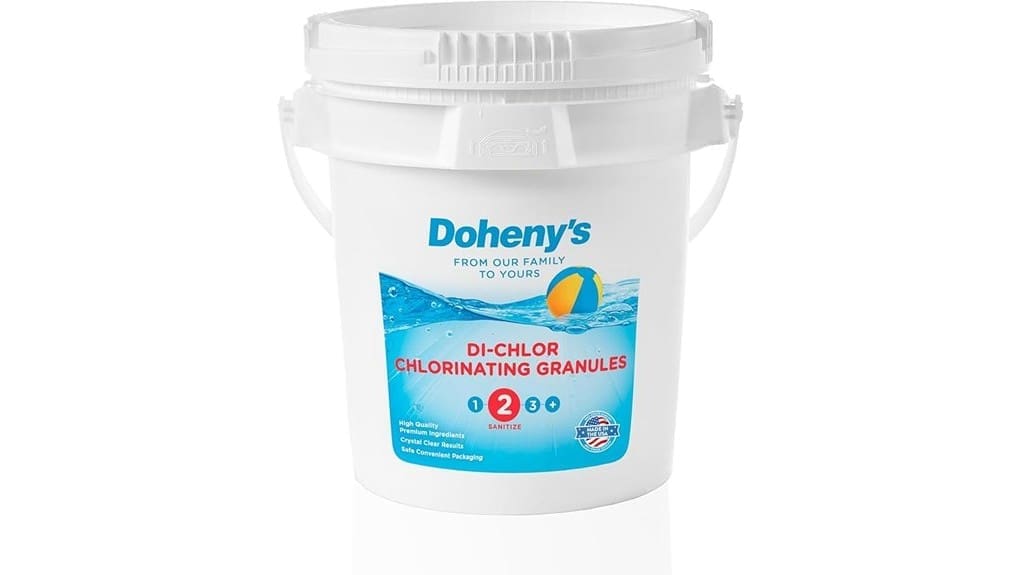
You’ll get a professional-grade, fast-dissolving stabilized chlorine (sodium dichloro-s-triazinetrione, 56% available chlorine) that quickly raises free chlorine for shock and routine sanitizing while resisting UV loss with cyanurate stabilization. It’s acidifying, so you’ll monitor pH/CYA and buffer as needed; it won’t add calcium. Dose 1 lb per 10,000 gallons, use gloves, pre-dissolve in water, and don’t mix chemicals. Keep it sealed and cool—scroll on to see detailed performance, dosing, and value comparisons.
Some Key Takeaways
- Fast-dissolving stabilized di-chlor granules provide rapid free chlorine boost and predictable shock performance.
- Contains professional-grade sodium dichloro (99.5% purity) with 56% available chlorine for strong sanitization.
- Cyanuric acid stabilization reduces UV loss but requires regular CYA monitoring to maintain chlorine efficacy.
- Acidifying decomposition means buffering recommended; product is calcium-neutral, so no calcium buildup expected.
- Available in 10–50 lb buckets; 50 lb and 2-pack options offer best value for pool managers and technicians.
What Doheny’s Di-Chlor Is and Who It’s Best For
Because it combines sanitizer, shock, and algaecide in a fast-dissolving, residue-free formula, Doheny’s Di-Chlor is a professional-grade granular chlorine you’ll reach for when you need rapid, reliable water treatment. You’ll use it to quickly elevate free chlorine, eradicate algae, and maintain clear water without clouding or calcium buildup. Ideal buyers are pool managers, service techs, and serious homeowners who prioritize rapid response and predictable dosing. You’ll favor it for seasonal maintenance, shock treatments, and routine sanitization where stabilized, fast-acting chlorine is required. Follow label dosing and safety protocols to preserve pool chemistry and equipment longevity. It’s a great option for homeowners looking to keep their pool sparkling with dependable shock treatments.
Active Ingredients, Strength, and What That Means for Pool Chemistry
Understand that Doheny’s Di-Chlor is built on sodium dichloro-s-triazinetrione (99.5% purity) and delivers 56% available stabilized chlorine, which gives you a predictable, fast-acting source of hypochlorous acid once dissolved. You’ll get stabilized chlorine that resists UV degradation, reducing volatilization while contributing to cyanuric impacts on free chlorine efficacy. Monitor CYA to avoid reduced active chlorine fraction. The compound is neutral in calcium but exhibits pH influence: decomposition is acidifying, so buffer accordingly to maintain most effective sanitizer form. Account for chlorine demand from organics and sunlight when dosing to sustain target free chlorine concentrations. Use simple pool test kits to regularly check free chlorine and cyanuric acid levels to keep your pool water safe and balanced, especially during heavy use or hot weather, with an emphasis on regular testing.
Real-World Performance: Sanitizing, Shocking, and Algae Control
When you need reliable sanitizing, shocking, and algae control, Doheny’s Di-Chlor delivers fast, predictable action: its 56% available stabilized chlorine dissolves quickly to generate hypochlorous acid for immediate pathogen kill while the cyanurate stabilization slows UV loss so you maintain free chlorine longer. You’ll see rapid turbidity reduction and consistent free chlorine recovery after heavy bather load or organic surge. Shock longevity is notable versus unstabilized shocks, giving sustained residual control without calcium buildup. Algae necrosis occurs within hours with continued residual action. Odor profile is clean, mildly chlorinated — no strong chemical sting — reflecting efficient oxidation and low impurities. Homeowners appreciate that these characteristics make it well-suited for regular maintenance and outdoor pool care.
How to Use It Safely and the Exact Dosage for Common Pool Sizes
Having seen how Di-Chlor rapidly sanitizes and controls algae, you should apply it carefully to protect swimmers and equipment: always wear chemical-resistant gloves and eye protection, add the granules to a clean bucket of water (never pour water into the product), pre-dissolve if broadcasting near returns is not possible, and never mix with other pool chemicals—especially acids or unstabilized chlorines. Use 1 lb per 10,000 gallons to raise and maintain chlorine; for 5,000 gal use 0.5 lb, for 15,000 gal use 1.5 lb. Store sealed in a cool, dry location for proper storage; use handling gloves for all transfers. For best long-term results, follow a proper pool opening routine that includes testing alkalinity and stabilizer levels before adding Di-Chlor to balance the pool chemistry first.
Packaging Options, Value per Pound, and Who Should Buy It
Because you’ll use Di-Chlor regularly, choose the packaging that matches your maintenance schedule and storage capacity: Doheny’s comes in 10 lb, 25 lb, and 50 lb buckets, plus a 2-pack of 50 lb buckets for heavy users or commercial sites. You’ll pay higher shipping costs per pound for small buckets; 50 lb and 2-pack options deliver the best value per pound and qualify for bulk discounts. If you resell product or supply multiple pools, larger formats improve margin and resale value. Opt for smaller sizes if limited by storage, handling, or eco impact concerns tied to unused chemical disposal. Choose the pack size that best fits your outdoor living usage and yard needs.
Some Questions Answered
Is Di-Chlor Safe for Use With Saltwater Pools?
Yes — you can use di-chlor in saltwater pools, but you should be careful. It provides stabilized chlorine that’s compatible with salt systems for routine chlorination, yet frequent high-dose shocks can increase free chlorine and stabilizer levels. Monitor cyanuric acid and salt cell performance, since elevated stabilizer and chlorine byproducts can accelerate electrode corrosion. Test levels regularly, avoid overdosing, and follow manufacturer guidelines to minimize saltwater compatibility and electrode corrosion risks.
Can It Be Used With Plaster or Pebble Pool Surfaces?
Yes — you can use it on plaster compatibility and pebble texture surfaces. You’ll apply as directed; the fast-dissolving, residue-free di‑chlor won’t cloud water or leave calcium deposits that damage plaster or pebble finishes. Maintain recommended dosing (1 lb per 10,000 gallons) and avoid pouring undissolved granules directly onto surfaces. Test and monitor stabilizer/chlorine levels regularly to prevent surface etching or discoloration from prolonged high chlorine concentrations.
How Should Leftover Product Be Stored Long-Term?
Store cool and store dry: keep leftover product sealed in its original container, away from heat, sunlight, moisture, and combustible materials. You’ll place the bucket on a stable, non-porous pallet or shelf in a well-ventilated area, away from acids and organics. Check seals periodically and don’t allow water contamination. Label date opened and use within manufacturer-recommended shelf life; dispose of degraded material per local hazardous-waste regulations.
Is It Compatible With Metal-Based Pool Heaters?
Yes — it’s compatible if you use it correctly. You’ll maintain heat compatibility by avoiding direct addition near metal surfaces and by keeping stabilized dichlor at recommended doses. Corrosion risk rises if you overdose, let pH drift acidic, or pour granules onto hot metal; those conditions accelerate chlorine-induced corrosion. Follow dosing (1 lb/10,000 gal), guarantee proper pH/buffer, dissolve granules before adding, and circulate thoroughly to protect metal-based heaters.
Will It Affect Pool Swimwear or Towels?
Yes — if you don’t manage chlorine levels, it can cause color fading and fabric degradation in swimwear and towels. You should maintain recommended dosing (1 lb per 10,000 gallons) and proper circulation to keep free chlorine in safe ranges. Rinse and air-dry textiles after use, avoid prolonged exposure to high chlorine, and use stabilizers or laundering with chlorine-neutralizing agents to minimize oxidative damage and preserve fabric strength and color.