You’ll find Xtremeclear 3″ chlorine tablets deliver long-lasting, stabilized sanitation and cost savings versus liquid or unstabilized options. They’re 99% trichloro-s-triazinetrione with ~90% stabilized chlorine, so they resist sunlight loss and kill bacteria quickly when dosed right. Tablets dissolve slowly—automatic feeders give steadier output than floaters—and they can nudge pH down. Handle and store them with care, use compatible feeders, and test often; keep going to get full use and safety tips.
Some Key Takeaways
- Xtremeclear 3″ tablets are stabilized trichloro-s-triazinetrione (~90% stabilized chlorine) for prolonged UV-resistant sanitization.
- Slow-dissolving 3″ tablets provide steady chlorine release but require compatible 3″ feeders for consistent dissolution.
- Effective bactericidal and algaecide action when dosed correctly, with minimal residue if water is balanced.
- Handling/storage require caution: keep in sealed dry bucket, ventilated area, use gloves/eye protection, and avoid mixing with incompatible chemicals.
- Good cost-per-tablet for large pools, but monitor pH and chlorine to prevent over-chlorination and chemical odor after shocking.
How Xtremeclear 3 Chlorine Tablets Work and What’s Inside
Although they look simple, Xtremeclear 3″ chlorine tablets are engineered to deliver steady sanitization: each slow-dissolving, 3-inch tablet contains Trichloro-S-Triazinetrione (99% grade) and about 90% stabilized chlorine, so you get prolonged, UV-resistant chlorine release that kills bacteria, helps control algae, and reduces scale and stains. You’ll appreciate the clear chemical composition: chiefly stabilized trichloro-s-triazinetrione for sustained free chlorine. Compared to unstabilized options, these tablets lower maintenance and resist sunlight loss. You should follow safety precautions: store sealed, handle with gloves, avoid mixing with other chemicals, and keep away from children and moisture. Homeowners who enjoy their outdoor spaces should also consider shock treatment best practices to keep pools sparkling and safe.
Performance: Sanitizing, Stabilization, and Dissolve Rate Tested
Having covered what’s inside the tablets, let’s look at how they actually perform in use. You’ll notice strong sanitizer efficacy: bacteria drops quickly when dosing is correct, and stabilized chlorine keeps levels steady under sun exposure. Dissolution variability appears between dispensers—floaters melt unevenly, automatic feeders give steadier output. Expect minimal chlorine residue when balanced, though occasional flakes collect in skimmers. Water odor is reduced rapidly after shock dosing, but lingering chemical smell can occur if over-chlorinated. Compared to similar 3″ tablets, Xtremeclear offers reliable stabilization and good kill-power, but monitor dissolve rate and adjust feed to avoid spikes. This product line is aimed at homeowners who enjoy their outdoor spaces and need dependable pool maintenance with chlorine tablets.
Compatibility and How to Use the 3 Tablets Safely
When you choose Xtremeclear 3″ tablets, check dispenser size and pool type first so you get consistent dosing and avoid damage to equipment. You’ll compare floaters, skimmer feeders, and larger automatic feeders — only use feeders rated for 3″ tablets. Assess chemical compatibility with other sanitizers and algaecides; don’t mix stabilized trichloro with non-chlorine shock or acidic chemicals. For safe storage, keep the sealed bucket dry, ventilated, and away from heat or combustible materials; store tablets upright and separate from incompatible substances. When adding tablets, follow manufacturer dosing, use protective gloves and eye protection, and keep children and pets away. Proper pH levels are essential for both swimmer safety and chlorine effectiveness, so regularly test and adjust your water with reliable pH testing.
Pros, Cons, and Real-World Use Cases (Pools, Spas, Toilets)
Because Xtremeclear 3″ chlorine tablets deliver high, stabilized chlorine in a slow-dissolving form, you’ll find them highly effective for routine sanitizing in large-volume applications like backyard pools and commercial water features. You’ll appreciate pros: long-lasting, 90% stabilized chlorine reduces UV loss, strong bactericidal action, and clear cost savings versus liquid chlorine. Cons: slow dissolution can lower pH, tablet size limits some feeders, and harsh oxidizer handling needs care. For pools, spas, toilets use compatible floaters or larger automatic feeders; for hot tubs monitor levels closely. Application tips: test water frequently, adjust pH, store dry and sealed for safety. Homeowners who enjoy outdoor spaces should consider simple pool water test kits to keep chemistry balanced and ensure safe, clear water.
Buying Guide: Packaging, Quantity, Price Considerations, and Warranty
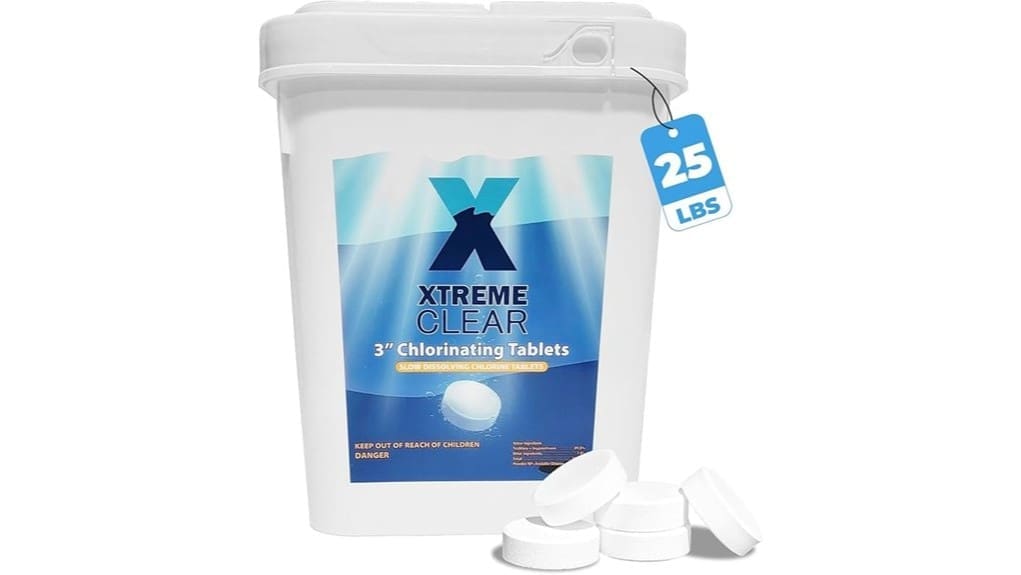
After considering performance and handling from the previous section, you’ll want to weigh packaging, quantity, price, and warranty before buying Xtremeclear 3″ Chlorine Tablets. The 25-pound bucket with individually wrapped 3″ tablets is convenient for storage and dosing; compare bucket counts (listed as 27 items) against actual net weight. If you use pools or spas year-round, bulk pricing reduces per-tablet cost versus smaller packs. Check dispenser compatibility so you don’t buy unnecessary extras. Note Amazon’s voluntary 30-day return warranty policy and that manufacturer warranty details are available—factor both into total ownership cost and risk tolerance. Homeowners should also ensure any pool electrical equipment and accessories meet local electrical codes when integrating chemical feeders with outdoor systems.
Some Questions Answered
Are These Tablets Safe for Use With Saltwater Chlorinators?
No, you shouldn’t use these tablets with a saltwater chlorinator. They’ll disrupt saltwater effects and can overload your system since trichloro tablets add stabilized chlorine and cyanuric acid, which isn’t needed in a salt chlorine generator. You’ll increase chlorinator maintenance and risk scale or sensor issues compared with using unstabilized liquid chlorine or calcium hypochlorite specifically recommended for salt systems. Stick with manufacturer guidance for best results.
Can They Be Stored Outside in Summer Temperatures?
Yes — you can store them outside in summer if you take precautions. You’ll get better store stability by keeping the bucket sealed, elevated, shaded, and away from heat sources; avoid direct sun and temperatures above typical temperature limits (keep under about 100°F/38°C). Compared to leaving loose tablets, the factory wrapping and bucket offer more protection, but long-term exposure to high heat still degrades performance, so monitor conditions and rotate stock.
Do the Individually Wrapped Tablets Biodegrade or Are Wrappers Recyclable?
No — the individually wrapped tablets aren’t labeled as biodegradable wrappers, so you shouldn’t expect them to break down naturally. You’ll want to check the wrapper material code for local recycling options; many pool-tab wraps are mixed plastics and aren’t accepted curbside. Comparatively, biodegradable wrappers would be greener, but here your recycling options are limited. Consider bulk unwrapped alternatives or contact the manufacturer for specific recycling guidance and material details.
Are These Tablets Compatible With Vinyl, Fiberglass, and Concrete Pool Liners?
Yes — you can use them with vinyl, fiberglass, and concrete liners, but you’ll want to be careful. They’re stabilized, slow-dissolving tablets that compare well to unstabilized chlorine for steady sanitizing. Still, avoid direct contact with vinyl to prevent vinyl staining or liner abrasion; use a floater or proper feeder placed away from walls. For fiberglass and concrete, monitor chlorine levels to prevent bleaching or surface damage over time.
Is There a Hazard if Pets Access the Bucket or Spilled Tablets?
Yes — there’s a real hazard if pets access the bucket or spilled tablets. You should treat them as toxic: they can cause pet poisoning if ingested and skin corrosion on contact with wet tablet residue. Compared to dry pool chemicals, these 3″ tablets are slow-dissolving but still dangerous; keep the sealed bucket locked and clean spills promptly. If exposure occurs, call your vet or poison control and rinse affected skin immediately.