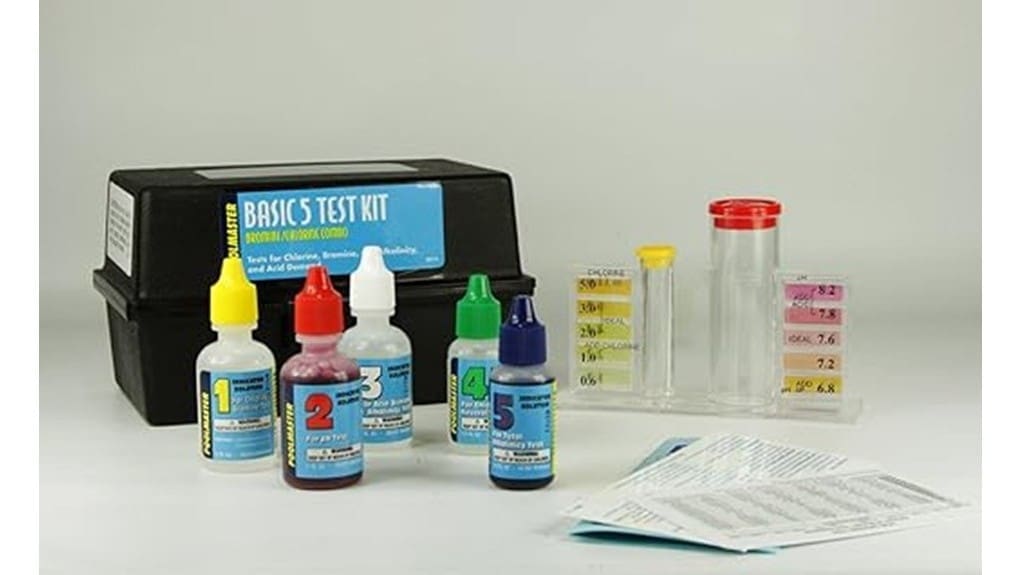
You’ll get a compact, budget-friendly 5‑way kit that measures chlorine/bromine, pH, acid demand, and total alkalinity with titration-style checks that are slower than strips but more informative. It includes a clear plastic test block, five reagents, and a color chart; store reagents cool and rinse the block for best results. It won’t match lab precision but gives consistent, actionable guidance for routine pool care. Keep going to see setup, testing steps, and tips.
Some Key Takeaways
- Provides chlorine/bromine, pH, acid demand, and total alkalinity measurements in a compact, budget-friendly kit.
- Uses colorimetric blocks and titration reagents, offering more actionable results than strips but less precision than meters.
- Setup is simple: rinse block, dry caps, store reagents upright and away from light and heat for stability.
- Accuracy depends on user technique, lighting, water temperature, and reagent age; expect consistent directional readings.
- Best for routine backyard monitoring; upgrade to digital photometers or lab tests for higher precision.
Quick Verdict: Is the Swim Central Basic 5‑Way Test Kit Worth Buying?
Decide quickly: the Swim Central Basic 5‑Way Test Kit gives you the essential tools to monitor chlorine/bromine, pH, acid demand, and total alkalinity at a budget price, and it’s worth buying if you want a portable, straightforward kit for routine pool checks rather than lab‑grade accuracy. You’ll get a compact plastic test block, five reagents, and built‑in color reading that make daily upkeep fast. As a budget option, it sacrifices precision but delivers consistent directional results. For a quick comparison against strips or digital meters, expect slower but more informative titration‑style readings that help you act confidently. It’s a good choice for homeowners who enjoy maintaining their outdoor spaces and need reliable, easy-to-use supplies for basic pool water testing like pool water test kits.
What’s Included and How to Set Up the Test Block
Before you take your first reading, unpack the kit and lay out every component so you know exactly what you’re working with: the round clear-view plastic test block with color comparison caps, five reagent bottles (three 1-oz and two ½-oz), and the acid measuring chart. Check labels to confirm Included reagents match the kit: solutions #1–#3 (1 oz) and #4–#5 (½ oz). Rinse the test block with pool water, then dry caps and exterior. Store reagents upright and avoid direct sunlight. For Block cleaning, use fresh water and a soft cloth; never scrub with chemicals that could skew readings. Regular testing and proper storage help keep pool water clear.
How to Run Each Test (Chlorine, Bromine, pH, Acid Demand, Alkalinity)
Now that your kit’s components are laid out and the test block’s been rinsed, you’re ready to take readings for each parameter: chlorine, bromine, pH, acid demand, and total alkalinity. Fill the block to the mark with pool water, noting sample temperature—cool or hot water shifts color reaction speed. Add the specified drops in order for chlorine or bromine, cap, invert gently, then compare to the built-in color chart. For pH, titrate with reagent until color change, record. For acid demand, add drops to reach target pH; count drops. For alkalinity, follow titration steps, avoid chemical interference by rinsing between tests. Consider using a digital tester for more consistent chlorine readings and easier maintenance of your outdoor pool water.
Accuracy, Reliability, and Real-World Performance Results
Although colorimetric kits like the Basic 5-Way are inherently less precise than digital meters, you’ll get reliable, actionable results for routine pool maintenance when you use the kit correctly. In controlled comparisons you’ll find readings typically within acceptable ranges for chlorine, pH, alkalinity and acid demand; bromine follows similarly. Watch for measurement drift over time — store reagents cool and dark to preserve reagent stability. Field variability arises from water temperature, turbidity and lighting during color matching. Your results hinge on user technique: rinse the block, use exact drops, wait recommended times, and compare colors in consistent light for best real-world performance. Proper pool opening preparation starts with choosing the right opening chemicals and test products for your outdoor space.
Who Should Buy It, Alternatives, and Final Buying Tips
If you maintain a backyard or garden-style pool and want a straightforward, low-cost way to monitor chlorine/bromine, pH, alkalinity and acid demand, this kit fits the bill — it’s best for routine checks rather than lab-grade analysis. You should buy it if you’re a budget conscious owner doing seasonal maintenance or weekly spot checks; it’s portable, simple, and includes necessary reagents and an acid chart. Alternatives: digital photometers for higher accuracy, strip tests for speed, or professional lab analysis for precise needs. Final tips: store reagents cool, replace solutions annually, log readings, and calibrate expectations to the kit’s limitations. For homeowners focused on summer pool care, this kit supports basic maintenance and enjoying outdoor spaces like patios and gardens, helping you keep water safe and clear with simple routine testing and treatment, especially when combined with good pool maintenance practices.
Some Questions Answered
Are Replacement Reagents Available Separately for This Kit?
Yes — replacement availability exists but is limited; Swim Central sells original reagents sparingly, and you’ll often find third party substitutes from pool-supply brands that match the five-test chemistry. You should verify reagent volumes (1 oz for #1–#3, 1/2 oz for #4–#5), compatibility with the clear-view test block, and expiration dates. Order from reputable dealers, compare lot codes, and keep original instructions to guarantee accurate results and safe handling.
How Long Do the Reagents Remain Usable After Opening?
You’ll typically get 6–12 months of usable reagent life after opening, depending on storage and handling. Keep bottles tightly capped, store them upright in a cool, dark place away from heat and sunlight; ideal storage temperature is about 50–77°F (10–25°C). Label open date, discard if color or clarity changes, or tests drift. For best accuracy, replace reagents annually and follow the manufacturer’s shelf life guidance and safety notes.
Is the Test Kit Safe to Pack for Air Travel?
Yes — you can pack the test kit for air travel, but you’ll need to follow liquid restrictions and airline rules. Carry reagents in checked baggage if volumes exceed carry-on limits (usually 3.4 oz/100 mL per container). Seal caps tightly, double-bag liquids in leakproof plastic, and place the plastic test block in a protective case. Declare hazardous materials if airline or country regulations classify pool chemicals as restricted.
Can This Kit Be Used for Hot Tub Water Testing?
Yes — you can use it for hot tub water testing. You’ll measure chlorine/bromine, pH, acid demand and total alkalinity, which are key to hot tub chemistry and spa compatibility. Use smaller sample volumes and compare carefully to your spa’s target ranges (higher sanitizer and tighter pH). Rinse and store reagents after each test, follow the included guide, and recalibrate your routine more often because hot tubs concentrate chemicals faster.
Are the Reagent Bottles Childproof or Leak-Resistant?
No — the reagent bottles don’t have certified childproof caps and they’re not specifically marketed for enhanced leak resistance. You should treat them as standard small plastic reagent bottles: keep them upright, store them in a locked or high cabinet, and use the matching caps tightly after each use. For transport, place bottles in a sealed plastic bag or secondary container to prevent spills and reduce risk around children or pets.