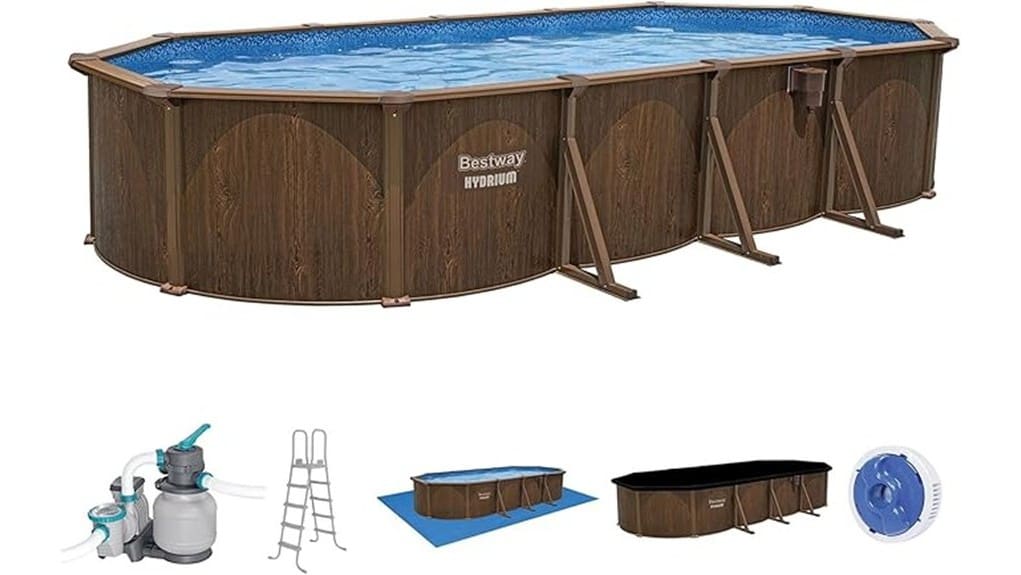
You’ll get a sturdy semi-permanent 24' x 12' x 52" steel-frame pool with galvanized supports, a UV-resistant liner, ladder, ground cloth, cover, ChemConnect dispenser, and a 1,600 GPH sand filter pump. It holds about 7,157 gallons at 90% and needs basic tools, two helpers, and site prep; expect a day or weekend to assemble. Maintenance is straightforward but plan for backwashing and weekly chemical checks. Keep going to see full specs, pros, and alternatives.
Some Key Takeaways
- Spacious 24'×12'×52" steel-frame pool holds 7,157 gallons (90% fill), ideal for families and entertaining.
- Durable galvanized steel framing and sun-resistant liner offer stronger longevity than inflatables.
- Included 1,600 GPH sand filter pump, surface skimmer, and ChemConnect dispenser handle basic filtration and dosing.
- Requires ground leveling, basic tools, two helpers, and electrical hookup for the pump; expect a weekend install.
- Consider higher water/energy costs and optional variable-speed pump upgrade for quieter, efficient operation.
What the Bestway Hydrium 24' X 12' X 52 Actually Includes and Key Specs
Although it’s a semi-permanent backyard pool, the Bestway Hydrium 24' x 12' x 52" arrives as a complete package you can assemble with basic tools. You get included accessories: sand filter pump (1,600 GPH capacity), surface skimmer, ChemConnect dispenser, ladder, ground cloth and pool cover. Specs note external dimensions 288" x 144" x 52" and a water capacity of 7,157 gallons at 90% fill — a clear capacity clarification against an alternate 1,500-gallon listing. Assembly needs only a screwdriver, wrench and knife. You’ll appreciate the straightforward kit and shared confidence in setup and use. Many homeowners pair these pools with robotic vacuums to keep their outdoor spaces pristine.
How the Pool Is Built: Materials, Corrosion Resistance, and Liner Durability
Now that you know what comes in the box and how it goes together, let’s look at how the Hydrium is built. You’ll notice galvanized steel supports and walls emphasizing steel integrity; they’re engineered to resist bending and offer stable, semi-permanent framing. The top platform and connections are corrosion-resistant, so you can expect season-to-season durability if you maintain coatings. Inside, the liner has a sun-resistant coating that improves uv resistance and reduces cracking or discoloration over time. You’ll appreciate the balance of sturdy metal and protected liner — it’s designed for a group that wants reliability and shared backyard enjoyment. This design is aimed at homeowners who enjoy enhancing their outdoor spaces with a durable steel frame pool product.
Installation, Tools, and Realistic Setup Time for a Backyard Oval Pool
When you’re planning the Hydrium’s installation, factor in site prep, a small toolset, and at least two helpers for a smooth, safe setup; experienced DIYers can finish most steps in a day or two, while first-timers should budget a weekend. You’ll level the ground, lay the ground cloth, and confirm site preparation meets local codes. With just a screwdriver, wrench, and knife plus helpers, assembly is straightforward. Check plumbing considerations for the included sand filter and skimmer, and verify electrical requirements for pump power. Plan seasonal storage for the cover and accessories. Expect organized, collaborative work rather than surprises. Consider adding outdoor living accessories to turn your above-ground pool into a backyard oasis.
Performance in Use: Filtration, Water Capacity, Maintenance, and Safety Features
If you want clear, swimmable water without constant tinkering, the Hydrium’s included 1,600‑gallon sand filter pump and surface skimmer handle the day‑to‑day work but you’ll need to size expectations to the pool’s true volume: the oval holds about 7,157 gallons at a 90% fill, so circulation cycles and run time should be planned around that capacity rather than smaller, conflicting specs. You’ll rely on steady water circulation and routine chemical monitoring; the ChemConnect dispenser helps, but you’ll check levels weekly. Maintenance is straightforward: backwash, skim, and inspect steel fittings. Safety features include a ladder and cover; secure access and supervision remain essential. Consider upgrading to a variable speed pump for quieter, more efficient circulation and long‑term energy savings.
Who This Pool Is Best For and Whether It’s Worth the Price (Costs, Alternatives, and Buying Recommendation)
Although the Hydrium’s semi-permanent steel frame and large 7,157-gallon capacity demand more upfront space and commitment than a quick-fill inflatable, it’s a strong value for homeowners who want a durable, backyard centerpiece rather than a seasonal toy. You’ll appreciate its room for family gatherings, sturdy galvanized walls, and included sand filter pump that cut ongoing filter purchases. Expect higher initial water and energy costs during fill and heating, but lower replacement frequency versus inflatables. If you want permanence and community-focused use, buy it; if you need portability or tight budgets, consider smaller steel or premium inflatable alternatives. Best for homeowners who want to elevate outdoor living with a hybrid above-ground option.
Some Questions Answered
Does the Pool Require a Building Permit or HOA Approval?
Possibly — you’ll likely need HOA approval and maybe a building permit. Check local zoning regulations and setback requirements before installing; some municipalities treat semi-permanent pools as structures needing permits, and HOAs often have aesthetic or placement rules. Contact your city planning or building department and review your HOA Covenants, Conditions & Restrictions. Document approvals, follow specified setbacks, and share plans with neighbors so you feel included and avoid fines or enforced removal.
Can the Pool Be Left Filled During Winter in Cold Climates?
You can, but you shouldn't leave it filled without winterizing steps and freeze protection. Drain to below skimmer level, run and winterize the 1,600-gal sand filter per instructions, add antifreeze to lines, install a fitted winter cover, and use a floating air pillow or ice compensators. Check chemical balance before closing and inspect periodically. If heavy freeze is likely, consider draining partially or removing sensitive equipment to avoid damage.
Are Replacement Liners and Parts Readily Available Long-Term?
Yes — you can generally find replacement liners and parts long-term. You’ll want to check replacement availability through Bestway and authorized retailers; manufacturer support is solid for common items like liners, ladders, and pumps. Keep model and ASIN handy for parts lookup. Join owner groups to share sources and tips; they’ll help you locate aftermarket or OEM components and confirm fit, giving you confidence the pool stays serviceable over time.
What Is the Expected Lifespan With Regular Maintenance?
You can expect about 8–15 years with regular maintenance. If you stay on top of water balance, winterizing, and corrosion prevention for the steel frame, the shell and supports last longer; plan on liner replacement every 4–8 years depending on sun exposure and wear. You’ll want to source replacement liners and parts early to stay connected with the community of owners; timely parts and shared tips extend your pool’s life and enjoyment.
Can the Pool Be Integrated With a Saltwater System?
Yes — you can run a saltwater system, but check salt compatibility and monitor electrolysis effects closely. You’ll want a compatible chlorinator rated for above-ground pools and sacrificial anodes or corrosion-resistant fittings to protect galvanized steel. Test metal parts regularly, control salinity, and follow manufacturer guidance. Doing this keeps your pool durable and lets you feel confident and included in the community of saltwater pool owners.