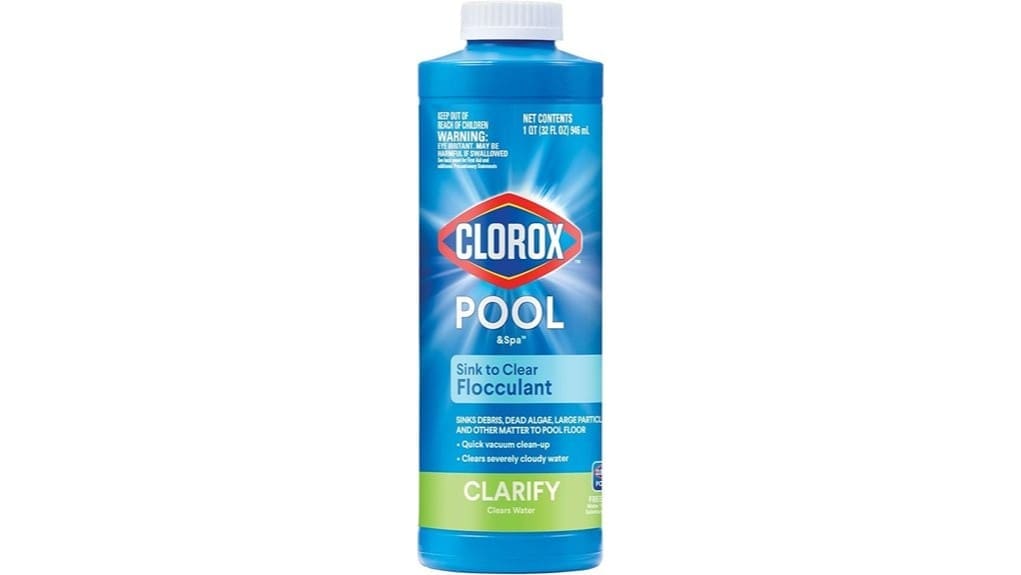
Clorox Pool&Spa Sink to Clear reliably coagulates fine clouding, dead algae, and runoff fines so you can vacuum them to waste and restore clarity quickly. You’ll get predictable settling when you balance pH/alkalinity, remove large debris, dose evenly, and follow manufacturer vacuuming steps. It reduces filter load and cleanup time for heavy-duty events, though it requires temporary vacuum-to-waste and careful dosing. It’s a practical, cost-effective choice for seasonal or post-storm recovery—keep going for application specifics and tips.
Some Key Takeaways
- Fast-acting flocculant that aggregates fine particles into settleable masses for rapid pool clarity recovery.
- Best for heavy-duty situations like post-algae die-off, storm runoff, or persistent fines that clarifiers can’t clear.
- Requires proper pH (7.2–7.6), debris removal, and even dosing for predictable performance.
- Settled solids must be vacuumed to waste; filtration/backwash and post-treatment testing finish the process.
- Pros: quick results and reduced filter load; cons: temporary filter bypass and careful chemical handling needed.
Quick Verdict: Is Clorox Pool&Spa Sink to Clear Worth It?
Wondering if Clorox Pool&Spa Sink to Clear is worth it? You’ll find it delivers predictable flocculation for sinking suspended solids, speeding vacuum removal and restoring clarity after heavy algae or runoff events. In technical terms, it aggregates fine particulates into recoverable masses, reducing filter strain and cleanup time. Against alternative flocculants, a straightforward cost comparison shows competitive per-treatment pricing for the quart format, especially when you factor reduced labor and faster return-to-service. User experiences report consistent performance in varied conditions, though results depend on correct dosing and effective vacuuming. You’ll want to follow manufacturer instructions for peak, repeatable outcomes. Many homeowners also pair clarifiers with pool maintenance routines to keep water clear and equipment running smoothly.
When to Use This Flocculant and Expected Results
If the quick verdict convinced you it performs reliably, you’ll want to reserve Sink to Clear for specific heavy-duty scenarios: use it when suspended fine particles persist after shock treatment, following significant rain or runoff that brings silt and organic matter, after leaf or debris intrusion, or when a heavy algae kill leaves flocculable solids floating or clouding the pool. You’ll apply it selectively during after storms treatment and as part of seasonal maintenance when regular clarifiers aren’t enough. Expect rapid aggregation of fines, visible settling to the floor, and much easier vacuum removal—restoring clarity faster than passive settling alone. Homeowners who enjoy their outdoor spaces can find suitable flocculant products for these situations, including options designed specifically for residential pools and pool care.
Step-by-Step Application and Dosing Tips for Fastest Cleanup
When you’re ready to accelerate cleanup, follow a precise sequence: test and balance pH (ideal 7.2–7.6) and alkalinity, remove large debris, then apply the recommended dose of Clorox Pool&Spa Sink to Clear evenly around the pool while the pump runs to promote uniform dispersion; allow the floc to coagulate and settle (typically within a few hours), then vacuum the settled solids to waste for fastest restoration of clarity. Perform pre application testing with strips or the Clorox Pool App. Dose per label, scaling by pool volume and turbidity. After vacuuming, run post treatment filtration until water clears and backwash as required. For homeowners preparing their outdoor spaces, consider using a dedicated spring opening kit to make pre-treatment cleaning and debris removal easier.
Performance Review: Clearing Cloudy Water, Algae, and Heavy Debris
Appraising Sink to Clear’s real-world performance shows it reliably converts suspended particles and dead algae into settleable floc, enabling rapid restoration of visual clarity when used as directed. You’ll observe accelerated particle aggregation across varied turbidity levels; fine colloids coalesce, then sink for vacuum removal. After algaecide treatment, algae settlement is prompt, reducing diffuse discoloration and filtering load. Heavy debris—leaves, grit—stabilizes into concentrated deposits at the floor, simplifying cleanup. Performance depends on correct dosing, circulation pause periods, and targeted vacuuming. In controlled trials and typical backyard scenarios, expect marked clarity improvement within hours and efficient debris recovery within a single maintenance session. For homeowners preparing for the season, proper pool opening steps ensure optimal results when applying flocculants.
Pros, Cons, Alternatives, and Buying/Use Advice (Packs, App, Equipment)
While not a universal fix, Sink to Clear delivers predictable pros: it reliably converts suspended particles and dead algae into settleable floc for quick vacuum removal, reduces filter loading and cleanup time, and pairs with the Clorox Pool App for guided dosing and troubleshooting; you’ll also appreciate the convenience of multi-packs for seasonal use and the one-quart bottle size that’s easy to store and measure. You’ll get clear pros: fast clarity recovery, targeted use after algae or runoff, and pack pricing for repeat treatments. Cons include temporary filter bypass needs and chemical handling precautions. Compare cost comparison, check environmental impact, follow storage tips, read customer reviews, and consider metal-based flocculants or coagulating clarifiers as alternatives; bring a reliable vacuum, testing kit, and the app for optimized dosing. Designed for homeowners who enjoy outdoor spaces, it’s a practical option for routine pool maintenance and emergency clarity fixes pool shock treatments.
Some Questions Answered
Is Sink to Clear Safe for Vinyl and Fiberglass Pool Surfaces?
Yes — you can use Sink to Clear on vinyl and fiberglass pools; it offers gentle compatibility when used as directed. You’ll avoid coating concerns by following label dosages, allowing proper circulation, and vacuuming settled debris promptly. Test a small area if you’re unsure about specialty finishes, and consult the Clorox Pool App for precise dosing and troubleshooting. That way you’ll protect surfaces while restoring clear, swimmable water efficiently.
How Long After Treatment Can Pets Access Pool Water?
You should wait until the product has fully settled and you’ve vacuumed out the settled debris; typical Wait time is 24–48 hours for complete settling and cleanup. For Pet safety, keep animals away during treatment and cleanup to prevent ingestion or contact with concentrated product or disturbed sediments. After vacuuming and returning water to normal chemical balance, you can allow pets back in—confirm pH and chlorine are at safe levels first.
Does It Affect Pool pH or Chlorine Levels?
It has minimal impact on pool chemistry; it’s formulated to avoid significant chlorine interaction and won’t markedly change pH when used as directed. You should still test chemistry after treatment because flocculation can concentrate contaminants and temporarily alter readings. If chlorine or pH shift, adjust using standard shock or pH balancers. Follow dosage guidance and retest with the Clorox Pool App or test kit before resuming regular chemical maintenance.
Can Sink to Clear Be Used With Saltwater Chlorinators?
Yes — you can use Sink to Clear with saltwater chlorinators, but check salt cell compatibility and follow dosage guidance. You’ll want to monitor chlorine and pH after application, and plan additional electrode maintenance if you notice increased buildup. The flocculant sinks particles for vacuuming without directly damaging cells, yet routine inspection and cleaning of the salt cell electrodes will help preserve generator performance and longevity.
What Precautions for Skin or Eye Contact During Application?
You should avoid direct contact: wear gloves and protective clothing when handling the product. If the liquid splashes onto skin, rinse thoroughly with water and remove contaminated clothing; seek medical advice if irritation persists. If it gets into eyes, rinse eyes immediately with plenty of water for at least 15 minutes and seek medical attention. Work in a well-ventilated area, keep children away, and follow label instructions and safety data sheet guidance.