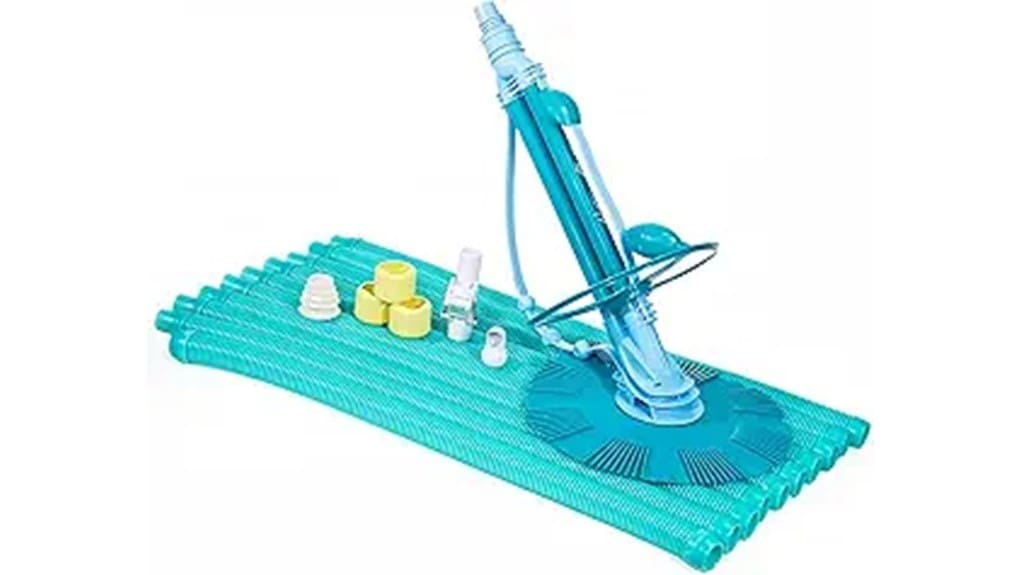
If you want an affordable, no-frills automatic suction cleaner, the XtremepowerUS Premium is worth considering for pools up to about 30 feet with a 1 HP (≈1600 GPH) pump and existing filtration. It reliably scrubs floors and most walls, handles leaves and sand, and connects to a skimmer or dedicated suction line, but it won’t reach stairs or tight corners and needs periodic manual touch-ups. Keep reading for setup, performance checks, and maintenance tips.
Some Key Takeaways
- Affordable suction-side cleaner that reliably picks up leaves, sand, and light sediment when paired with proper filtration.
- Best for pools up to 30 feet and requires a minimum 1 HP (≈1600 GPH) pump for consistent operation.
- Covers floors and most walls on a programmed pattern but often misses stairs, tight corners, and complex perimeters.
- Simple skimmer or dedicated suction-line installation; shut off pump, use adapters, trim hose, and check seals.
- Low-maintenance with washable debris bag and hoses, but expect occasional manual touch-ups for embedded grime.
Who Should Consider the XtremepowerUS Suction Vacuum?
If you want an affordable, low-maintenance way to keep your pool floor and walls clear without adding electricity, the XtremepowerUS suction vacuum is worth considering; it’s best for pools up to 30 feet with an existing filtration system and a pump of at least 1 HP (or 1600 GPH). You’ll appreciate it if you own a small yard pool and want a simple, reliable cleaner that ties into your pump. It suits busy owners who need reduced manual upkeep and an eco-friendly option. It’s not for pools lacking sufficient suction or needing stair cleaning, so check compatibility first. It’s a good match for homeowners who value outdoor living and want to maintain their pool with above-ground pool vacuums that integrate with existing systems.
What the Cleaner Does: Coverage, Performance, and Limits
When you run the XtremepowerUS suction vacuum, it reliably picks up debris from the pool floor and scrubs the walls on a programmed pattern, but it won’t reach stairs or tight corners. You’ll get consistent surface coverage across flat areas and most vertical surfaces, driven by steady suction power that handles sand, leaves, and light sediment. It navigates automatically at recommended speeds, minimizing oversight, though its patterning means occasional missed spots along complex perimeters. You’ll appreciate lower maintenance and predictable results, yet plan to manually touch up stairs, tight corners, and heavy, embedded grime for complete cleanliness. Owners who enjoy their outdoor spaces will find these robotic cleaners a convenient way to maintain pool surfaces with minimal effort and lower maintenance.
Installation and Setup Steps : Connecting to a Skimmer or Dedicated Suction Line
Before you connect the cleaner, shut off the pool pump and verify the system meets the minimum flow requirement (1 HP or about 1600 GPH); this avoids cavitation and guarantees proper operation. You’ll attach the hose set to a skimmer or dedicated suction line. Check hose length so the cleaner reaches all areas without excess slack; trim hoses per the manual. Use the skimmer adapter when connecting to a skimmer—ensure a snug fit and that the skimmer basket is removed or modified as instructed. Recheck seals, restart the pump, and watch for steady suction and proper hose alignment. Maintain your skimmer and fittings regularly to keep your pool skimmer running smoothly all season.
Performance Check: Pump Requirements, Cleaning Speed, and Real-World Results
Start by confirming your pump meets the XtremepowerUS minimum of 1 HP (≈1600 GPH); inadequate flow causes cavitation and inconsistent movement. You’ll notice pump noise varies with model—higher RPMs raise noise and can jitter the cleaner. Measure cleaning speed: expect about 8–12 feet per minute; slower indicates flow issues, faster may skip spots. In real-world runs the vacuum sweeps floors and walls reliably when flow is correct, trapping debris without extra supervision. Track energy draw on your pump; higher draw can offset savings from automated cleaning. Overall performance is solid if you match pump specs and monitor system behavior. Consider regular maintenance and choosing compatible replacement motors to keep your pool pump running smoothly and extend equipment life.
Maintenance, Troubleshooting Tips, and Value-for-Money Verdict
Although the XtremepowerUS cleaner needs only basic upkeep, you should inspect and clean its debris bag, hose connections, and intake ports regularly to keep suction consistent and avoid premature wear. You’ll perform routine hose inspection, check clamps, and follow the manual’s guide for filter replacement intervals. If navigation stalls or suction drops, consult the troubleshooting PDF: clear blockages, confirm the 1 HP/1600 GPH pump requirement, and reattach hoses properly. Overall value is strong if your pool fits specs; it saves time and pairs with existing filtration. You’ll feel confident investing when maintenance stays straightforward and affordable. Upgrade your setup to improve outdoor living with pool pump installation enhancements.
Some Questions Answered
Does the Cleaner Include a Warranty and How Long Is It?
Yes — it includes a warranty; you’ll want to check the warranty details for exact terms. The coverage typically protects manufacturing defects for a limited period, but there are coverage exclusions such as misuse, improper installation, wear-and-tear parts, and damage from insufficient pump power. You’ll feel supported if you follow the manual and maintenance steps, and you should confirm the specific warranty length and exclusions in the included technical specification PDF.
Can It Run While a Heater or Salt System Is Active?
Yes — you can run it while your heater or salt system is active. You’ll want to confirm heater safety by ensuring normal flow and temperature limits; the cleaner uses standard suction and won’t interfere if plumbing and pump meet specs. For salt compatibility, it’s fine with salt-chlorination systems, but rinse and inspect parts periodically to avoid accelerated wear from saline conditions. Overall, operate within manufacturer pump and system recommendations for best results.
Are Replacement Hoses and Parts Sold Separately?
Yes — replacement hoses and spare parts are sold separately. You can buy individual replacement hoses to match the included set or order spare parts like wheels, diaphragms, and fittings. You’ll want to confirm compatibility with your model and pool size before purchasing. You’ll find options through the manufacturer, authorized retailers, or third-party suppliers; compare prices and warranty coverage so you’re confident the parts will keep your cleaner running reliably.
Is It Compatible With Variable-Speed Pumps?
Yes — you can use it with variable-speed pumps, but you’ll need to make sure the pump delivers the cleaner’s required flow. Check variable flow compatibility and use pump speed tuning to achieve the recommended 8–12 feet per minute movement and minimum 1600 GPH (or 1 HP equivalent). You’ll feel confident if you test speeds and adjust until the cleaner moves steadily; consult the manual for specific tuning and troubleshooting steps.
What Materials Is the Cleaner’s Body Constructed From?
The cleaner’s body uses stainless steel components and impact resistant plastic for durability. You’ll find metal fittings and reinforcement where strength matters, while the main shell and bumpers are molded from tough, impact resistant plastic to resist scrapes and UV. That combination keeps the unit sturdy yet lightweight. You’ll feel confident this design balances corrosion resistance and shock protection, though inspect seals and joints periodically for wear.