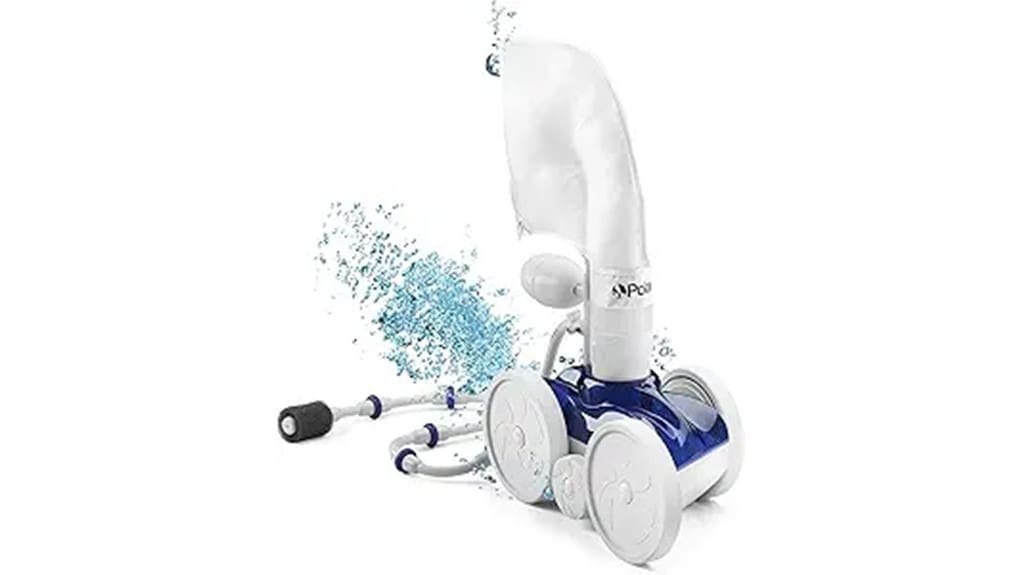
You’ll find the Polaris Vac‑Sweep 280 is a powerful pressure‑side cleaner that’ll scrub floors, climb walls, and reach corners thanks to double Venturi jets and a booster pump. Its 2.25″ inlet scoops leaves and pebbles into a single‑chamber bag while a predictable brush pattern prevents missed strips. Setup needs a 31′ hose and pump priming, and maintenance focuses on the bag and hose condition. If you want details on installation, troubleshooting, and alternatives, keep going.
Some Key Takeaways
- Double Venturi jets plus booster-pump power provide strong suction and maneuverability for scrubbing floors, climbing walls, and accessing corners.
- A 2.25-inch inlet handles large debris like leaves and pebbles, reducing clogs and lowering manual pre-cleaning.
- Predictable brush pattern ensures even debris pickup and minimizes missed strips across vinyl, tile, and gunite.
- Performance depends on proper booster pump setup and hose condition; kinks, leaks, or clogged bags reduce effectiveness.
- Best for in-ground pools needing fast heavy-debris removal; consider suction or robotic alternatives for finer filtration or autonomy.
Performance and Cleaning Results: How the Vac‑Sweep 280 Cleans Floors, Walls, and Corners
Watch as the Vac‑Sweep 280 methodically sweeps your pool: its double Venturi jets and booster-pump power give it enough suction and propulsion to scrub floors, climb walls, and work into corners within a typical 3-hour cycle. You’ll notice a predictable brush pattern that prevents missed strips and promotes even debris pickup. Suction consistency stays strong across surfaces, so you’re not chasing intermittent clogging. Wall scrubbing is confident on vinyl, tile, and gunite, and corner access is better than many pressure-side units, reaching tight junctions. You’ll feel assured the cleaner earns its place on your pool team. Homeowners who enjoy their outdoor spaces often pair robotic and pressure-side cleaners for complementary cleaning and comprehensive pool maintenance.
Key Specs and What They Mean (Double Venturi, 2.25 Inlet, 31′ Hose, Filter Bag)
After seeing how the Vac‑Sweep 280 moves across floors, walls, and corners, it’s worth exploring the performance specifications that drive that effectiveness. You get a double venturi system that boosts suction and maneuverability without overworking your pump—more consistent cleaning paths and fewer stalls. The 2.25-inch inlet diameter handles larger debris like leaves and pebbles, so you won’t chase clogs as often. The included 31′ feed hose matches typical in‑ground layouts for full coverage. Its single‑chamber filter bag captures both fine and bulky debris, keeping the pool system cleaner and giving you confidence in reliable, efficient operation. This makes it a strong option for homeowners looking to upgrade their pump setup for better outdoor living.
Setup, Installation, and Typical Maintenance You Should Plan For
Getting the Vac‑Sweep 280 up and running is straightforward, but you should follow a few precise steps to guarantee peak performance and avoid common problems. Attach the 31′ feed hose securely to the cleaner and booster pump, prime the pump, then set the cleaner into the pool to confirm smooth movement and correct jet balance. Inspect the filter bag and empty after heavy sessions. Schedule hose maintenance: check for cracks, kinks, and tight couplings, replacing sections as needed. For seasonal storage, dry the unit and bag, coil the hose loosely, and store indoors away from UV and freezing temperatures to prolong life. Also, keep the pump basket working smoothly by cleaning it regularly to ensure proper flow and suction.
Real-World Pros and Cons: Debris Handling, Surfaces, Run Time, and Common Issues
While the Vac‑Sweep 280 excels at scooping large debris and scrubbing varied surfaces thanks to its 2.25‑inch inlet and double Venturi jets, you should expect tradeoffs: it clears leaves, acorns, and pebbles quickly and treats vinyl, fiberglass, gunite, pebble, and tile without damage, but its performance depends on proper booster pump setup and hose condition. In practice you’ll appreciate fast coverage and fewer trips to the skimmer, yet monitor for leaf clogging in the bag, hose kink that stalls movement, gradual brush wear reducing scrub effectiveness, and occasional suction loss from pump or hose leaks. Consider pairing the cleaner with pool vacuum accessories to get the most consistent results.
Is It Worth Buying? Price, Who It’s Best For, and Alternatives to Consider
If you want a fast, heavy‑debris solution for an in‑ground pool and don’t mind installing a separate booster pump, the Polaris Vac‑Sweep 280 is worth serious consideration—it combines a large 2.25″ inlet and double Venturi jets to pick up leaves, acorns, and pebbles quickly while scrubbing floors and walls. For cost-conscious buyers, weigh price comparison against performance: upfront cost plus booster pump investment often beats frequent manual cleanings or filter strain. It suits homeowners with trees, busy schedules, or community-minded pool owners seeking reliable coverage. Alternatives include suction cleaners for simplicity and robotic models for finer filtration and autonomy. Homeowners looking to reduce operating costs may also consider upgrading to energy-efficient pool pumps to complement a pressure-side cleaner.
Some Questions Answered
Does It Work With Variable-Speed Booster Pumps?
Yes — you can use a variable-speed booster pump, but you’ll need to tune it. For good variable speed compatibility, set pump performance tuning so the Vac-Sweep 280 gets sufficient pressure for its Double Venturi jets; too low and cleaning falters, too high wastes energy. Start mid-range, observe sweep patterns and debris pickup, then adjust speeds to balance cleaning time, noise, and energy. You’ll join others fine-tuning for best results.
Can I Use It in a Pool With Steps and Built-In Seats?
Yes — you can use it in pools with steps and built-in seats. You’ll get reliable step navigation and thorough seat safety when the cleaner sweeps and scrubs those surfaces. Its large inlet and flexible movement handle debris around edges, while the onboard bag prevents clogging of your main filter. You’ll want to watch initial runs to confirm hose placement and adjust booster pump speed so it navigates steps and seats smoothly.
Is the Hose Length Adjustable or Extendable?
Yes — you can extend the hose by adding hose segments to reach your pool’s far corners. You’ll secure extra length to the supplied 31 feet, but remember added length can slightly affect performance, so test for proper movement. For tidy storage, you’ll want reel storage to prevent kinks and tangles; a reel also helps you adjust length quickly and keeps your cleaning routine feeling reliable and shared with other caretakers.
Are Replacement Filter Bags Readily Available?
Yes — replacement availability is strong; you’ll find genuine and aftermarket filter bags easily through pool stores and online retailers. You’ll want to check aftermarket compatibility to make certain fit and durability, since some third-party bags vary in material and zipper/seal quality. You’ll feel supported by community reviews and vendor return policies when choosing. Keep an extra bag on hand so you’re never caught without a fresh, functioning debris collector.
Does It Come With a Warranty and How Long Is It?
Yes — it includes a manufacturer warranty; you’ll get limited warranty coverage (typically one year) against defects. You can expect clear terms on parts and workmanship, and Polaris supports repairs through authorized service centers if needed. You’ll want to register your cleaner and keep proof of purchase to streamline claims. That way you’re protected, feel confident, and can access local service centers for prompt, community-oriented support.