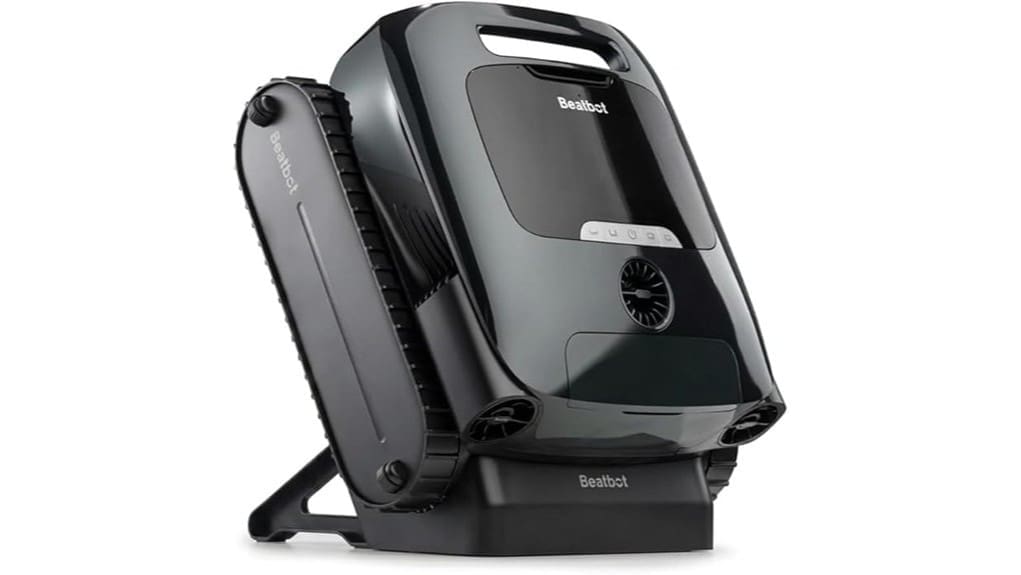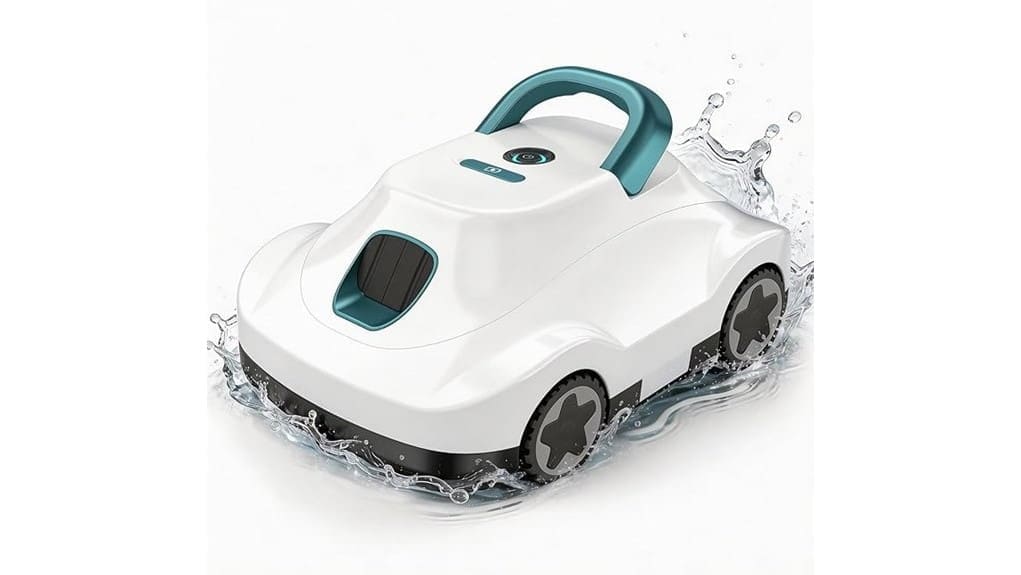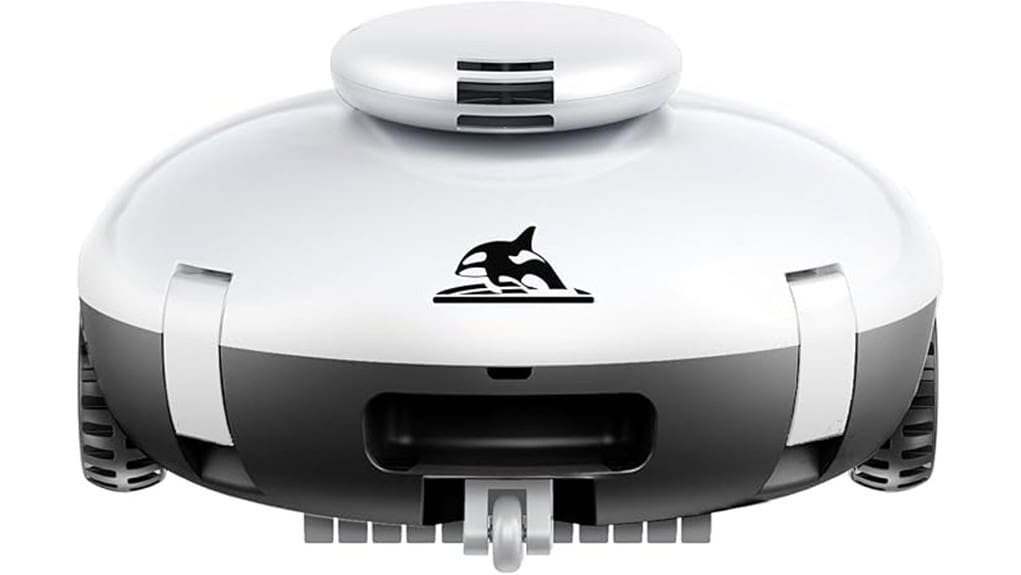
If you’ve got a flat-bottom above-ground pool, this cordless robotic vacuum makes light work of leaves, dirt and sand with strong suction (up to 1200 GPH) and about 140 minutes per charge from a 7500 mAh pack. It’s quiet, easy to set up and predictable on flat floors, but won’t handle deep slopes, steps or stubborn algae. You’ll want to manage battery health and routine filter care—keep going for full setup, operation and upkeep tips.
Some Key Takeaways
- Cordless robotic vacuums excel on flat-bottom, above-ground pools up to ~860 sq ft for routine debris like leaves, dirt, and sand.
- Expect strong suction (up to 1200 GPH) and quiet operation, delivering predictable coverage and visibly cleaner floors between deep cleans.
- Battery life is about 140 minutes from a 7500 mAh pack, with ~3-hour recharge and gradual capacity loss over many cycles.
- Not suitable for steep slopes, steps, heavy-duty scrubbing, or stubborn algae — chemical/manual treatment is required first.
- Maintain intake, brushes, seals, and filters regularly; empty debris bin after each run and store battery cool and disconnected.
Which Pools and Messes Is a Cordless Robotic Pool Vacuum Actually Good For?
When you’re choosing a cordless robotic pool vacuum, think flat-bottom, modest-size pools and routine debris rather than heavy-duty cleaning: this unit excels on flat-bottom above-ground pools up to about 860 sq. ft., scooping leaves, dirt, sand and small debris with its dual high-efficiency motors and up to 1200 GPH suction. You’ll find it ideal if you want low-fuss upkeep and community pride around a shared pool. Don’t expect strong in ground suitability for deep slopes or steps, and don’t rely on it for stubborn algae removal—treat chemical or manual scrub needs separately before running the robot. Many homeowners trust robotic vacuums for routine maintenance to keep pools looking presentable between deep cleans.
How This Model Performs: Suction, Run Time, Noise, and Real Cleaning Results
Although not built for heavy-duty scrubbing, this cordless robotic vacuum delivers impressively direct results: its dual high-efficiency motors generate up to 1200 GPH suction that consistently lifts leaves, sand, and everyday debris from flat-bottom pools, and the 7500 mAh battery lets you run productive cleaning cycles of up to about 140 minutes on a charge. You’ll notice strong suction efficiency on flat surfaces, predictable cleaning patterns that avoid repeats, and quiet operation—noise levels stay low so you’re not disturbed. In real world runtime tests it completes large passes without surprise stops, leaving floors visibly cleaner and you more confident. This model is a great choice for homeowners who want to keep their outdoor spaces clean with manual vacuum knowledge informing proper use and maintenance.
Battery, Charging, and Runtime Management You Need to Know
You’ve seen how well the motors and suction clean flat-bottom pools, so now let’s look at what keeps the robot running through those long cycles: the battery, charging behavior, and how to manage runtime. You’ll want to track battery health over time—expect gradual capacity loss after many charging cycles. With a 7,500 mAh pack and up to 140 minutes runtime, plan sessions accordingly and use quick top ups between heavy cleans. Fast recharge (~3 hours) gets you back in the water. For seasonal care, follow storage charging recommendations to preserve cells and maintain reliable starts every swim season. Consider pairing maintenance with outdoor thermometer use to keep overall pool conditions and equipment health in check.
Setup, Operation, and Simple Maintenance That Keep It Working Longer
Start by placing the robot on a clean, dry surface and inspect the intake, brushes, and charging port for debris or damage before any use. You’ll fully charge the battery and fit the silicone plug cover before submersion. Use one-button start, monitor the LED, and let it self-park when done or low on power. Empty and rinse the debris bin after each run; schedule filter replacement per the manual and keep spare cartridges handy. Check seals and brushes weekly, dry components before storage. Follow simple storage tips: cool, shaded, dry area with the charger disconnected to extend life and keep it ready. These routine steps help ensure effortless pool cleaning and more relaxing outdoor living.
Who Should Buy This Cordless Robotic Vacuum : Pros, Cons, and Alternatives
If you want hassle-free floor cleaning for a flat-bottom above-ground pool and value cordless convenience, this robotic vacuum is a strong match—its dual high-efficiency motors and 1200 GPH suction handle leaves, sand, and dirt reliably while the 140-minute runtime covers most sessions without tethering you to a power outlet. You should buy it if you’re a budget buyer wanting solid debris removal without complex setup, or a pet owner who needs frequent, quiet cleaning. Cons: limited to flat bottoms and occasional filter upkeep. Alternatives include corded robotic vacs for larger pools or handheld pumps for spot cleaning. Many homeowners who enjoy their outdoor spaces prefer these tools for maintaining pool cleanliness with minimal effort, especially when choosing models designed for above-ground pools.
Some Questions Answered
Does It Come With a Warranty and What Does It Cover?
Yes — you get a warranty. You’ll receive a warranty duration typically covering 12 months; check your retailer for exact terms. Coverage details include defects in materials and workmanship for motors, battery faults within the period, and electronic failures under normal use. You’re expected to follow usage and maintenance notes for validity. If issues arise, contact support for repair or replacement so you won’t feel stranded and can keep swimming confidently.
Can It Clean Pool Walls and Steps as Well as the Floor?
No — it’s designed for flat-bottom floors and won’t reliably climb walls or steps. You’ll get excellent edge scrubbing along the floor perimeter and decent corner reach for debris, but don’t expect vertical cleaning. Charge fully, park it at the edge when done, and use a manual brush or dedicated wall-cleaning tool for steps and walls. You’ll still feel confident knowing the floor gets thorough, quiet suction and efficient debris removal.
Are Replacement Brushes and Filters Available Separately?
Yes — you can get replacement parts like brushes and filters separately. You’ll find manufacturer replacement parts and some aftermarket compatibility options, but stick with OEM when possible for best fit and performance. You’ll want to check part numbers, dimensions, and seller reviews before buying. If you join user groups or forums, you’ll get trusted sources and installation tips so you won’t feel alone troubleshooting or maintaining your cleaner.
Can the Vacuum Be Used in Saltwater or Chlorinated Pools?
Yes — you can use it in saltwater and chlorinated pools, but you should check saltwater compatibility and chemical resistance before regular use. You’ll enjoy reliable operation thanks to corrosion-resistant materials and sealed electronics, yet rinse and inspect the unit after use to prolong life. If you want to belong to the community of careful owners, fully charge, cover the charging plug, and follow maintenance tips to keep performance strong.
How Long Is the Expected Overall Battery Lifespan?
You can expect the battery to last around 2–3 years with regular use, depending on cycle count and care. Battery degradation will gradually reduce runtime over hundreds of charge cycles; with good habits (full charges, avoiding deep discharges, and storing charged between seasons) you’ll stay near the 140-minute spec for longer. Treat it like part of the family gear — simple maintenance will keep it reliable and feeling like yours season after season.choosing a cordless robotic pool vacuum, think flat-bottom, modest-size pools and routine debris rather than heavy-duty cleaning: this unit excels on flat-bottom above-ground pools up to about 860 sq. mAh pack. It’s quiet, easy to set up and predictable on flat floors, but won’t handle deep slopes, steps or stubborn algae. You’ll want to manage battery health and routine filter care—keep going for full setup, operation and upkeep tips.
Some Key Takeaways
- Cordless robotic vacuums excel on flat-bottom, above-ground pools up to ~860 sq ft for routine debris like leaves, dirt, and sand.
- Expect strong suction (up to 1200 GPH) and quiet operation, delivering predictable coverage and visibly cleaner floors between deep cleans.
- Battery life is about 140 minutes from a 7500 mAh pack, with ~3-hour recharge and gradual capacity loss over many cycles.
- Not suitable for steep slopes, steps, heavy-duty scrubbing, or stubborn algae — chemical/manual treatment is required first.
- Maintain intake, brushes, seals, and filters regularly; empty debris bin after each run and store battery cool and disconnected.
Which Pools and Messes Is a Cordless Robotic Pool Vacuum Actually Good For?
When you’re choosing a cordless robotic pool vacuum, think flat-bottom, modest-size pools and routine debris rather than heavy-duty cleaning: this unit excels on flat-bottom above-ground pools up to about 860 sq. ft., scooping leaves, dirt, sand and small debris with its dual high-efficiency motors and up to 1200 GPH suction. You’ll find it ideal if you want low-fuss upkeep and community pride around a shared pool. Don’t expect strong in ground suitability for deep slopes or steps, and don’t rely on it for stubborn algae removal—treat chemical or manual scrub needs separately before running the robot. Many homeowners trust robotic vacuums for routine maintenance to keep pools looking presentable between deep cleans.
How This Model Performs: Suction, Run Time, Noise, and Real Cleaning Results
Although not built for heavy-duty scrubbing, this cordless robotic vacuum delivers impressively direct results: its dual high-efficiency motors generate up to 1200 GPH suction that consistently lifts leaves, sand, and everyday debris from flat-bottom pools, and the 7500 mAh battery lets you run productive cleaning cycles of up to about 140 minutes on a charge. You’ll notice strong suction efficiency on flat surfaces, predictable cleaning patterns that avoid repeats, and quiet operation—noise levels stay low so you’re not disturbed. In real world runtime tests it completes large passes without surprise stops, leaving floors visibly cleaner and you more confident. This model is a great choice for homeowners who want to keep their outdoor spaces clean with manual vacuum knowledge informing proper use and maintenance.
Battery, Charging, and Runtime Management You Need to Know
You’ve seen how well the motors and suction clean flat-bottom pools, so now let’s look at what keeps the robot running through those long cycles: the battery, charging behavior, and how to manage runtime. You’ll want to track battery health over time—expect gradual capacity loss after many charging cycles. With a 7,500 mAh pack and up to 140 minutes runtime, plan sessions accordingly and use quick top ups between heavy cleans. Fast recharge (~3 hours) gets you back in the water. For seasonal care, follow storage charging recommendations to preserve cells and maintain reliable starts every swim season. Consider pairing maintenance with outdoor thermometer use to keep overall pool conditions and equipment health in check.
Setup, Operation, and Simple Maintenance That Keep It Working Longer
Start by placing the robot on a clean, dry surface and inspect the intake, brushes, and charging port for debris or damage before any use. You’ll fully charge the battery and fit the silicone plug cover before submersion. Use one-button start, monitor the LED, and let it self-park when done or low on power. Empty and rinse the debris bin after each run; schedule filter replacement per the manual and keep spare cartridges handy. Check seals and brushes weekly, dry components before storage. Follow simple storage tips: cool, shaded, dry area with the charger disconnected to extend life and keep it ready. These routine steps help ensure effortless pool cleaning and more relaxing outdoor living.
Who Should Buy This Cordless Robotic Vacuum : Pros, Cons, and Alternatives
If you want hassle-free floor cleaning for a flat-bottom above-ground pool and value cordless convenience, this robotic vacuum is a strong match—its dual high-efficiency motors and 1200 GPH suction handle leaves, sand, and dirt reliably while the 140-minute runtime covers most sessions without tethering you to a power outlet. You should buy it if you’re a budget buyer wanting solid debris removal without complex setup, or a pet owner who needs frequent, quiet cleaning. Cons: limited to flat bottoms and occasional filter upkeep. Alternatives include corded robotic vacs for larger pools or handheld pumps for spot cleaning. Many homeowners who enjoy their outdoor spaces prefer these tools for maintaining pool cleanliness with minimal effort, especially when choosing models designed for above-ground pools.
Some Questions Answered
Does It Come With a Warranty and What Does It Cover?
Yes — you get a warranty. You’ll receive a warranty duration typically covering 12 months; check your retailer for exact terms. Coverage details include defects in materials and workmanship for motors, battery faults within the period, and electronic failures under normal use. You’re expected to follow usage and maintenance notes for validity. If issues arise, contact support for repair or replacement so you won’t feel stranded and can keep swimming confidently.
Can It Clean Pool Walls and Steps as Well as the Floor?
No — it’s designed for flat-bottom floors and won’t reliably climb walls or steps. You’ll get excellent edge scrubbing along the floor perimeter and decent corner reach for debris, but don’t expect vertical cleaning. Charge fully, park it at the edge when done, and use a manual brush or dedicated wall-cleaning tool for steps and walls. You’ll still feel confident knowing the floor gets thorough, quiet suction and efficient debris removal.
Are Replacement Brushes and Filters Available Separately?
Yes — you can get replacement parts like brushes and filters separately. You’ll find manufacturer replacement parts and some aftermarket compatibility options, but stick with OEM when possible for best fit and performance. You’ll want to check part numbers, dimensions, and seller reviews before buying. If you join user groups or forums, you’ll get trusted sources and installation tips so you won’t feel alone troubleshooting or maintaining your cleaner.
Can the Vacuum Be Used in Saltwater or Chlorinated Pools?
Yes — you can use it in saltwater and chlorinated pools, but you should check saltwater compatibility and chemical resistance before regular use. You’ll enjoy reliable operation thanks to corrosion-resistant materials and sealed electronics, yet rinse and inspect the unit after use to prolong life. If you want to belong to the community of careful owners, fully charge, cover the charging plug, and follow maintenance tips to keep performance strong.
How Long Is the Expected Overall Battery Lifespan?
You can expect the battery to last around 2–3 years with regular use, depending on cycle count and care. Battery degradation will gradually reduce runtime over hundreds of charge cycles; with good habits (full charges, avoiding deep discharges, and storing charged between seasons) you’ll stay near the 140-minute spec for longer. Treat it like part of the family gear — simple maintenance will keep it reliable and feeling like yours season after season.