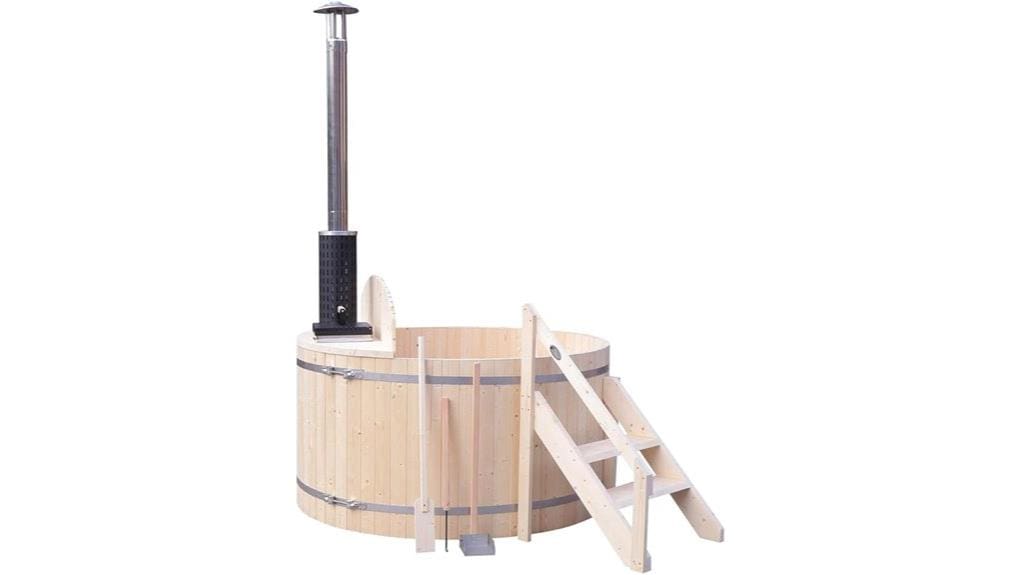
You’ll get a rustic, off-grid soak with the Aleko wood hot tub and ice bath that fits 4–5 people and uses a stainless-steel wood stove so you won’t need electricity. You’ll build and tend the fire, stir to manage temperature, and accept less precision than electric spas. Pine siding will weather and stainless parts cut corrosion risk, but you’ll need wood, water care, and clearance planning. Keep going to see specifics on setup, performance, and upkeep.
Some Key Takeaways
- Heats without electricity via internal wood stove, making it ideal for off-grid soaking and rustic setups.
- 422-gallon pine tub fits 4–5 people; suitable for small groups and communal use.
- Temperature control is manual—feed the stove and stir water; less precise than electric systems.
- Stainless-steel heater parts resist corrosion, but pine boards can darken, shrink, and need upkeep.
- Ongoing costs include firewood, water changes, chemistry supplies, and possible permits for outdoor wood heaters.
Quick Verdict : Who Should Buy the Aleko Wood Hot Tub and Why
If you want a versatile, off-grid soak that doubles as a cold-plunge, the Aleko wood hot tub is a solid pick: it heats without electricity, fits 4–5 people, and gives you simple, durable wood-fired performance with corrosion-resistant components. You’ll love its rustic spa aesthetics if you want a natural backyard focal point that welcomes friends. It’s best for small groups, outdoor enthusiasts, and those valuing low-tech maintenance—user demographics that favor longevity over bells and whistles. Be realistic about installation logistics (level pad, clearance, wood supply). Consider resale value: niche buyers will appreciate authenticity, not high-tech features. Create a relaxing backyard retreat with cozy pool cabanas to complement the tub and enhance outdoor living.
How the Wood-Fired Heater and Setup Work (No Electricity Required)
You’ve got a great off-grid soak with the Aleko, but knowing how its wood-fired heater works will tell you what to expect for setup, operation, and maintenance. You position the stainless steel stove inside the pine tub, build a contained fire, and rely on basic wood fired mechanics to convert heat to the surrounding water. No pumps or electricity—heat rises, warms water, and the tub’s design promotes natural water circulation dynamics; hotter water rises to the surface while cooler water draws toward the heater. You’ll prep fuel, clear chimney paths, and periodically stir with the included paddle to keep heat even. This setup makes the Aleko a fitting choice for homeowners looking to elevate their yard with a stylish hybrid above-ground pool alternative.
Performance in Hot-Tub and Cold-Plunge Modes (Heating Time, Temperature Control, Ice-Bath Use)
Expect the Aleko to perform reliably as both a hot tub and a cold plunge, but know what trade-offs come with a wood-fired, non-powered system. You’ll usually reach soakable warmth within a couple hours; wind, ambient temperature, and fuel quality affect the heat-up and cause noticeable temperature variability. You control heat by feeding the stove and stirring; it’s tactile and communal, but less precise than electric systems. For ice-bath sessions, plan for significant ice melt rate—stirring speeds melt and lowers cold duration. Overall, you get robust, low-tech control that rewards attention and shared care rather than automated consistency. Consider pairing this setup with heat pump pool heaters to extend the usable season and reduce reliance on wood alone.
Build Quality, Durability, and Safety Features (Pine Tub, Stainless-Steel Heater, Covered Stove)
While the Aleko pairs traditional pine construction with stainless-steel fittings, you’ll want to weigh craftsmanship and material limits against its low-tech appeal. You’ll appreciate solid joinery, but monitor pine aging—exposure and repeated heating cycles can darken and shrink boards over years. Stainless components resist rust, yet check chimney corrosion at seams and fasteners periodically. Heater insulation performs well but isn’t foolproof; maintain clearances and avoid stored combustibles nearby. The covered stove reduces contact risk, though you should enforce a firm safety clearance and educate guests. Overall, it feels communal and robust if you inspect and steward it regularly. Consider pairing your setup with stylish pool pump covers to elevate and protect the surrounding outdoor space.
Real-World Costs, Maintenance, and Buying Considerations (Capacity, Accessories, Installation, Pros vs Cons)
Because capacity and low-tech construction drive most of the ongoing costs, factor those into your purchase decision up front: a 422-gallon, 4–5 person pine tub keeps initial hardware simple but raises recurring expenses for water changes, wood, and seasonal maintenance. You’ll budget for ice, firewood, and occasional sealant; plan seasonal storage to prevent freeze damage. Check local installation permits—some areas restrict outdoor wood heaters. You’ll manage water chemistry manually, lacking filtration systems, so chemistry costs and testing matter. Accessories add comfort but affect long term resale. Weigh hands-on upkeep and rustic appeal versus convenience of powered spas before buying. Above-ground pool heater owners often use wood-fired heaters with similar heat retention considerations.
Some Questions Answered
Can the Tub Be Used Year-Round in Freezing Climates?
Yes — you can use it year-round in freezing climates, but you’ll need winter maintenance and active freeze protection. You’ll keep the cover on, monitor water levels, stoke the wood stove regularly, and drain or insulate exposed plumbing when idle. You’ll also periodically check seals and the stainless heater for corrosion. Do this together with fellow users, and you’ll enjoy safe, reliable hot or cold therapy through harsh winters.
How Long Does the Wood Heater Smoke During Startup?
You’ll see initial smoking and a startup odor for about 10–30 minutes while the wood ignites and the stove reaches proper draft. Use dry, seasoned wood and a fully open chimney to shorten smoke time. You’ll still get occasional puffing as you add wood, so stay nearby and expect brief smoke bursts. Friends who share the tub will appreciate that proper technique cuts smell and keeps evenings pleasant.
Is Assembly Required and How Long Does It Take?
Yes — some assembly’s required; you’ll bolt the pine staves, fit the stainless-steel heater and chimney, add the cover and steps. Expect 3–6 hours with two people if you follow instructions; allow more for DIY upgrades or tweaks. Check Delivery logistics beforehand for crate placement and heavy-item handling so you’re prepared. You’ll save money doing it together, and you’ll feel part of a hands-on community when it’s done.
Are Replacement Parts and Wood Stove Components Available?
Yes — you can get replacement parts and stove components for your tub. You’ll find common items like gaskets, bolts, chimney sections, and replacement stove grates available through the manufacturer or authorized dealers. You’ll want to confirm fit and warranty coverage before buying. If you’re part of a user community, share tips and part sources; that collective knowledge helps everyone maintain and safely enjoy their wood-fired setup.
Can the Tub Be Relocated Once Filled With Water?
No — you shouldn’t expect portable relocation once the tub’s filled. Moving a full 422-gallon pine tub risks damaging structural integrity, stressing joints, and straining the stainless-steel heater and chimney. You can drain it and relocate the emptied unit with care, enlisting friends and proper equipment. That approach keeps your community’s shared gear safe and usable, preserving durability and avoiding unnecessary repairs or safety hazards.