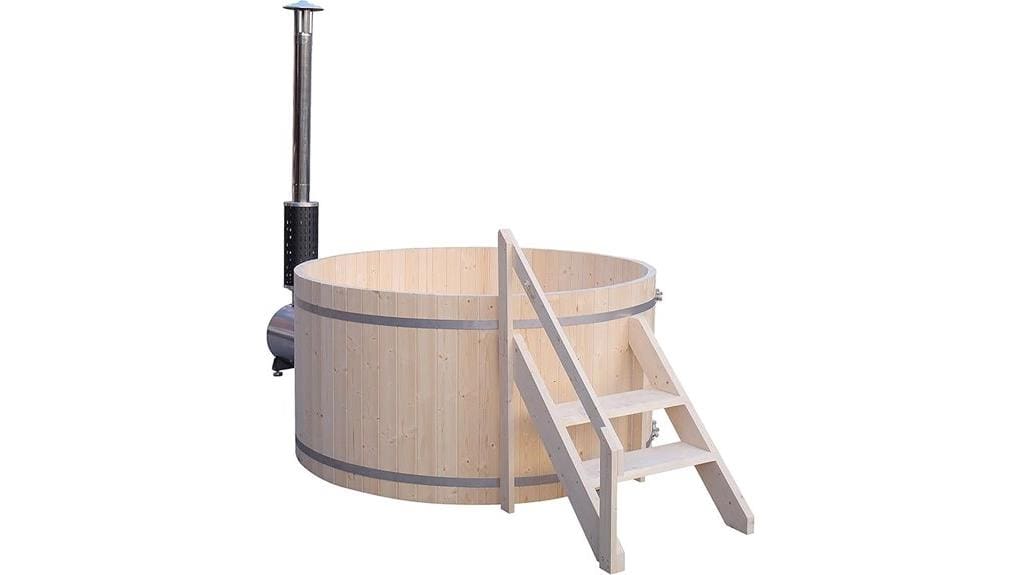
You’ll get a rustic, off‑grid wood‑fired tub that seats 4–5 and holds 422 gallons, heated by a stainless‑steel external stove with chimney for steady draft. Expect about two hours to warm under moderate conditions, with wind, temperature, and load affecting times. Upright benches favor social soaking but limit leg stretch; stirring guarantees even heat or chill. It’s lower cost upfront but needs wood, upkeep, and modest water care—keep going to see detailed pros, cons, and setup notes. One of the most significant aleko wood hot tub benefits is its eco-friendly operation, making it a great choice for those looking to minimize their carbon footprint. Additionally, the natural warmth of the wood creates a unique and inviting atmosphere, perfect for relaxation and social gatherings. With proper maintenance, this type of hot tub can provide years of enjoyment while enhancing your outdoor space.
Some Key Takeaways
- Holds 422 gallons and seats 4–5, offering communal soaking with upright bench seating.
- External stainless-steel wood stove heats by conduction/convection; typical warm-up ~2 hours for full capacity.
- No electricity required, but manual fueling and slower heat control are trade-offs for off-grid use.
- Requires regular maintenance: inspect seals, modest chemical routine, weekly pH testing, and pine care.
- Best for buyers seeking rustic, low-tech soaking; consider wood costs, seasonal winterization, and stirring for even heat.
ALEKO PEWSHTUB at a Glance: Specs, Capacity, and Materials
Although it’s designed for rustic simplicity, the ALEKO PEWSHTUB offers clear, measurable specs: a circular pine tub that holds 422 gallons, seats 4–5 people, and measures 70.9 inches in diameter with a 35.4‑inch sidewall. You’ll note pine aesthetics combined with beige durability in its finish, and stainless steel for the external wood-burning heater and chimney. At 607 pounds and including an insulated cover, steps, and paddle, it’s purpose-built for shared experiences. No electricity is required; capacity and dimensions are straightforward, letting you evaluate fit, transport, and placement with objective criteria before committing. Consider pairing the tub with a pool equipment enclosure to keep the heater protected and maintain yard aesthetics.
How the Wood-Fired Heating Works and Real-World Warm-Up Times
When you light the ALEKO PEWSHTUB’s external wood stove, heat transfers through the stainless-steel heater into the tub water via conduction and convection, with the chimney drawing air to sustain combustion. You’ll monitor burn rate by adjusting fuel size and airflow; smaller logs mean steadier, more controllable heat output. Heat circulation relies on natural convection within the tub and the heater’s placement, so stirring helps homogenize temperature. Typical warm-up time sits around two hours for 422 gallons under moderate conditions; wind, ambient temperature, and load affect results. Expect hands-on temperature control rather than automated precision. Keep your outdoor pool warm with heating mats to extend the season and maintain comfortable temperatures around your outdoor spaces.
Comfort, Usability, and Performance: Seating, Stirring, and Cold-Plunge Use
In evaluating comfort and usability, the ALEKO PEWSHTUB seats four to five people in a circular pine shell with 35.4-inch sidewalls, offering upright bench-style seating that favors social soaking but may limit leg-stretching for taller users. You’ll find ergonomic seating adequate for group use though lacking deep recline. The included wooden paddle supports an effective stirring technique to equalize heat; you’ll stir periodically during the roughly two-hour warm-up for consistent temperature control. For cold-plunge sessions, ice management is straightforward—add ice and monitor temperature—but you’ll need to plan volumes and stirring to maintain even chill across the tub. The design complements outdoor living areas and pairs well with pool stairs for seamless backyard integration.
Setup, Accessories, Maintenance, and Seasonal Care Requirements
Having covered seating and temperature control, you’ll find setup and upkeep straightforward but requiring regular attention to keep the pine shell and stainless-steel stove performing well. You’ll assemble the tub with included steps, paddle, and insulated cover; plan two people and basic tools. Accessories are minimal—cover, paddle, steps—so inspect fittings and chimney seals regularly. For water quality, follow a modest chemical maintenance routine to prevent algae and scale; test pH weekly. In colder months practice seasonal winterization: drain or insulate external stove, clear ash, and store cover securely. Routine inspections preserve shared enjoyment and longevity. For homeowners who enjoy their outdoor spaces, consider pool winter protection practices to help safeguard surrounding areas and accessories during the cold months.
Is It Worth Buying? Cost, Pros/Cons, and Who This Tub Is Best For
Although it demands more hands-on care and a willing outdoor setup, the ALEKO PEWSHTUB delivers a low-tech, off-grid soaking option that can be cost-effective for buyers who value simplicity and self-sufficiency. You’ll pay less upfront than many electric spas, but factor in wood, maintenance, and seasonal care when estimating long term costs. Pros: off-grid heating, dual hot/cold use, sturdy materials, social capacity for 4–5 people. Cons: manual fueling, slow heat-up, pine requires upkeep, limited filtration. This tub suits you if you want communal, rustic soaking and prioritize autonomy over hi‑tech convenience; consider resale value if future sale matters. Consider pairing it with an automatic pool cover to protect the tub and extend its lifetime.
Some Questions Answered
Can the Tub Be Used Indoors With Proper Ventilation?
Yes — you can use it indoors only if you meet strict indoor safety and ventilation requirements. You’ll need a certified chimney, adequate fresh-air intake, carbon monoxide detectors, and professional installation to route exhaust outside. You’ll also want a noncombustible floor, clearances per code, and regular stove maintenance. If you can’t guarantee those conditions, don’t install indoors; prioritize everyone’s safety and community comfort.
What Is the Expected Lifespan of the Pine Tub?
You can expect the pine tub to last roughly 10–20 years with normal use. Lifespan depends on natural aging, exposure, and maintenance frequency; you’ll extend life by draining, drying, sealing, and keeping the insulated cover on when idle. Rotate responsibilities among users so upkeep’s consistent. Inspect for rot or warping annually and address issues promptly. With attentive care, the tub will remain a shared, reliable fixture for your group. the Hudson Bay HB34 hot tub features a spacious design that allows for comfortable seating for up to seven people. Additionally, its energy-efficient heating system ensures a warm soak without significantly increasing your utility bills. With its durable materials and high-quality craftsmanship, this hot tub promises both luxury and longevity for enjoyable outdoor experiences.
Are Replacement Parts for the Heater Readily Available?
Yes — replacement availability is generally good for common heater parts like grates, flues, and seals; you can order directly from the manufacturer or find parts through dealers. You’ll want to check aftermarket compatibility carefully, since some components may vary by model. You’ll feel supported if you confirm part numbers and measurements before buying, and joining owner communities will help you source compatible aftermarket items and get installation tips. When considering the features of the generic riley hot tub, it’s essential to evaluate aspects like the heating system, jet configuration, and energy efficiency. Many users appreciate the ergonomic design and user-friendly controls, which enhance the overall relaxation experience. Additionally, examining reviews and comparisons can provide valuable insights into the performance and reliability of different models in the market.
Can the Tub Be Winterized Without Professional Help?
Yes — you can winterize it yourself. Use the drain method to empty all water, remove the heater and clear the chimney, then dry interior surfaces thoroughly. Apply insulation options like an insulated cover (included), added foam wrap around the exterior, and gap sealing to reduce freezing risk. You’ll want to store accessories indoors and check seals periodically; follow the manual’s steps and you’ll confidently maintain the tub through winter. the hudson bay hb31 features and specifications emphasize durability and ease of use, making it a great choice for winter conditions. Its energy-efficient design ensures optimal performance even in colder temperatures. With attention to detail in its construction, the hudson bay hb31 is built to withstand harsh weather while providing comfort and reliability.
Is Professional Assembly or Delivery Offered by ALEKO?
ALEKO doesn’t typically include professional assembly or delivery; you’ll need to arrange installation services yourself. Check sellers or local contractors for help with setup and safe stove/chimney placement. For shipping, sellers may offer freight options—liftgate, curbside, or white‑glove—so confirm specifics before purchase. You’ll want written details on who handles damage, timing, and additional fees so you and your community of users feel supported and informed.