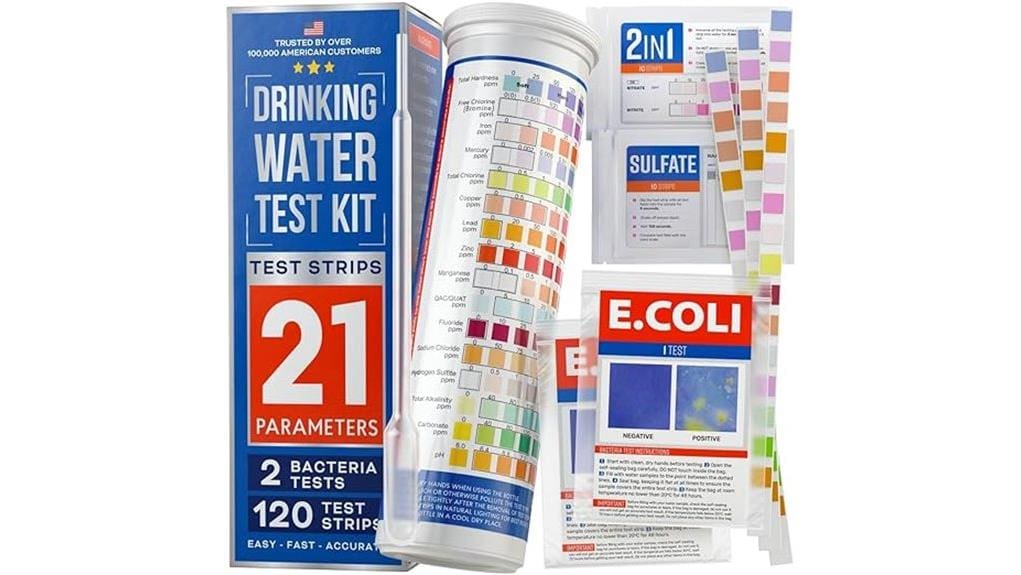
You’ll get a fast, evidence‑based screen of key household water risks with the All‑New 20‑in‑1 120‑strip kit: it checks pH, chlorine, hardness, fluoride, lead, iron, copper and coliform/E. coli so you can triage corrosion, contamination, disinfection failure or scaling without a lab. The kit includes 120 strips (17‑in‑1 roll), two bacterial vials, color card, timer decal and data sheet; follow one‑second dip and timed reads, log trends, and confirm positives professionally — more details follow.
Some Key Takeaways
- Comprehensive 20‑in‑1 kit includes 120 strips (17‑in‑1 roll) plus two bacterial vials for chemical and basic bacteriological screening.
- Easy, standardized procedure: dip 1 second, use timer decal, read pads at specified intervals, and log on included data sheet.
- Good real‑world accuracy for pH, chlorine, hardness, and common metals; low‑level trace detection may approach strip limits.
- Readability aided by color reference card and timer, but lighting, timing, and sample matrix can affect precision—repeat tests recommended.
- Best for routine home screening and troubleshooting; confirm positive or critical results with certified lab tests or specialist follow‑up.
What the 20‑in‑1 Kit Tests and Why Those Results Matter
Because your home water can contain a mix of chemical and biological hazards, the 20‑in‑1 kit tests a focused suite of parameters that signal common health and aesthetic issues. You’ll measure hardness, pH, chlorine, fluoride, and key heavy metals (lead, iron, copper) alongside microbial indicators (coliform, E. coli). Results map to accepted ranges so you can triage: corrosion, contamination, disinfection failure, or mineral scaling. The procedure is standardized—dip, time, compare—and the included data sheet lets you log trends. This targeted panel gives actionable diagnostics for informed decisions about treatment, mitigation, or professional follow‑up. Homeowners who enjoy their outdoor spaces can use these results to keep pools and other water features clear and safe with simple, regular testing and pool test strips.
Unboxing & Contents: What’s in the 120‑Strip Kit
Open the box and you’ll find a compact, clearly organized kit containing 120 test strips: a sealed roll of 17‑in‑1 chemical strips and two separate bacterial test vials for coliform and E. coli, plus a color reference card, a timer decal that aligns with strip markings for direct comparison, and a data sheet for logging results. You’ll also see instructions, a resealable pouch to protect unused strips, and a QR code linking to product specifications and customer support. The packaging balances protection with packaging sustainability notes. Contents are arranged so you and others in your household can quickly inventory and share results. The kit is especially handy for homeowners who want to keep outdoor water features safe and enjoyable with digital pool testers.
How to Use the Strips Correctly (Step‑by‑Step)
When you’re ready to test, gather the strip roll, bacterial vials, timer decal, and a clean sample container, then follow the kit’s control steps to guarantee valid readings. Dip a 17-in-1 strip vertically for one second, remove excess drip on container rim, start the timer decal, and read each pad at its specified interval—adhere to correct timing for pH, chlorine, hardness, metals and organics. For bacteria, inoculate vials per instructions and incubate as directed. Record results on the data sheet. Store remaining strips sealed with desiccant; strip storage at room temperature away from light preserves reagent integrity and reliability. Many homeowners also use simple test kits to monitor pool water safety and maintain healthy outdoor spaces.
Accuracy, Readability, and Test Range: Real‑World Performance
Having followed the kit’s control steps and timing procedures, you can assess how its measurements perform under real-use conditions. You’ll find strip reactions align with lab validation for major analytes like pH, chlorine, hardness, and metals within expected tolerances. Readability is strong: color blocks and the exterior guide let you match results quickly, supporting consistent recordkeeping. Test range covers common household concentrations, though low-level detection for trace contaminants can approach the strip’s limits. Field variability—sample matrix, lighting, and timing—still affects precision, so replicate readings and occasional professional confirmation help maintain confidence. For safe storage of testing supplies and chemicals, follow proper pool chemical storage practices to keep kits and containers secure and effective.
Who Should Buy This Kit and Practical Alternatives
If you need routine, broad-spectrum screening for household drinking water, this 20‑in‑1 kit is a practical choice because it covers the most common chemical and bacteriological concerns (pH, hardness, chlorine, lead, iron, copper, fluoride, coliform/E. coli) with clear ranges and repeatable readouts; you’ll get quick, actionable results for everyday monitoring and spotting issues that warrant professional follow-up. You should buy it if you’re a budget buyer, a rental tenant checking potable supply, or a homeowner wanting baseline data. Alternatives: single-analyte lab tests for regulatory accuracy, digital TDS/pH meters for precision, and certified lab bacteriology when contamination is suspected. Homeowners who enjoy maintaining outdoor spaces may also appreciate products that help keep water clear, like pool clarifiers, which demonstrate the value of simple, routine water care.
Some Questions Answered
How Long Do Unused Strips Stay Effective After Opening the Bottle?
Unused strips remain effective for about 6–12 months after opening if you follow proper storage conditions. You’ll extend shelf life by keeping the bottle tightly sealed, storing strips in a cool, dry place away from direct sunlight and humidity, and avoiding temperature extremes. Record the opening date on the bottle or data sheet so your group can track expiry together and guarantee consistent, reliable test results for shared water monitoring.
Are Replacement Bottles or Extra Test Strips Sold Separately?
Yes — replacement availability is offered; you can buy extra test strips or replacement bottles separately. Sellers typically list separate pricing for 120-strip refills and individual reagent bottles, so you’ll compare cost per strip. Check product listings or manufacturer pages for SKU details, compatibility, and expiration dates. You’ll also find bundle and refill options; choose the one that matches your testing frequency to maintain consistent, evidence-based water monitoring.
Can Strips Be Used to Test Bottled or Filtered Water?
Yes — the strips are suitable for bottled suitability and filtered compatibility testing. You’ll wet a strip, time it, and compare colors to the provided ranges; results work on tap, well, bottled and filtered samples. The kit detects hardness, metals, chlorine, pH and microbes, so you’ll get actionable data for home use. You’ll also find a data sheet to record readings and track changes over time.
Do the Bacteria Tests Require Special Disposal or Handling?
Yes. You should treat used bacteria tests as potential biohazard disposal items and handle them to prevent contamination. After testing, seal swabs/strips in a leakproof bag, disinfect surfaces and wash hands with soap. Follow local regulations for biohazard disposal or municipal guidance; if none, double-bag and discard with non-recyclable waste. Label containers if storing briefly. These steps protect you and your community from cross-contamination risks.
Is There a Mobile App for Logging or Interpreting Results?
No, there isn’t a dedicated mobile app; the kit uses a paper data sheet for manual logging. You can, however, implement mobile integration by photographing strips and storing readings in any notes or spreadsheet app, then use result sharing via email or messaging to collaborate. That workflow is evidence-based and technical: capture image, timestamp, transcribe values, and export CSV. You’ll feel included using shared cloud folders for group tracking.