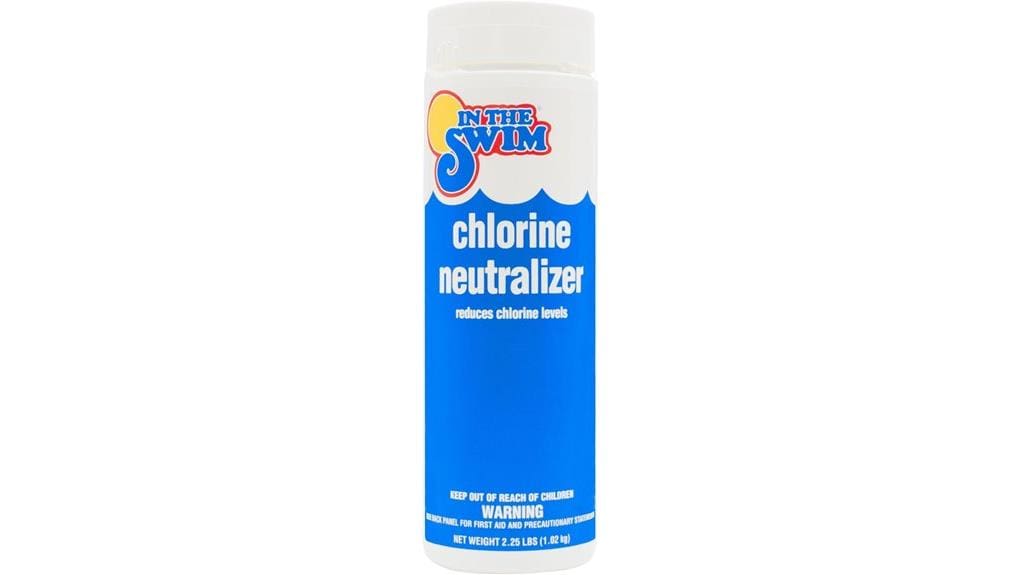
You’ll find In The Swim’s 90% sodium thiosulfate granules deliver fast, predictable dechlorination—about 5.5 ppm per 5 oz per 10,000 gallons—without premixing. You’ll apply granules near return jets or broadcast with the pump running for rapid dispersion; neutralization occurs within minutes to an hour. The product is compact, easy to dose, and suited for spot corrections, though it temporarily removes sanitization and may require post-treatment shock and rebalance. Continue below for detailed dosing, safety, and alternatives.
Some Key Takeaways
- 90% sodium thiosulfate granular formula neutralizes free chlorine rapidly, about 5.5 ppm per 5 oz per 10,000 gallons.
- No premixing required; broadcast granules near return jets while pump runs for fast, even dispersion.
- Works within minutes to an hour depending on agitation; always verify residual chlorine after treatment.
- Pros: predictable dosing and compact packaging; cons: narrow margin, temporary loss of sanitization and potential need to shock.
- Best for homeowners needing quick dechlorination; alternatives include liquid thiosulfate or commercial spray products for spot treatment.
Quick Verdict: Does In The Swim Chlorine Neutralizer Work and Who Should Buy It?
If you need to drop pool chlorine quickly and predictably, In The Swim Chlorine Neutralizer delivers: its 90% sodium thiosulfate granular formula reduces free available chlorine at a measured rate (about 5.5 ppm per 5 oz per 10,000 gallons) without premixing, making it a practical choice for pool operators, homeowners, and service technicians who require rapid dechlorination to prevent eye/skin irritation and protect swimmers and pool equipment. You’ll find it effective for acute chlorine concerns and routine pool maintenance. It’s compact, easy to dose, and integrates into existing workflows, so you’ll feel supported and confident managing sanitizer levels. This product is especially useful for homeowners who perform pool shock treatments and want reliable dechlorination when opening or maintaining outdoor pools.
How the Product Works and What’s in the Box
Because it contains 90% sodium thiosulfate, the granular formula neutralizes free chlorine through a rapid redox reaction that converts hypochlorous acid and hypochlorite ions into chloride, lowering free available chlorine predictably at roughly 5.5 ppm per 5 oz per 10,000 gallons without premixing. You’ll appreciate the clear chemical mechanism: sodium thiosulfate supplies electrons, reducing oxidizing chlorine species to chloride while itself oxidizing to tetrathionate derivatives. Package contents include a single 2.25‑pound granular container (36 oz unit count listed), label with dosing guidance, safety instructions, and manufacturer contact. You’ll feel included in a practical, informed user group. This product is aimed at homeowners who enjoy outdoor spaces and want simple test kits and treatments for pool water safety.
Real-World Performance: Dosing, Speed of Chlorine Neutralization, and Results
While the labeled dose—5 ounces per 10,000 gallons—serves as a reliable baseline, you’ll see that real-world adjustments are often necessary depending on starting free chlorine, water volume accuracy, and mixing method. You’ll dose based on measured ppm; each 5 oz reduces roughly 5.5 ppm, so calculate additive needs precisely. Expect neutralization within minutes to an hour depending on application timing and water agitation. Dissolve granules near return jets or broadcast while pump runs for consistent dispersion. Results are predictable when you verify residuals post-treatment and adjust doses collaboratively with other pool owners sharing similar setups. For homeowners maintaining outdoor spaces, following best chlorine tablet practices helps keep pools safe and clear.
Pros, Cons, and Safety/Handling Tips for Pool Owners
Although it cuts chlorine quickly and predictably, you should weigh the trade-offs: the granules deliver fast dechlorination with minimal dosing complexity, but overdosing can drop free chlorine below safe sanitizer levels and force immediate rebalancing. Pros: predictable sodium thiosulfate chemistry, easy granular dosing, no premix, rapid symptom relief for swimmers — useful in routine pool maintenance protocols. Cons: narrow dosing margin, transient loss of sanitization, potential need to shock and rebalance pool chemistry. Safety/handling: wear gloves and eye protection, avoid inhalation, store dry and labeled, measure by volume/weight, document additions for shared ownership and compliance. Store pool chemicals in a cool, dry, well-ventilated area and follow safe storage practices to prevent degradation and accidents.
Who This Product Is Best For and Buying Alternatives to Consider
Those pros and cons help clarify who should consider In The Swim Chlorine Neutralizer and when it’s appropriate to use. You’ll find it suited to owners of backyard pools who need rapid, measured reduction of free chlorine—especially if you host sensitive swimmers or manage variable sanitizer dosing. Use it for spot corrections, post-shock reductions, or before extended pool access to minimize irritation. If you want alternatives, consider liquid sodium thiosulfate for faster dissolution, commercial dechlorinating sprays for small areas, or enzyme-based products for ongoing maintenance. Compare dosing precision, form factor, and pool volume when choosing between options. For routine upkeep, remember to keep your pool pH balanced for clearer, safer water.
Some Questions Answered
Can This Neutralizer Be Used in Saltwater Pools?
Yes — you can use it in saltwater pools, but exercise caution regarding saltwater compatibility and electrode corrosion. You’ll neutralize free chlorine with sodium thiosulfate without affecting salt levels, yet dosing promptly and evenly is critical. Avoid adding near salt chlorinator electrodes and power down the system if possible to prevent localized reducing conditions that accelerate electrode corrosion. Follow manufacturer guidance and monitor salt cell condition regularly to protect your equipment and community.
Is It Safe to Use With Pool Liners and Plaster?
Yes — you can use it; it’s considered safe compatibility with common pool surfaces. You’ll neutralize excess chlorine without aggressive chemical reaction that harms vinyl liners or plaster. Follow dosage guidelines and avoid overdosing to support liner preservation and long-term finish integrity. You’ll measure by gallonage, apply granular product directly or broadcast evenly, and flush any localized excess to maintain balanced water chemistry and shared pool enjoyment.
Can I Neutralize Chlorine While People Are Swimming?
No — you shouldn’t neutralize chlorine while people are swimming. Instant dosing products act quickly, but you’ll disrupt sanitizer distribution and create uneven swimmer safety conditions. Instead, remove swimmers, apply the measured dose per volume, allow full circulation and retest free chlorine until safe levels are confirmed. That way you protect everyone’s health and maintain consistent water chemistry, fostering a shared responsibility for safe pool use.
How Long Does Opened Product Remain Effective?
Opened product remains effective for about 1–2 years if you follow proper shelf stability practices. You’ll keep performance by maintaining recommended storage conditions: cool, dry, airtight container away from moisture and direct sunlight, and sealed between uses to prevent clumping or decomposition. You’ll also label the opening date and inspect for odor or discoloration; if you detect changes, discard it. These steps help you preserve potency and safety.
Can It Remove Chloramines or Combined Chlorine?
Yes — you can use it to neutralize chloramines and combined chlorine. You’ll see rapid chloramine breakdown because sodium thiosulfate chemically reduces available oxidants; dose carefully and measure combined chlorinemeasurement afterward to confirm levels. You’ll want to add the calculated amount, wait, then retest with a reliable kit. You’ll feel confident knowing the process is straightforward, technical, and repeatable for safe shared-pool maintenance.