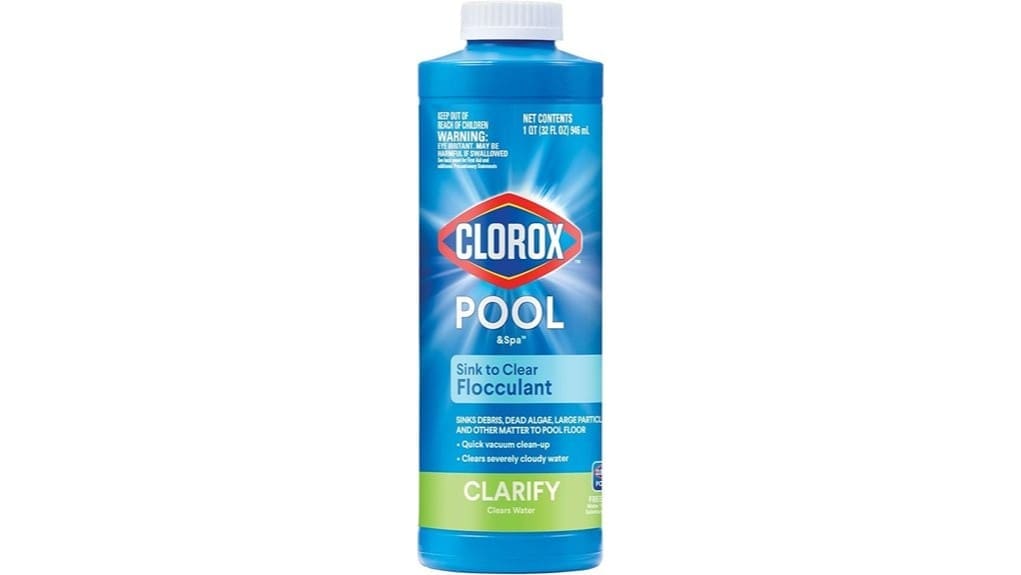
You’ll get a concentrated flocculant that quickly aggregates fine suspended particles into dense flocs that sink for vacuum removal. Use it after heavy algae treatments, storms, or runoff once chemistry’s balanced and filtration is on low. Dose by pool volume (app or label), wait 4–12 hours to settle, then vacuum to waste and clean filters. It’s fast and predictable for bulk particle removal; keep going to see dosing tips, cleanup steps, and comparisons.
Some Key Takeaways
- Concentrated flocculant quickly coagulates fine suspended particles into dense flocs that settle within 4–12 hours for vacuum removal.
- Best used when water is opaque after algae treatments, storms, or runoff and when pool chemistry and filtration are balanced.
- Apply evenly with circulation on low, avoid swimming during settling, then vacuum-to-waste from deep to shallow.
- Requires post-treatment filter maintenance and backwashing or cartridge cleaning to remove trapped fines and restore flow.
- Ideal for bulk particle removal and faster recovery, though not a substitute for continuous filtration or routine micro-clarity care.
What the Product Is and When to Use Clorox® Pool&Spa™ Sink to Clear Flocculant
When your pool is clogged with fine suspended particles that standard filtration can’t remove, Clorox® Pool&Spa™ Sink to Clear Flocculant is a concentrated treatment that aggregates those particles and makes them sink to the floor for vacuuming. You’ll use it when heavy algae treatments, openings, storms, or runoff leave water opaque. It’s a targeted tool in your pool maintenance toolkit that complements balanced water chemistry and routine filtration. Apply it to convert troublesome colloids into collectable solids, then vacuum settled debris. You’ll appreciate the predictable, efficient clearing it provides, helping your pool community keep shared water safe and swim-ready. Many homeowners find these products useful for maintaining clearer pool water around outdoor living spaces.
How to Use It: Step-by-Step Dosing, Timing, and Vacuum Cleanup Tips
Before you treat the pool, confirm water chemistry is balanced and filtration is running; then measure the pool volume so you can dose accurately. Use the dosage calculator in the Clorox Pool App or table to determine quart-per-gallon guidance. Pour flocculant evenly with circulation on low; allow 4–12 hours for particles to coagulate and settle. Monitor clarity and avoid swimmers during settling. Once settled, lower pump speed and perform vacuum-to-waste or manual vacuuming from deepest point, working outward. Follow routine filter maintenance after cleanup—backwash or clean cartridges—to remove residual fines and restore optimalised flow. Keep a dedicated pool logbook to track treatments and maintenance for better ongoing care and record-keeping pool logbook.
Real-World Performance: Clearing Cloudy Water, Sinking Algae, and Cleanup Speed
In practical use, Clorox Pool&Spa Sink to Clear rapidly coagulates suspended fines so they settle to the floor, allowing you to remove concentrated debris with minimal passes. You’ll observe accelerated cloud sinking kinetics within hours under recommended dosing; turbidity drops measurably and particulate aggregates form dense flocs. Dead algae and leaf fragments compact, making vacuuming efficient and reducing cycle time. User experience feedback consistently notes predictable settling and faster recovery after storms or blooms. You’ll follow protocol for peak results: test chemistry, apply evenly, wait settling period, then vacuum. The process is reliable, repeatable, and community-trusted for heavy clears. This product is ideal for homeowners who like to keep their outdoor spaces inviting and well-maintained, especially when managing routine pool shock and maintenance best practices.
Pros, Cons, and Who Should (or Shouldn’t) Buy This Flocculant
Although designed specifically for heavy clears, this flocculant delivers predictable, rapid coagulation that makes debris removal efficient and repeatable for technicians and homeowners; you’ll get dense flocs that settle within hours under proper dosing and chemistry, streamlining vacuuming and reducing recovery time after blooms, storms, or seasonal openings. You should buy it if you need reliable bulk particle removal, value quick vacuum cleanup, and follow app-guided dosing. Don’t buy if you need continuous filtration correction or frequent micro-clarity adjustments. Consider packaging for long term storage and follow disposal guidance to minimize environmental impact; handle per label. It’s a good fit for homeowners who want to keep their outdoor spaces ready for summer use with minimal downtime and maintenance pool maintenance.
Comparison to Alternatives and Estimated Cost-Per-Treatment
When you compare Clorox Pool&Spa Sink to Clear with alternative flocculants, you’ll find it produces denser, faster-settling flocs at standard dosages, reducing vacuum time and repeat treatments; its formulation targets bulk particle aggregation rather than continual micro-clarification, so it outperforms clarifiers for heavy-clear jobs but isn’t a substitute for ongoing filtration aids. You’ll pay a modest premium versus generic flocculants, but the price comparison shifts when you factor reduced treatment frequency and labor. Estimate per-treatment cost by dose from the label divided into bottle volume; expect lower net cost when large debris or post-storm recovery limits repeat dosing. Many homeowners pair flocculants with pool clarifiers and routine filtration to maintain clear water longer.
Some Questions Answered
Is This Flocculant Safe for Vinyl and Fiberglass Pool Surfaces?
Yes — you can use this flocculant on vinyl and fiberglass; it’s vinyl safe and fiberglass friendly when used as directed. You’ll follow dosage and circulation guidance to avoid localized concentration that could stress liner or gelcoat. Test and balance your water first, treat small sections if concerned, then vacuum settled material promptly. You’ll feel confident knowing the product’s formulation targets particles, not pool finishes, when you follow instructions.
Can Pets Swim Immediately After Treatment?
No, you shouldn’t let pets swim immediately after treatment. You’ll avoid pet exposure and potential animal toxicity by waiting until the flocculant has fully settled and you’ve vacuumed and balanced chemicals per label directions. Rinse or refill water if instructed, and use the Clorox Pool App for dosage and clearance guidance. That keeps your animals safe and your pool ready; it’s a responsible step that includes everyone who uses the water.
Does It Affect Pool Chlorine or pH Levels Long-Term?
No, it won’t cause long-term chlorine depletion or pH rebound when used as directed. You’ll see minor, temporary chlorine consumption while flocculant binds particles; free chlorine typically recovers with routine maintenance. pH may shift slightly during treatment but won’t experience a persistent pH rebound if you follow dosing and test recommendations. You’ll feel confident knowing the Clorox Pool App helps you monitor chlorine levels and pH to maintain balance.
Is It Compatible With Saltwater/Chlorine Generator Systems?
Yes — it’s compatible with saltwater/chlorine generator systems. You won’t see adverse saltwater compatibility issues, and generator effects are minimal when you follow dosing instructions. You should test chlorine and pH after treatment using the Clorox Pool App, remove settled solids promptly by vacuuming, and avoid overdosing. That keeps your generator running normally and preserves water balance while restoring clarity for everyone who shares your pool.
How Should I Store Unopened and Opened Bottles?
Store unopened bottles in a cool storage area away from heat, direct sun, and moisture; keep them upright and sealed. Once opened, reseal tightly, note opening date on the label for label tracking, and return to cool storage. Dispose according to local hazardous-waste rules when expired. You’ll want a shared tracking system so teammates can see bottle status and dates; that keeps everyone confident and aligned in pool care routines.