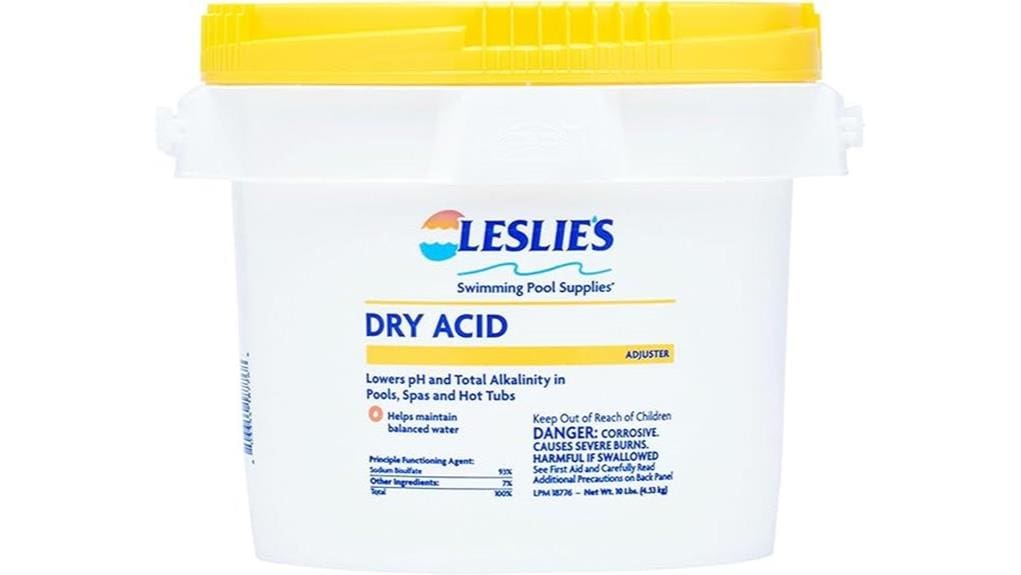
You’ll get a compact granular sodium bisulfate that reliably lowers pH and total alkalinity with predictable dosing (about 2 lb per 10,000 gallons lowers TA ~10 ppm). You’ll handle it safer than liquid acid, broadcast around a deep return with the pump on, wait four hours before retesting, and use gloves and eye protection. It’s surface-safe for common pool finishes and practical for routine maintenance — keep going to see precise dosing, timeline, pros, and buying tips.
Some Key Takeaways
- Granular sodium bisulfate reliably lowers pH and total alkalinity with predictable dosing (2 lbs per 10,000 gallons ≈ TA -10 ppm).
- Suitable for pools, spas, and hot tubs and safe on fiberglass, vinyl, painted, and tile surfaces when used per label.
- Apply with pump running by broadcasting granules around a deep return; pre-dissolve only if label permits.
- Expect measurable TA and pH drops within 1–4 hours, with stabilization over 24–48 hours and retest before repeating.
- Wear gloves and eye protection, avoid inhaling dust, wait four hours before swimming, and store sealed and dry away from other chemicals.
Quick Verdict and Who This Product Is Best For
While you’re managing pool chemistry, Leslie’s Dry Acid pH Down delivers a precise, granular sodium bisulfate solution that reliably lowers pH and total alkalinity. You’ll appreciate predictable dosing—2 lbs per 10,000 gallons reduces alkalinity about 10 ppm—so you can plan adjustments with confidence. It’s compact, safe on common pool surfaces, and suits routine maintenance for pools, spas, and hot tubs. Consider cost comparison against liquid acids and concentrate purchases; the granular form often wins for storage and measured use. Time your treatments around seasonal timing: test early in spring and maintain weekly checks during high-use months to belong to a confident upkeep routine. Homeowners who enjoy their outdoor spaces should also regularly use pool test strips to keep water clear and balanced.
How to Use Leslie’s Dry Acid pH Down Safely and Effectively
Before you add Leslie’s Dry Acid pH Down, test and adjust total alkalinity first, then pH, so you correct the underlying buffering capacity before changing acidity. You’ll measure volume, calculate dose (2 lbs/10,000 gallons lowers TA ~10 ppm), pre-dissolve only if label permits, and broadcast granules around deep return with pump running. Wear protective gear—gloves and eye protection—and avoid inhaling dust. Wait four hours of circulation before re-testing and swimming. Store sealed, dry, away from children and chemicals; proper storage preserves potency and safety. Follow label instructions and community pool protocols to maintain shared water quality. Many homeowners also use chlorine tablets to help maintain consistent sanitizer levels while managing pH and alkalinity.
Real-World Performance: pH and Alkalinity Results and Expected Timeline
Because granular sodium bisulfate acts directly on carbonate alkalinity and free hydrogen ions, you’ll typically see measurable drops in total alkalinity (TA) and pH within the first hour of circulation, with most of the adjustment occurring during the initial 1–4 hour window; expect TA to fall roughly 10 ppm per 2 lb per 10,000 gallons and pH to drop several tenths depending on starting chemistry and buffering capacity. You’ll monitor TA first, then pH, because chemical buffering determines responsiveness. Apply measured doses, keep circulation running, and respect recommended application timing. Results stabilize over 24–48 hours as buffers re-equilibrate; retest before repeating. Homeowners who regularly use shock treatments and proper maintenance routines often pair pH-lowering products with regular shock to keep outdoor pools sparkling and balanced, emphasizing consistent maintenance.
Pros and Cons: Benefits, Limitations, and Pool Types Where It Shines
When you need a reliable, measured way to lower both pH and total alkalinity, Leslie’s Dry Acid delivers predictable chemistry control. You get efficient pH and TA reduction with granular dosage that lets you apply precise increments; two pounds per 10,000 gallons is a known reference. It’s practical for pools, spas, and hot tubs, and its surface compatibility includes fiberglass, vinyl liner, painted, and tile finishes. Limitations: it’s corrosive until diluted, requires prior TA testing and staged dosing, and needs four hours circulation before use. If you want consistent, community-minded maintenance, this product fits routine, technical care. Many homeowners find it helpful to follow basic stabilizer tips for balanced, long-lasting pool chemistry.
Buying Checklist: Dose Math, Packaging Details, and Value-for-Money Considerations
If you want predictable results and good value, focus first on dose math and package sizing: Leslie’s Dry Acid comes in a 10 lb granular tub (10.8 lb listed) and the working rule—2 lb per 10,000 gallons lowers total alkalinity by about 10 ppm—lets you calculate how much product you’ll need for routine or corrective treatments. Check package weight and unit count (160 oz) against your pool volume, estimate frequency, then compare cost perounce across sellers. Factor in shipping options and delivery time for bulk needs. Choose based on calculated consumption, reliable supply, and community-tested performance. Many homeowners who maintain skimmer systems report that consistent testing and adjustment of pH and alkalinity keeps circulation and skimmer performance optimal, especially when following proper dose math.
Some Questions Answered
Is This Product Safe Around Pets and Plants if Splashed?
Yes — but you should avoid splashes. You’ll prevent skin irritation and foliage damage by handling granular sodium bisulfate carefully, keeping pets and plants away during dosing, and rinsing any spills immediately with plenty of water. Wear gloves and eye protection, follow label instructions, and wait recommended circulation time before allowing pets to swim. If accidental contact occurs, wash the area and seek veterinary or medical advice for persistent symptoms.
Can Leslie’s Dry Acid Corrode Metal Fittings or Heaters?
Yes — if you misuse it, you can cause metal corrosion and heater damage. You’ll avoid problems by diluting and broadcasting granular sodium bisulfate away from metal, following label doses, and circulating water for the recommended 4 hours before use. Test and adjust total alkalinity first, then pH. If you see persistent corrosion or heater scaling, consult a technician so your pool community stays safe and included in care.
How Long Does an Opened Bag Stay Effective in Storage?
An opened bag remains effective about 1–2 years if you store it dry and sealed. You’ll protect shelf life by minimizing moisture exposure: keep the granular sodium bisulfate in an airtight container, in a cool, dry place away from humidity and contaminants. Check for caking or clumping before use; dispose if it’s damp or degraded. You’ll keep pooled supplies reliable by labeling opening dates and rotating stock.
Is This Product Compatible With Saltwater Chlorine Generators?
Yes — you’re safe using it with saltwater systems: Saltwater compatibility is fine because granular sodium bisulfate lowers pH without harming cell plates when dosed properly. You should adjust Generator settings after treatment to account for temporary chlorine variations. Test TA and pH, add per label, circulate four hours, then retest. This keeps your system balanced and the community of pool users confident in consistent, safe operation.
Can It Be Used to Lower pH in Above-Ground Inflatable Pools?
Yes. You can use it to lower pH in above-ground inflatable pools, treating small volumes safely as a temporary treatments option. You’ll dose carefully, dissolve or broadcast granular sodium bisulfate per label, circulate water, then wait four hours before swimming. Prioritize inflatable maintenance by testing and adjusting Total Alkalinity first, then pH, and avoid localized overconcentration on vinyl to protect the pool surface and your community of users.