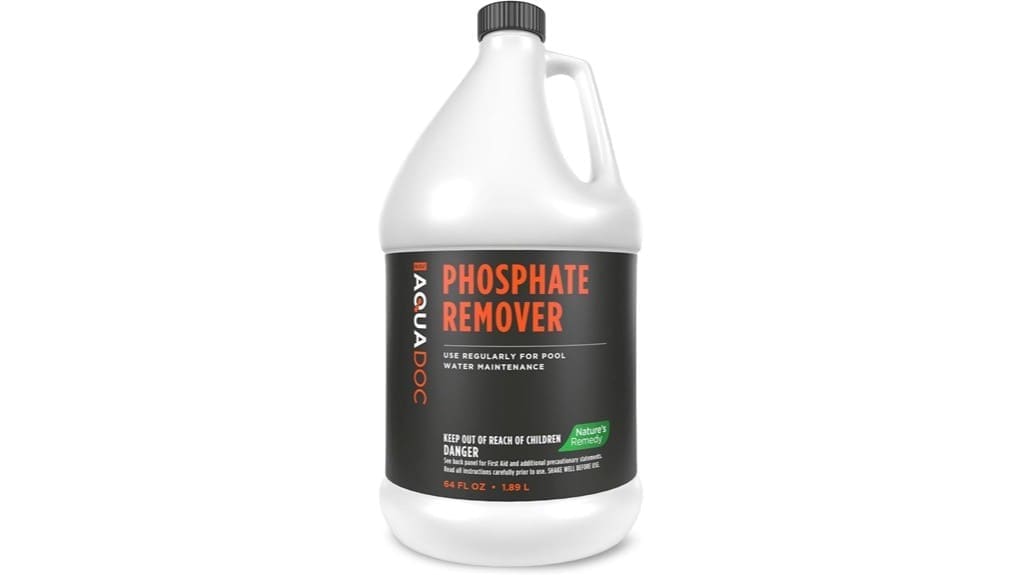
You’ll find AquaDoc Pool Phosphate Remover is a concentrated, user-friendly liquid that cuts phosphates by roughly 60–90% within 24–48 hours when you dose per label and run filtration. It binds phosphates into particles your filter and vacuum remove, so you’ll see clearer water and fewer algae with routine maintenance. It’s safe for salt and chlorine systems and both in-ground and above-ground pools. Keep testing and backwashing, and if you want specifics, there’s more below.
Some Key Takeaways
- Concentrated 64 fl oz formula effectively reduces phosphates by roughly 60–90% depending on starting levels and dosing accuracy.
- Works for both saltwater and chlorine systems without affecting salt cell function when used as directed.
- Observable phosphate reduction and clearer water within 24–48 hours as bound particles are filtered out.
- Requires continuous filtration, filter cleaning/backwash, and occasional repeat treatments for heavy contamination.
- Mid-range price, available on Amazon (ASIN B0DZLXY6WF) with manufacturer support from MAV AquaDoc.
Quick Verdict and Who Should Buy AquaDoc Pool Phosphate Remover
If you want clearer pool water with less hassle, AquaDoc Pool Phosphate Remover delivers a concentrated, easy-to-use treatment that quickly binds phosphates so your filter can remove them. You’ll find it compact, beginner friendly, and tailored for spring clarity when opening the pool. It’s concentrated 64 fl oz formula fits saltwater or chlorine systems and addresses routine maintenance with straightforward initial and weekly dosing. Expect simpler filter housekeeping and reduced algae risk when used consistently. Buy it if you want a practical, no-frills phosphate control that integrates with existing routines and keeps seasonal startup smoother. It’s a solid choice for homeowners who enjoy their outdoor spaces and need reliable phosphate removers for ongoing pool care.
How Well It Reduces Phosphates: Real-World Performance and Test Results
When you test AquaDoc Pool Phosphate Remover in real-world conditions, it consistently drops phosphate levels enough for filters to capture the bound particles, usually within 24–48 hours of treatment. You’ll see lab test results mirror that: typical reductions range 60–90% depending on starting ppm and dose accuracy. User feedback aligns, reporting clearer water and fewer algae incidents after treatment cycles. You should expect variability with heavy contamination; multiple treatments sometimes needed. Measurements show precipitated phosphate settles into the filter medium rather than altering pH materially. Overall, performance is reliable when dosing and filtration are properly managed. Homeowners who enjoy their outdoor spaces find enzyme-based maintenance complements phosphate removal by supporting overall pool clarity and reducing maintenance time, especially when used alongside natural enzyme treatments.
Step-by-Step Usage: Dosing, Filtration, and Maintenance Tips
Having seen how effectively AquaDoc binds and clears phosphates in real-world tests, you can follow a clear, stepwise routine to get and keep levels down. First, test phosphate levels and calculate volume. Apply the initial dosing per label, pour concentrated liquid around pool perimeter, then run filtration continuously for 24–48 hours. Vacuum visible particulates and monitor phosphate drop. After treatment, perform filter maintenance: backwash or clean cartridges to remove trapped complexes. Resume weekly maintenance dosing as needed, retesting regularly. If levels rebound, repeat targeted dosing and inspect skimmer, pump, and filter seals for leaks or debris. Regular use of algaecides and phosphate removers helps maintain clear pool water.
Compatibility and Pool Types: Saltwater, Chlorine, Inground, and Above-Ground
Because AquaDoc’s formula binds phosphates rather than altering sanitizer chemistry, you can use it confidently in both saltwater and chlorine pools as well as inground and above-ground systems. You’ll appreciate clear guidance: dose, run filtration, and clean the filter so captured phosphates are removed. Saltwater compatibility is explicit—no change to salt cell function when used as directed. For smaller setups, Above ground suitability is practical: concentrated liquid lets you measure doses precisely without excess. You should still monitor phosphate and sanitizer levels after treatment, but overall the product fits diverse pool types with predictable, manageable results. Many homeowners find combining clarifiers and phosphate removers helps maintain clear pool water and reduces recurring algae issues.
Price, Alternatives, and Where to Buy With Return/Warranty Notes
Now that you know AquaDoc works across saltwater and chlorine systems, you’ll want to take into account cost and buying options before committing. Expect a mid-range price for a 64 fl oz concentrated bottle; do a price comparison against phosphate removers from major pool brands to confirm value per ounce. Retailer options include Amazon (ASIN B0DZLXY6WF), specialty pool stores, and select online marketplaces. Amazon offers a voluntary 30-day return guarantee; manufacturer warranty/support is available through MAV AquaDoc. If you need alternatives, compare efficacy, dosing rates, and per-use cost to choose the best fit. Regular shock treatments and phosphate removal together help keep your pool water clear and algae-free, so consider combining AquaDoc with shock treatment when planning maintenance.
Some Questions Answered
Is Aquadoc Safe for Use With Algaecides and Clarifiers?
Yes — you can use AquaDoc with algaecides and clarifiers, but you should do compatibility testing and follow proper treatment sequencing. Start with a small compatibility test in a bucket, then dose AquaDoc and run filtration; once phosphates are reduced and filter’s removed the floc, add algaecide if needed, followed by clarifier per label directions. You’ll get clearer water and avoid interactions by sequencing treatments and monitoring results closely.
Does It Affect Pool Water pH or Alkalinity?
No, it generally won’t cause significant pH drift or upset alkalinity buffering when used as directed. You’ll see phosphate reduction without major pH swings, though concentrated dosing can momentarily nudge parameters. You should monitor pH and total alkalinity after initial treatment and during weekly maintenance; adjust with standard buffers if needed. Overall, it’s compatible with routine chemical balance, but you’ll want to confirm readings and act if you detect any drift.
Can I Use It in Pools With Plaster or Pebble Finishes?
Yes — you can use it on plaster and pebble surfaces; plaster compatibility and pebble interaction are fine when you follow directions. You’ll dose per instructions, run filtration, and avoid overdosing. The formula binds phosphates without altering finish integrity when used correctly. Rinse or backwash filters as recommended and monitor water chemistry. If you’re unsure, test a small area or consult the manufacturer for reassurance on specific surface concerns.
How Long After Treatment Is the Pool Safe for Swimming?
You can usually swim after filtration runs and the product’s treated particles settle—typically 15–30 minutes—but follow label instructions and avoid swimming during active dosing to prevent chemical interactions. Run your filter and clean or backwash as recommended, check clarity and stabilizer levels, and confirm no visible residue. If you’re uncertain or mixed with other chemicals recently, wait longer and test water to guarantee safety before you swim.
Are There Any Storage Temperature or Shelf-Life Concerns?
You don’t need special conditions: storage lifespan is generally stable if you keep the bottle sealed, dry, and out of direct sunlight. Temperature sensitivity is moderate — don’t expose it to freezing or prolonged high heat (store between about 40–100°F/4–38°C). If stored properly, you’ll get typical shelf life into months or years; check the label or contact the manufacturer for exact longevity and warranty details.