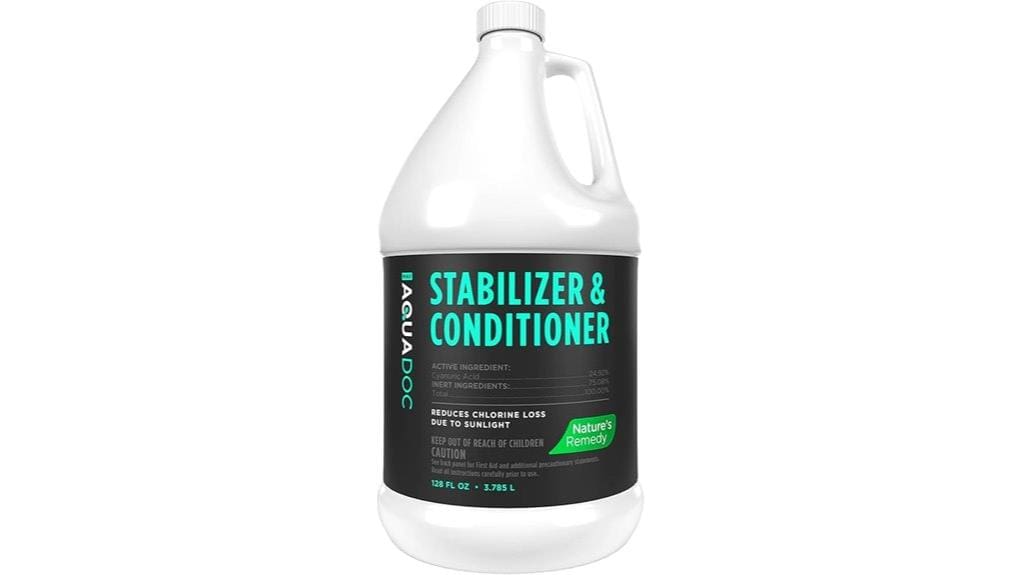
You’ll find AquaDoc’s liquid cyanuric acid stabilizer fast-acting and easy to dose, so you’ll keep chlorine levels steadier with fewer adjustments. It disperses quickly, reduces UV-driven sanitizer loss, and often cuts chemical and water waste over a season. Users report clearer water and faster recovery after heavy use, with simple application and routine testing recommended. It’s a practical choice if you want lower maintenance and predictable chlorine protection — keep going to see detailed usage tips and comparisons.
Some Key Takeaways
- Liquid cyanuric acid stabilizer that quickly disperses to extend chlorine life and reduce UV-driven sanitizer loss.
- Users report clearer water and more consistent chlorine readings within a few treatments and faster recovery after heavy use.
- Liquid format offers more uniform dosing and faster action than granular or powdered stabilizers.
- Follow label dosing, add to circulating water, retest stabilizer levels after 24–48 hours, and run the pump for distribution.
- Best for owners prioritizing steady chlorine protection, reduced maintenance time, and measurable chemical and water savings.
Quick Verdict: Is AquaDoc Pool Stabilizer and Conditioner Worth Buying?
Although it’s labeled maximum strength, AquaDoc Pool Stabilizer and Conditioner delivers straightforward, practical benefits you’ll notice quickly: it’s a fast-acting, liquid cyanuric acid treatment that stabilizes chlorine, reduces chemical and water loss, and helps keep water crystal clear. You’ll find it worth buying if you want reliable stabilization, fewer chemical adjustments, and measurable cost savings over a season. User reviews often highlight simple application and faster recovery after heavy use. You’ll join a community of pool owners who value efficiency and predictability. It’s a pragmatic choice if steady chlorine protection and lower maintenance time matter to you. Properly balancing pool pH is essential for clearer, safer water and works hand-in-hand with stabilizers.
What’s Inside and How It Works (Cyanuric Acid, Liquid Action, and Compatibility)
Because it’s built around liquid cyanuric acid, AquaDoc’s stabilizer works quickly to lock in chlorine and slow its breakdown from UV exposure, so you’ll see steadier chlorine levels after treatment. You’ll benefit from targeted cyanuric chemistry: the active ingredient binds free chlorine, extending disinfectant life without altering pH appreciably. The liquid dynamics guarantee fast dispersion and more uniform dosing than granules, so you can treat water and get predictable results. It’s formulated to be compatible with in-ground and above-ground pools and with standard sanitizers, letting you join a community of pool owners who prioritize reliability and simplified maintenance. Proper stabilizer levels also help you keep your pool balanced and reduce the need for frequent chlorine shocks by maintaining stabilizer concentrations within recommended ranges.
Real-World Performance: Clarity, Chemical Stability, and Water Loss Reduction
When you treat your pool with AquaDoc Pool Stabilizer and Conditioner, you’ll notice clearer water and more consistent chlorine readings within a few treatments. You’ll see improved visual clarity as suspended particles settle faster and cyanuric acid preserves sanitizer strength, so you don’t chase fluctuating levels. The liquid formula acts quickly, reducing chemical loss and cutting back on routine adjustments. Evaporation control helps limit water and sanitizer depletion, so you’re replacing less water and balancing chemicals less often. Overall, performance feels reliable and communal—neighbors and fellow swimmers will appreciate a consistently clear, well-maintained pool. Many homeowners who enjoy outdoor spaces find pool shock treatments complement stabilizers for maintaining water quality and clarity.
How to Use It Safely and When to Expect Results (Dosage, Application, and Troubleshooting)
If you’re treating your pool with AquaDoc Pool Stabilizer and Conditioner, follow the label for precise dosing and add it to circulating water for best results. You’ll wear safety gear when measuring and pouring, and apply during cooler hours to avoid peak sunlight degradation. Proper dosing depends on pool volume; use stabilizer testing after 24–48 hours to confirm levels. Run the pump for the recommended filter run time post treatment to distribute product and monitor chlorine interaction—cyanuric acid affects free chlorine. Troubleshoot by retesting, adjusting dose slowly, and contacting support if levels remain off. For guidance on safe closing steps and recommended products, consult our pool closing tips and best practices for winterizing and care.
How It Compares to Other Pool Stabilizers and When to Choose AquaDoc
Although many stabilizers on the market claim fast action, AquaDoc stands out for its liquid, fast-acting cyanuric acid formula that’s compatible with all pool types and designed to reduce chemical and water loss, so you’ll spend less time tweaking water chemistry and more time swimming. When you consult comparison charts, AquaDoc ranks high for speed, compatibility, and maintenance savings versus granular or powdered alternatives. Choose AquaDoc if you want consistent cyanuric acid levels, fewer adjustments, and easier seasonal timing during opening and closing. It’s practical for shared pool communities and solo owners who value clear guidance and reliable, time-saving results. Homeowners who enjoy their outdoor spaces often pair AquaDoc with pool clarifiers for optimal clear pool water.
Some Questions Answered
Is Aquadoc Safe for Pool Equipment and Liners Long-Term?
Yes — you can expect material compatibility with regular use, and it won’t generally harm equipment or liners long term. You’ll still want to follow label dosing and test cyanuric acid levels to avoid buildup. If you monitor levels and avoid overdosing, you’ll minimize long term discoloration risk and preserve pumps, heaters, and vinyl. You’ll feel confident maintaining balanced water and protecting your pool components over time.
Can I Use It With Saltwater Chlorine Generators?
Yes — you can use it with saltwater chlorine generators, but you’ll monitor your salt cell and follow a dosing guide to avoid over-stabilizing. You’ll check mineral balance regularly, since cyanuric acid can affect readings and salt system efficiency. For maintenance tips, clean the salt cell per manufacturer schedules, test CYA and salinity weekly, and adjust dosing gradually. That way you’ll protect equipment and keep water chemistry balanced.
Does It Affect Swim-Ready Timing After Application?
Yes — you can usually swim soon after application, but you’ll want to wait until the stabilizer’s liquid mixes fully and any strong chlorine odor dissipates. You’re protecting swim readiness while also aiding sunburn protection by preserving chlorine effectiveness; minimize chemical interactions by following dose and circulation instructions. You’ll feel included in safe pool care when you test levels, rinse if needed, and only reenter once readings are within recommended ranges.
What Storage Conditions and Shelf Life Does It Have?
Store it in cool storage, out of direct sunlight and extreme temperatures, and keep the container tightly sealed. If you don’t open the bottle, you’ll retain unopened potency for the manufacturer’s stated shelf life (typically 1–3 years); once opened, expect reduced stability over time and follow label guidance. You’ll want to rotate supplies, keep labels intact, and share storage routines with fellow pool keepers so everyone feels confident and included.
Is It Safe for Pets and Plants Around the Pool?
Yes — you can use it cautiously; it’s unlikely to harm pets or plants when applied per directions, but you shouldn’t allow direct pet exposure to concentrated product or treated water until levels normalize. Avoid draining pool water onto lawns or flower beds to prevent garden runoff that could stress plants. You’ll protect animals and greenery by following dilution, storage, and wait-time guidelines, and by keeping pets away during treatment and stabilization.