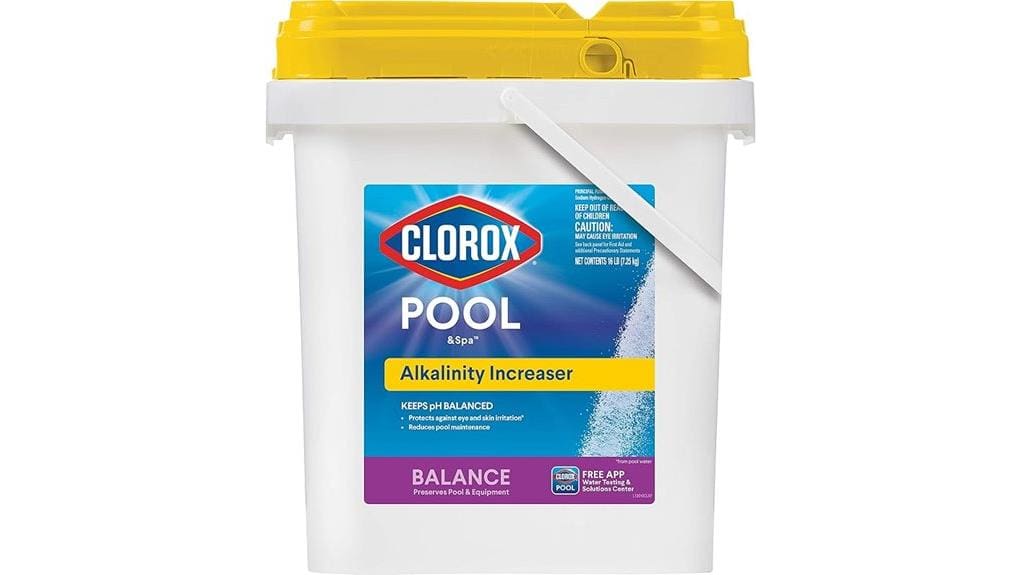
You’ll find Clorox Pool & Spa Alkalinity Increaser (granular sodium bicarbonate) reliably raises total alkalinity fast when you dose per label and broadcast granules with the pump running. It dissolves quickly under good circulation, buffers pH, and reduces corrosion and swimmer irritation when kept within 80–120 ppm. Use the app or chart to calculate pounds by pool volume, stagger large doses, and retest after 24–48 hours. Continue for practical tips on dosing and maintenance.
Some Key Takeaways
- Raises total alkalinity reliably and quickly when dosed per label, with measurable changes within hours.
- Granulated sodium bicarbonate dissolves fast under good circulation; break up clumps for best results.
- Typically stabilizes pH, reducing pH drift, corrosion risk, and swimmer irritation when used correctly.
- Dose using current alkalinity, pool volume, and the Clorox Pool App or label chart for accurate pounds needed.
- Best for low-alkalinity, new fills, saltwater, and plaster pools; avoid if alkalinity already in range or after recent acid addition.
Does Clorox Pool & Spa Alkalinity Increaser Actually Raise Alkalinity Quickly?
Generally, yes — the granulated formula dissolves quickly and raises total alkalinity efficiently when applied per label directions. You’ll see a rapid response in alkalinity tests within hours when water circulation is adequate. Measure current alkalinity, calculate required pounds, and maintain dosage precision to avoid overshooting target ranges. You’ll mix or broadcast per instructions, then run the pump to distribute evenly. The chemistry reliably converts alkalinity without affecting chlorine stability when used correctly. You’ll fit into a community of caretakers who value predictable results and measurable control, reducing guesswork and supporting consistent pool comfort. This product is ideal for homeowners who enjoy their outdoor pools and want to keep alkalinity balanced for healthy water.
How to Dose and Apply Clorox Alkalinity Increaser for Different Pool Sizes
Start by testing your pool’s current total alkalinity and volume, then calculate the pounds of Clorox Alkalinity Increaser needed to reach your target (typically 80–120 ppm). Use a dosage chart or the Clorox Pool App to convert volume and ppm gap into product weight. For small pools (5,000–10,000 gal) add measured granules in increments; for medium (10,000–20,000 gal) split doses across two applications; for large (>20,000 gal) stage over several days. Broadcast granules around deep end with pump running. Note application timing: add in evening, avoid swimmer contact, retest 24–48 hours and adjust as needed. Many homeowners also find that following shock treatment tips from pool care specialists helps maintain balanced chemistry and overall water clarity.
How This Granular Formula Affects pH, Corrosion Risk, and Swimmer Comfort
After you’ve adjusted alkalinity using the dosing approach above, the granulated sodium bicarbonate in Clorox Alkalinity Increaser acts predictably on your pool chemistry: it raises total alkalinity, which buffers pH and slows pH drift caused by bather load, sunlight, and chlorine reactions. You’ll see stabilized pH buffering that reduces acid swings, lowering the risk of metal leaching and scale. That translates into measurable corrosion prevention for heaters, liners, and fittings. With consistent levels, swimmer comfort improves—less eye and skin irritation and more pleasant water feel. The granular application is controllable, repeatable, and integrates with your regular maintenance. Many homeowners find these simple test kits helpful for keeping their pool water safe by regularly monitoring alkalinity and other key parameters with easy-to-use test kits.
Real-World Performance: Setup, Dissolve Time, and Maintenance Frequency
While setting up your pool for alkalinity adjustments, measure the current total alkalinity and pH, calculate the required sodium bicarbonate dose from the product label or app, and distribute the granules evenly around the deep end with the pump running to maximize dissolution and circulation. You’ll notice the granular formula’s quick dissolve behavior under active circulation; larger clumps require breaking up before application. Expect visible dissolution within 1–2 hours and full mixing by next testing interval. Plan maintenance intervals monthly under stable conditions, sooner after heavy rain or bather load. You’ll appreciate consistency and predictable dosing for shared pool stewardship. For homeowners preparing to open their pool, consider stocking essential pool opening chemicals to ensure a sparkling start.
Which Pools Benefit Most From Clorox Alkalinity Increaser and When to Avoid It
Which pools get the most benefit from Clorox Alkalinity Increaser and when should you skip it? You’ll find it ideal for new fills, freshly refilled pools, saltwater systems, and plaster pools where alkalinity swings are common. Use it when total alkalinity is below recommended range to stabilize pH, reduce corrosion risk, and improve swimmer comfort. Avoid dosing if alkalinity is already within range, if you’ve just added acid, or when cyanuric acid or calcium hardness require correction first. Test accurately, follow dosing guidance, and if unsure join fellow owners via the Clorox Pool App for tailored recommendations. Many pool owners pair alkalinity increasers with calcium hardness increasers to keep overall water balance in check.
Some Questions Answered
Is It Safe to Use This Product With Vinyl Liners?
Yes — you can use it with vinyl liners if you follow instructions and avoid overdosing. You’ll maintain vinyl compatibility by dissolving granules properly, broadcasting evenly, and keeping total alkalinity within recommended ranges. You should also check your liner warranty for any chemical restrictions and document treatments. If unsure, test a small area or consult customer service; that keeps your community of pool owners confident and protects your liner warranty.
Can I Add It Directly to Skimmer or Must Broadcast It?
You can use skimmer dosing for quick distribution, but you shouldn’t add a full dose directly into the skimmer. For safety and even results, pre-dissolve part of the granules in a bucket of pool water and pour near return jets, combining limited skimmer dosing with broader broadcast application around the pool. That approach prevents concentrated spots, protects equipment and liners, and guarantees consistent alkalinity across the entire water volume.
Is It Compatible With Mineral or Ozone Systems?
Yes — you can use it with mineral compatibility and there’s no adverse ozone interaction. You’ll add granules per dosing guidelines to raise total alkalinity without harming mineral systems or ozone generators. Maintain recommended alkalinity and pH ranges, circulate thoroughly, and avoid adding concentrated doses near equipment. If you’re unsure, test regularly and consult the app or manufacturer; this keeps your pool systems balanced and lets you feel confident as part of the pool-care community.
How Should I Store Leftover Product Long-Term?
Store leftover product in its original, labeled packaging inside a cool, dry area. Seal the container tightly and keep it locked or in a childproof container to prevent access. Avoid humidity, heat, and direct sunlight; don’t transfer to unmarked or improvised vessels. You’ll protect potency and safety by maintaining stable conditions, following manufacturer guidance, and keeping the community’s equipment and swimmers safe through responsible storage.
Does It Affect Salt Chlorine Generators’ Sensors?
No, it won’t directly damage generator electronics, but it can contribute to sensor drift over time if alkalinity management is neglected. You’ll prevent electrode scaling and inaccurate readings by maintaining proper total alkalinity and following manufacturer cleaning schedules. You should test regularly, flush or calibrate sensors per the generator manual, and use the Clorox Pool app recommendations so you and other pool owners feel confident in shared maintenance practices.