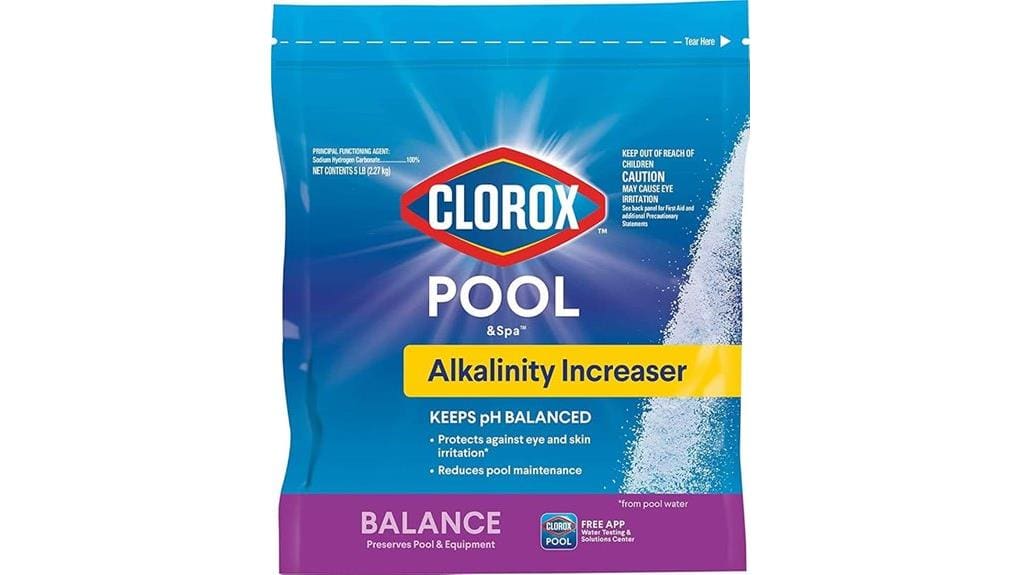
You’ll find Clorox® Pool&Spa™ Alkalinity Increaser raises total alkalinity quickly and predictably, dissolving fast for even distribution when broadcast or pre-dissolved. You’ll dose based on test-strip or app-calculated volume, apply granules around the deep end with the pump running, then retest after an hour. It buffers pH swings, reduces equipment corrosion risk, and improves swimmer comfort. It’s compatible with common pool surfaces and liquid chlorine systems; continue for detailed dosing, safety, and performance notes.
Some Key Takeaways
- Rapidly raises and stabilizes total alkalinity with a fast-dissolving granulated formula for predictable corrections.
- Designed for new fills and liquid-chlorine systems; compatible with concrete, vinyl, and fiberglass pools.
- Broadcast granules around the deep end while pumping; avoid dumping in one spot and brush any residue.
- Helps buffer pH swings, reducing eye/skin irritation and minimizing equipment corrosion and maintenance.
- Dose precisely using test strips or the Clorox Pool App; retest after one hour and monitor until stable.
Product at a Glance: What Clorox Pool&Spa Alkalinity Increaser Does and Who It’s For
When your pool’s total alkalinity falls outside the recommended range, Clorox Pool&Spa Alkalinity Increaser (5 lb.) raises and stabilizes it quickly with a granulated formula that dissolves fast and’s easy to apply; it’s designed for pool owners managing new fills, freshly refilled pools, or systems using liquid chlorine who need to reduce pH swings, protect equipment, and improve swimmer comfort. You’ll find objective performance: rapid alkalinity correction, reduced pH misconceptions by separating alkalinity from pH, and fewer adjustments. Use DIY testing with the Clorox Pool App, factor budget considerations into purchase frequency, and include this product in seasonal maintenance plans. Many homeowners also pair alkalinity increasers with proper stabilizer maintenance to keep outdoor pool chemistry balanced.
How to Use It: Dosing, Application Steps, and Safety Tips for Quick Results
Start by testing your pool’s total alkalinity and calculating the exact dose needed—this product raises alkalinity without directly altering chlorine levels—then follow precise application steps to guarantee even distribution and quick dissolution. You’ll perform pre application testing with test strips or the Clorox Pool App, record values, and calculate granule quantity per label. Broadcast granules around the deep end while pump runs; avoid dumping in one spot. Wait one hour, retest, and brush any residues. For safety, wear gloves and eye protection, keep children away, and store sealed. Conduct post treatment monitoring until readings stabilize. Regular alkalinity maintenance helps protect pool equipment and water balance, making it easier to enjoy your outdoor space with healthy water.
Performance Review: How Well It Raises Alkalinity, Dissolves, and Stabilizes pH
Although it’s marketed for quick correction, this alkalinity increaser consistently raises total alkalinity predictably when dosed per label. You’ll see target ppm achieved with single or staged additions; measured changes align with dosage charts. Granular solubility is high, so product disperses without clumping when broadcast or pre-dissolved, minimizing localized pH spikes. pH buffering performance is reliable: alkalinity increases dampen pH swing from routine chlorination and environmental inputs. You can monitor via test strips or the Clorox Pool App and expect reduced adjustment frequency. Overall, it’s a dependable, technical solution for maintaining alkalinity and stabilizing pool chemistry. It’s a practical choice for homeowners who want to boost pool pH naturally while enjoying their outdoor spaces.
Real Swimmer and Equipment Benefits: Comfort, Skin/Eye Effects, and Corrosion Prevention
Because proper total alkalinity buffers pH swings, you’ll experience fewer instances of eye and skin irritation from sudden acidity or alkalinity shifts, making swims more comfortable and reducing complaints from frequent users. You’ll notice improved eye comfort and less dry, itchy skin when alkalinity stays within target ranges; that directly reduces chemical-related discomfort and user churn. Consistent alkalinity also limits corrosive conditions that attack heaters, filters, and metal fittings, so you’ll extend equipment life and lower repair frequency. Managing alkalinity with a reliable increaser simplifies routine maintenance, creates a predictable water environment, and fosters a shared sense of pool stewardship. Using simple pool water test kits helps homeowners monitor alkalinity and other key parameters to keep their pools safe and enjoyable.
Should You Buy It?: Dosage Options, Pool Types, Alternatives, and Final Recommendation
With balanced alkalinity reducing irritation and equipment wear, you’ll want clear guidance on whether this 5 lb. granulated alkalinity increaser fits your pool. You’ll appreciate dosage flexibility: small incremental additions suit weekly tuning, larger doses correct refill or new-pool swings. It’s compatible with concrete, vinyl, and fiberglass pools and works with liquid chlorine systems. If you prefer other formulations, consider alternative brands offering powdered or tablet alkalinity products. Use the Clorox Pool App or test kits to calculate dose by volume and current TA. Recommendation: buy if you want reliable, easy-to-dissolve control with clear dosing support. Keep your pool pH balanced for clearer, safer water by monitoring both alkalinity and pH regularly and addressing swings promptly with proper dosing and testing pool pH.
Some Questions Answered
Is This Product Safe for Saltwater Chlorine Generator Pools?
Yes — you can use it in saltwater chlorine generator pools. You’ll maintain Saltwater compatibility by adjusting total alkalinity as recommended; proper alkalinity minimizes Electrolysis effects that can accelerate corrosion. Apply the granulated formula per dosage directions, test frequently with the Clorox Pool App, and avoid large single-dose swings. You’ll protect equipment, preserve comfortable water, and stay part of a community that values safe, balanced pools.
Can It Be Used With Other Chlorine Tablets Simultaneously?
Yes — you can use it with other chlorine tablets simultaneously. You’ll maintain chemical compatibility by keeping recommended distances between granular additions and slow-dissolving tablets or feeders, and by testing levels after dosing. Coordinate maintenance scheduling so you add alkalinity increaser when chlorine demand is stable, then retest pH and total alkalinity. This reduces reactive spikes, protects equipment, and helps everyone feel included in consistent, safe pool care.
How Long After Adding Can You Swim Safely?
You can usually swim after 15–30 minutes once the granules dissolve and the pH/alkalinity are back in range; follow testing to confirm. Wait time depends on circulation and dosage; run the pump, retest total alkalinity and pH, and make sure pool comfort before entering. If levels remain off, wait and adjust per the app or label. You’re supported by clear steps and shared pool-care practices.
Does It Affect Cyanuric Acid (Stabilizer) Levels?
No — it won’t noticeably change cyanuric acid; the product’s effects on cyanurate are negligible. You’ll adjust alkalinity without altering stabilizer interactions because the granulated alkalinity increaser raises bicarbonate levels, not cyanuric acid. That keeps stabilizer readings stable while improving pH buffering. You can test with the Clorox Pool App or a kit to confirm, and you’ll maintain consistent cyanurate concentration as you level total alkalinity.
Is This Product Biodegradable or Environmentally Friendly?
No — it isn’t marketed as biodegradable, and you shouldn’t assume biodegradability concerns are resolved. You’ll find sodium bicarbonate-based alkalinity increasers dissolve and dilute, but they can still alter local pH and alkalinity with potential ecosystem impact if discharged untreated. You’ll want to follow label guidelines, avoid direct drainage to natural waters, and use tested dilution or municipal disposal methods so your pool management protects swimmers and the broader community.