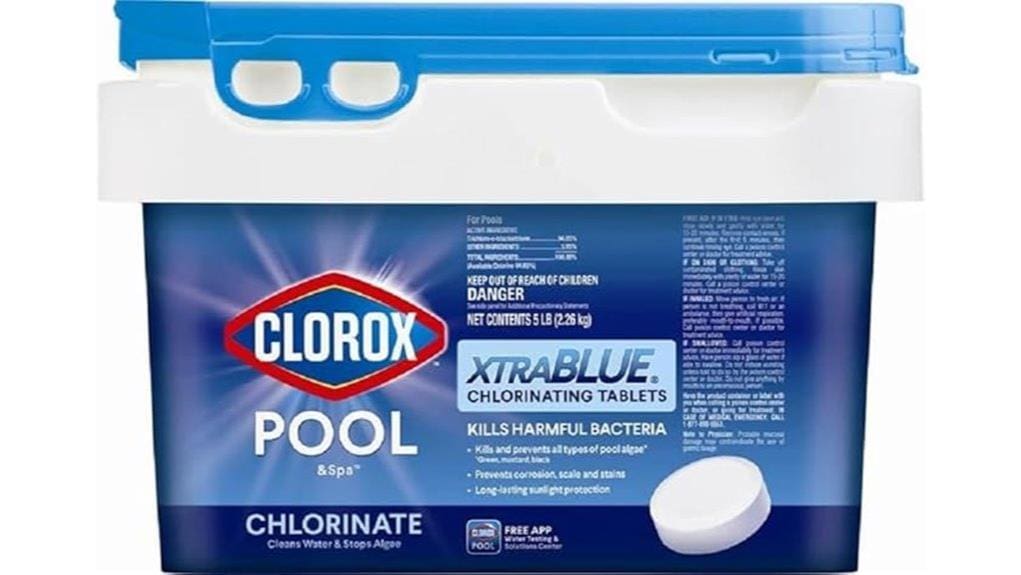
You’ll get stabilized, slow‑dissolving 3″ trichlor tablets that give predictable weekly chlorination for ~10,000‑gal pools when dosed correctly. They maintain free chlorine, limit UV loss, and help prevent common algae while conditioners reduce surface abrasion and improve feel. Wear gloves and eye protection, avoid mixing chemicals, and monitor cyanuric acid, pH, and chlorine to prevent corrosion and equipment stress. Keep tablets in proper feeders and continue for a full breakdown of use, limits, and alternatives.
Some Key Takeaways
- Stabilized 3″ trichlor tablets deliver consistent, slow-dissolving chlorine for routine weekly sanitation in typical pool systems.
- Individually wrapped tablets reduce handling, dosing errors, and contamination risk compared with bulk loose tablets.
- Includes stabilizer to limit UV degradation, but requires monitoring cyanuric acid and pH to maintain efficacy.
- Safe for vinyl, plaster, fiberglass, and tile when used correctly, but improper placement can corrode metals or damage liners.
- Recommended dosing guideline is two tablets per 10,000 gallons weekly, adjustable for bather load, sunlight, and chlorine demand.
What XTRABLUE 3” Tablets Are and Who They’re Best For
Designed for routine pool sanitation, Clorox Pool & Spa XTRABLUE 3” chlorinating tablets deliver stabilized, slow‑dissolving chlorine in individually wrapped doses so you can maintain consistent free chlorine levels with minimal handling. You’ll get 3” tablets formulated for weekly maintenance—typically two tablets per 10,000 gallons—reducing dosing frequency and exposure. The stabilizer limits UV degradation; conditioners mitigate surface corrosion and scaling. Use in floaters or feeders rated for 3” tablets and follow label safety: gloves, eye protection, dry storage. Ideal for swimming clubs and new homeowners who want reliable, low‑contact sanitation and clear guidance to keep community pools safe and compliant. Homeowners who enjoy their outdoor spaces should also regularly test pool water and consider using pool test strips to help keep water clear and balanced.
How the Tablets Perform: Sanitation, Algae Prevention, and Water Feel
While maintaining proper free chlorine levels, XTRABLUE 3” tablets deliver consistent sanitation by releasing a measured, stabilized dose of trichlor that inactivates bacteria and organic contaminants over an extended period. You’ll notice sanitation longevity with steady residuals that reduce microbial regrowth between treatments. The formulation targets all common algae types, preventing green, mustard, and black blooms when used correctly. Conditioners modulate water texture, giving a smoother, less abrasive feel on skin. You should still monitor cyanuric acid and pH to avoid efficacy loss. This performance summary emphasizes predictable control, communal safety, and confidence in weekly maintenance outcomes. These tablets are commonly used by homeowners who enjoy their outdoor spaces and maintain pools with shock treatment products.
Dosage, Handling, and Safety Tips for Weekly Maintenance
Regularly check pool volume and free chlorine before adding tablets, then dose precisely: place two 3″ tablets per 10,000 gallons in a float, automatic feeder, or chlorinator to maintain residuals, and adjust count upward or downward based on measured chlorine demand, bather load, sunlight, and cyanuric acid levels. Store tablets in a cool, dry, ventilated area; follow tablet storage instructions on the package and keep away from combustibles. When handling, wear gloves and eye protection, avoid mixing with other chemicals, and keep a community-minded log of additions. For shock events use calibrated emergency dosing; contact support if levels fail to respond. Keep a simple test kit on hand to routinely verify sanitizer levels and water balance for safe backyard swimming pool water safety.
Compatibility and Equipment Concerns: Surfaces, Filters, and Corrosion
When you use Clorox Pool & Spa XTRABLUE 3″ tablets, verify compatibility with pool surfaces, equipment, and filter media to prevent damage: the stabilized chlorine formulation is safe for vinyl, plaster, fiberglass, and tile when used at recommended concentrations, but high sustained free chlorine or improper feeder placement can accelerate corrosion of metal fittings, degrade sealants, and etch softer surfaces. You should inspect feeders and maintain proper dispersal to avoid tablet contact with liners. Monitor free chlorine and pH routinely; this protects surface compatibility and minimizes chemical stress. Check cartridges, DE grids, or sand beds for filter impact and schedule preventive maintenance. Homeowners should also consider routine filter maintenance to keep equipment functioning efficiently.
Value Comparison: Cost, Alternatives, and When to Choose XTRABLUE
Because tabletized stabilized chlorine combines prolonged UV protection with controlled dosing, XTRABLUE often delivers lower ongoing chemical costs and reduced maintenance labor than unstabilized granular alternatives. In a strict price comparison you’ll factor tablet count, ppm yield per dose, and handling risk; XTRABLUE’s individually wrapped 3” tablets reduce waste and dosing error. Consider alternative brands for bulk savings, but evaluate stabilizer content, dissolution rate, and compatibility with your feeder. Choose XTRABLUE when you prioritize predictable chlorine residuals, minimized handling exposure, and routine dosing for 10,000‑gallon systems. Always follow label safety instructions and test regularly to maintain compliant sanitizer levels. Many homeowners appreciate that these tablets are designed specifically for residential pools and outdoor use.
Some Questions Answered
Do These Tablets Have a Strong Chlorine Odor Indoors?
You won’t usually notice a strong scent indoors if you handle the tablets wrapped and store them sealed; however, some chlorine odor can occur during tablet unwrapping or if tablets are confined without indoor ventilation. You should open packages in well-ventilated areas, use gloves, and keep tablets sealed to limit fumes. Being cautious keeps you and others safe, and helps the group feel supported when managing pool chemicals responsibly.
Can I Use Them in a Solar Pool Heater System?
Yes — you can use them, but monitor your system. Their stabilized chlorine is generally solar compatibility-friendly, yet free chlorine can contribute to heater corrosion over time if levels spike or pH drifts. You’ll want to maintain recommended tablet dosing, keep pH and total alkalinity in range, regularly inspect solar panels and fittings, and use the Clorox Pool app for testing. Follow manufacturer guidance so everyone sharing the system stays safe and included.
Are They Safe for Use With Saltwater Chlorinators?
No — you shouldn’t use these tablets with a saltwater chlorinator. They’re not designed for salt compatibility and can upset compatible equipment by introducing stabilized chlorine and additives that interfere with generator operation. To protect your system, follow manufacturer guidance, use recommended pool-grade salt and feed systems, and consult customer service if you need a sanitizer that maintains electrolysis performance while keeping your pool safe and balanced.
What Is the Shelf Life of Unopened Tablets?
Unopened tablets typically remain effective for about 3–5 years if stored properly. You’ll keep potency by following recommended storage conditions: cool, dry, ventilated area away from sunlight and combustible materials. Manufacturers rely on expiration testing to set conservative dates; if you want reassurance, perform chlorine residual checks before use. You’ll join others who prioritize safety by discarding tablets showing discoloration, stuck wrappers, or a musty odor.
Do Wrappers Biodegrade or Require Special Disposal?
No — the individual wrappers aren’t designed to biodegrade; you shouldn’t expect safe wrapper composting. You’ll need to handle packaging recycling per local rules or dispose as non‑hazardous solid waste. For safety, dry any chemical residue, wear gloves, and keep wrappers away from food/soil. You’re part of a responsible community when you follow manufacturer guidance and local waste protocols to prevent environmental contamination and protect shared spaces.