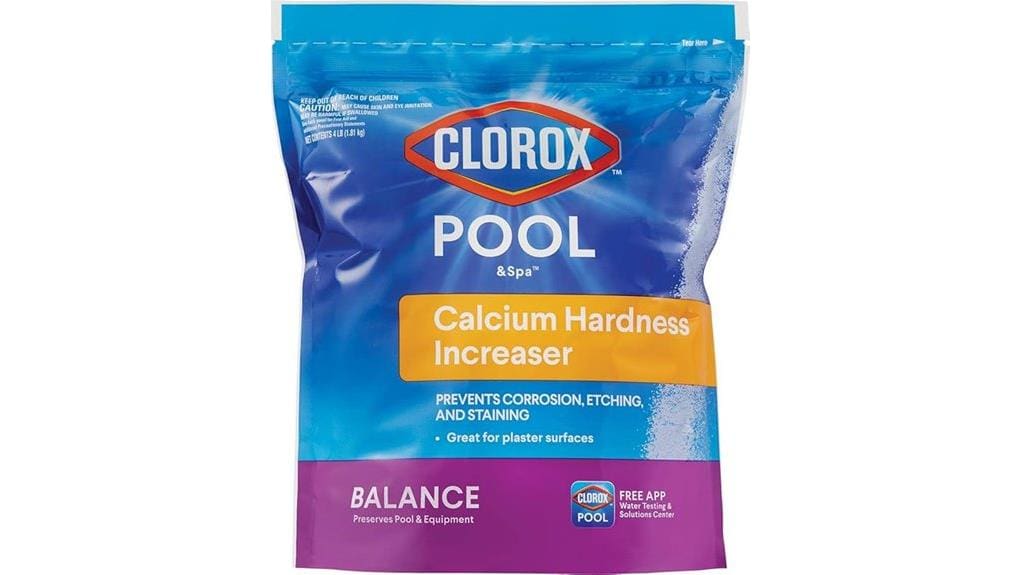
You’ll get a compact 4 lb granular treatment that raises calcium hardness to protect plaster and metal fittings in small- to mid-size outdoor pools. Use it when tests show low hardness to prevent etching, corrosion, and staining by adding dissolved calcium ions. Measure by pool volume, pre-dissolve if advised, broadcast with the pump running, then retest in 24 hours and adjust in small increments. It’s precise and predictable for soft-water systems; keep reading for full guidance.
Some Key Takeaways
- Effective granular formula raises calcium hardness predictably for small- to medium-sized plaster pools when dosed per product chart.
- Typically measurable hardness increases occur within 24–48 hours with proper pre-dissolving, even broadcasting, and pump circulation.
- Protects plaster and metal fittings from etching and corrosion in soft-water systems when used as part of routine testing.
- 4 lb packaging is convenient for homeowners but requires repeated purchases for larger pools or rapid corrections.
- Performance can be reduced by poor circulation or uneven dissolution, so retest after 24 hours and add in small increments if needed.
Quick Verdict: Is Clorox® Pool&Spa™ Calcium Hardness Increaser Worth Buying?
If your pool has low calcium hardness or you’re dealing with soft-water corrosion risks, Clorox® Pool&Spa™ Calcium Hardness Increaser delivers a straightforward, technical solution: it’s a granular, 4 lb dosing product that reliably raises total hardness to prevent etching, staining, and equipment wear. You’ll find it effective, easy to dose, and compatible with plaster and soft-water systems. Use it as part of a clear water chemistry plan and integrate dosing into your routine maintenance schedule. It fits homeowners who want dependable results, predictable adjustments, and reassurance that their surfaces and gear will remain protected. It’s a good option for homeowners who enjoy managing their outdoor spaces and want to keep pool water balanced.
What It Does and When Your Pool Needs Calcium Hardness Increase
Having established that this product reliably raises calcium levels, here’s what it actually does and when you need it: the granular formula adds dissolved calcium ions to raise total hardness, which stabilizes water chemistry and prevents plaster etching, metal corrosion, and staining caused by undersaturated water. You’ll use it when calcium testing shows hardness below recommended ranges or when soft water care measures are required. Correct hardness supports overall water balance, protects plaster surfaces, and reduces corrosive wear on equipment. For confident pool ownership, follow testing schedules and address low readings promptly to maintain plaster protection and system longevity. Homeowners who enjoy their outdoor spaces should also consider regular use of pool algaecides as part of comprehensive pool care.
How to Use It Safely: Dosage, Application Steps, and Testing Tips
When your pool test shows low calcium hardness, follow precise dosing and safe application to avoid localized scaling or cloudy water; always calculate the needed pounds from your pool volume and the product’s treatment chart before adding any granules. Measure and add granules to a bucket of pool water, pre-dissolve if recommended, then broadcast evenly around deep area with pump running. Wear protective gear and avoid inhalation or skin contact. Test hardness 24 hours after treatment; repeat in small increments if needed. Store unopened in proper storage conditions. Keep emergency procedures accessible and follow environmental disposal rules for containers. Homeowners who enjoy their outdoor spaces should also maintain proper total alkalinity to support overall water balance and equipment longevity, see total alkalinity.
Performance Review: Effectiveness, Speed, and Impact on Pool Surfaces/Equipment
After you’ve adjusted calcium levels safely and confirmed the new reading, evaluate how effectively the Clorox Pool&Spa Calcium Hardness Increaser raises and stabilizes hardness across the system. You’ll see measurable increases within 24–48 hours when circulated properly; repeat testing confirms stability. Its granular formula offers predictable contributions per dose, though dosing variability can occur with uneven dissolution or poor circulation—so mix and run pump. You’ll preserve surface protection on plaster and metal fittings when levels reach recommended ranges, reducing etching and corrosion risk. Follow testing cadence and adjust slowly; that communal care keeps your pool and gear performing reliably. Consider choosing compatible filter media like pool sand to help capture particulates and maintain overall water clarity.
Pros, Cons, and Who Should (Or Shouldn’T) Buy This 4 Lb Granule Pack
Typically, you’ll find this 4 lb granular pack best suited for small- to medium-sized plaster pools and owners dealing with naturally soft water who need predictable, incremental hardness increases. You’ll appreciate pros: precise dosing, granular solubility, and protection against corrosion and etching—useful for plaster pool maintenance and soft water homeowners. Cons: limited quantity (requires repeat purchases for larger pools), slower correction rate versus bulk products, and handling precautions for dusty granules. Buy if you prioritize controlled adjustments, localized plaster care, and app-guided dosing. Don’t buy if you manage large-volume pools or need rapid, single-dose correction. It also helps maintain proper mineral balance, which is key to keeping your pool water balanced.
Some Questions Answered
Is This Product Safe for Use With Saltwater Chlorine Generators?
Yes — you can use it with saltwater chlorine generators. You’ll maintain proper calcium hardness to protect equipment and plaster, and you’ll avoid scale if you monitor levels. For salt cell compatibility, keep hardness within recommended ranges to reduce deposits on electrodes. You’ll perform regular electrode maintenance and cleaning as part of your routine. Follow dosing guidance and test frequently so your system and community of users stay protected and included.
Can I Mix It With Other Pool Chemicals When Dosing?
You shouldn’t mix it directly with other chemicals; you’ll avoid adverse chemical interactions by dosing separately. Add the granular calcium hardness increaser to circulating water, allow full dissolution and circulation, then wait before adding sanitizers, shock, or pH adjusters. Follow a clear dosing sequence: add, circulate, test, then proceed. That practice protects equipment, maintains water balance, and helps everyone using the pool feel safe and included.
How Long Does One 4 Lb Bag Typically Last for Average Pools?
About 1–3 months, depending on pool size and weekly dosing. For a typical 15,000–20,000 gallon pool, a 4 lb bag provides usage estimates to raise calcium modestly for one to two maintenance intervals; if you test and dose weekly it may last around 8–12 weeks. Smaller pools or occasional shock adjustments will stretch it longer, while frequent large corrections or plaster pools will shorten its effective lifespan.
Is It Suitable for Vinyl or Fiberglass Pool Surfaces?
Yes — you can use it, but treat vinyl compatibility and fiberglass testing cautiously. You’ll raise calcium hardness safely, yet vinyl liners and fiberglass finishes don’t require high CH like plaster. Test a small area and monitor levels; follow manufacturer dosage and dilute granular product before adding to avoid local spots. Join fellow pool owners in routine testing, keep hardness within recommended ranges, and document results for consistent, shared best practices.
Are There Temperature or Weather Restrictions for Application?
Yes — you can apply any time the pool isn’t agitated by heavy rain or freezing conditions; avoid adding product during storms or when temperatures are below freezing because weather impact can dilute or prevent dissolution. For best results, apply timing during mild, calm weather and when pump circulation is running to distribute granules. You’ll protect equipment and finishes by waiting for steady temperatures and minimal precipitation before treatment.