You’ll like Doheny’s ProDrive if you want a fast, no-fuss above-ground cleaner that trades heavy scrubbing for strong 80 GPM suction and a 43-ft cable suited to most 33′ round or 20’x40′ ovals. It covers quickly and handles loose leaves and grit, though fine silt and complex corners need repeats. The polypropylene build, onboard basket, and app make upkeep easy but expect frequent emptying and a modest one-year warranty. Scroll on to learn specifics and alternatives.
Some Key Takeaways
- ProDrive suits above-ground pools up to ~33′ round or 20′ x 40′ oval with a durable polypropylene shell and 43-ft cable.
- Suction is rated 80 GPM, handling loose leaves and grit quickly but fine silt may need repeat passes.
- Coverage claims 2,756 ft/hr for fast runs, though complex shapes require slower, repeated spot-cleaning.
- Onboard cartridge plus removable filter basket maintains flow; frequent emptying and rinsing recommended.
- Single-motor design, limited spare parts, and a 1-year warranty mean potential paid repairs after year one.
What the ProDrive Above Ground Robotic Cleaner Is and Who It’s For
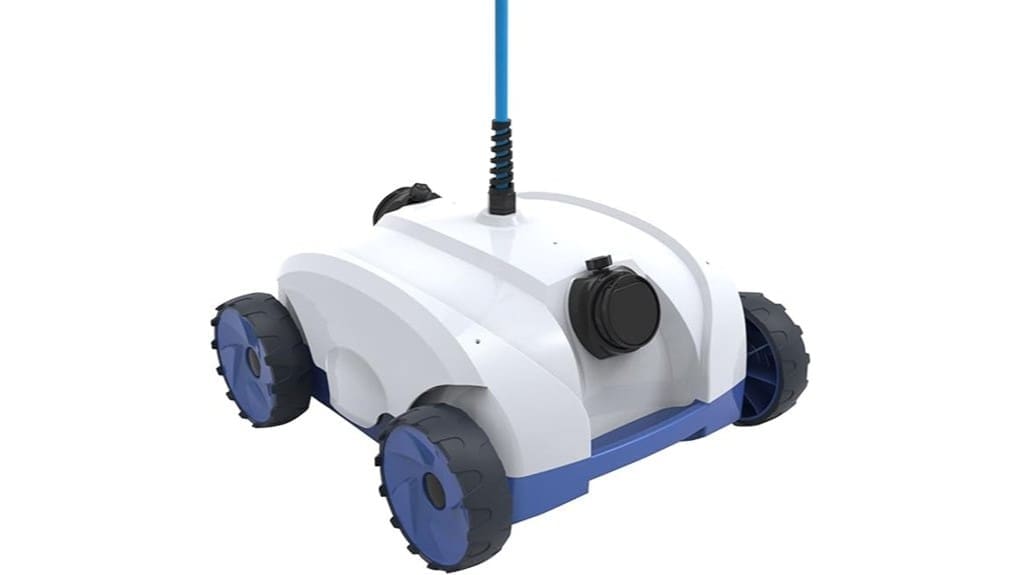
While it’s built specifically for above-ground pools, the ProDrive Above Ground Robotic Cleaner targets any pool owner who wants fast, hands-off debris removal for pools up to about 33′ round or 20′ x 40′ oval. You’ll see clear above ground suitability: polypropylene build, 43-ft cable, and an onboard filter that spares your main system. Compared to suction-only options, it’s self-propelled and app-noted, offering predictable coverage rates. Critically, it’s aimed at homeowners who value convenience over commercial-grade scrubbing; target users include busy families, seasonal pool owners, and those with limited maintenance time. It’s practical but not industrial. The cleaner is part of a broader market of robotic pool vacuums designed for homeowners who enjoy their outdoor spaces and want low-effort maintenance with robotic vacuums.
Real-World Performance: Suction, Coverage, and Cleaning Speed Tested
Having established who the ProDrive serves, let’s look at how it actually performs in the pool. You’ll notice strong suction—rated at 80 gallons per minute—grabs loose leaves and grit quickly, though fine silt needs repeated passes. Coverage claims (2,756 ft/hr) translate to fast runs across standard layouts, but turns on complex shapes slow effective sweep. Flow dynamics favor concentrated intake zones; that boosts pickup where debris clusters but leaves thin films around corners. Compared with peers, ProDrive is speedy and purposeful, yet you’ll still manage debris distribution by routing runs and accepting occasional spot-clean repeats for total clarity. It’s an attractive choice for homeowners who value effortless pool cleaning and relaxing outdoor living.
Design, Controls, and Filtration System: How the Unit Works Day to Day
Because the ProDrive combines a self-propelled motor with an on-board filtration basket and an expanding cartridge tank, you’ll get a practical balance of hands-off operation and straightforward maintenance. You’ll appreciate the compact polypropylene shell and 43-foot cable that let it reach typical above-ground layouts without fuss. Controls are simple: on-board buttons suffice, while app integration offers scheduled runs and remote starts—handy for regular daily routines but less refined than some competitors’ apps. Filtration pairs a removable basket with the expanding cartridge to maintain 80 GPM flow; it’s efficient, yet you’ll still check and empty debris more often than with larger, premium units. For homeowners who prefer low-maintenance options tailored to above-ground pools, choosing the right manual or automated vacuum is key to keeping your outdoor space pristine, and understanding manual pool vacuum basics helps inform that decision.
Pros, Cons, and Upkeep: Maintenance, Reliability, and Warranty Expectations
The ProDrive’s simple controls and on-board filtration make daily use straightforward, but you’ll want to understand the upkeep and long-term reliability trade-offs before buying. You’ll appreciate low daily effort: emptying the extra-large cartridge and rinsing the filter basket are quick. Maintenance tips include rinsing after each use, checking seals on the waterproof housing, and storing the unit dry to prevent cord wear. Downsides: single motor design can strain with heavy debris and replacement parts aren’t abundant. Warranty expectations are modest — a 1-year limited warranty and vendor 30-day return; plan for occasional paid repairs after year one. Above-ground pools often require specialized cleaners, so verify compatibility with your pool type and setup, especially models designed for above-ground pools.
Should You Buy It? Use Cases, Alternatives, and Final Buying Recommendation
While the ProDrive handles routine above-ground pool cleaning quickly and with minimal input, you should weigh its single-motor limits and parts availability against your pool’s debris load and budget for repairs. If you have small to medium pools and light leaf or sand loads, you’ll appreciate fast coverage, simple setup, and app control. For heavy debris, consider purchase alternatives with dual motors or higher-capacity filters for better long term durability. Compare warranties, spare-part availability, and real-world reviews. Recommendation: buy if you want low-effort maintenance for modest needs; seek sturdier models if you expect frequent heavy cleanup. Many homeowners upgrade to complete pump installation kits to optimize performance and longevity for their outdoor pool setups, especially when integrating robotic cleaners with existing systems and pump accessories.
Some Questions Answered
Is the Cleaner Safe to Use With Vinyl Pool Liners?
Yes — you can use it with vinyl liners, but check vinyl compatibility and monitor liner durability. The cleaner’s polypropylene shell and soft contact points reduce abrasion compared with rigid vacuum heads, yet its powerful self-propelled motor and high flow mean it can press firmly against liners. You’ll want to test gently, avoid sharp debris, and inspect seams regularly. Compared to lighter manual options, it’s efficient but requires cautious use to protect liner durability.
Can It Climb Pool Walls or Just Clean the Floor?
It climbs walls as well as floors; you’ll get both floor cleaning and wall traction on moderate slopes. You’ll notice good incline handling for typical above-ground pool walls, though it’s not meant for steep or heavily textured surfaces. Compared with basic suction vacuums, it’s more capable at maintaining contact while ascending. Still, expect variable performance on very slick liners or extreme angles, so judge by your pool’s wall texture.
How Noisy Is the Unit During Operation?
You’ll find the unit reasonably quiet; motor noise is noticeable but not harsh, sitting at a moderate level compared with heavy-duty suction cleaners. You’ll still hear water agitation and flow from the 80 gallons-per-minute filtration, which can mask some hum. Critically, expectations should be tempered: it’s louder than battery-powered units but quieter than older corded models. Overall, it balances power and acceptable operational sound for most backyard pools.
Are Replacement Cartridges Readily Available?
Yes — you’ll find filter cartridges available from Doheny’s and third-party sellers, though availability varies. You’ll want to compare replacement costs: genuine cartridges tend to cost more but match specs, while cheaper alternatives can save money yet may reduce flow or lifespan. Be critical: check compatibility and dimensions before buying. Compared to other above-ground models, sourcing parts is reasonable but not as effortless as mainstream brands, so plan ahead.
Does the App Support Scheduling and Remote Start?
Yes — you can schedule cleanings and start remotely. You’ll use mobile control to set timers and trigger runs, and the app sends push notifications about cycle starts, completions, and errors. Compared to simple remote-only units, this adds convenience and oversight, though app responsiveness can vary. You’ll appreciate scheduling for routine maintenance, but be prepared to troubleshoot occasional connectivity hiccups versus more polished smart-cleaner ecosystems.