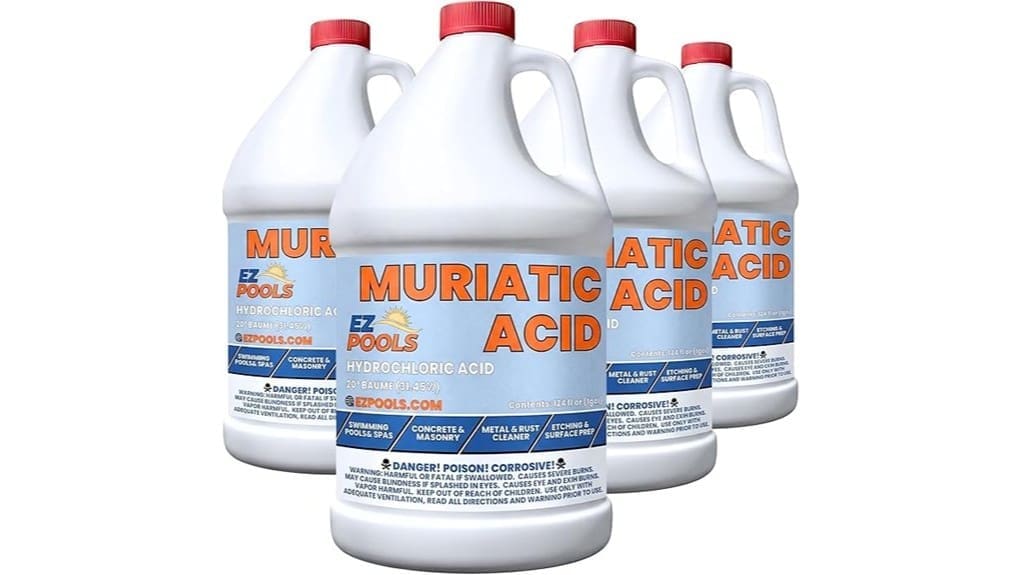
You’ll get concentrated, professional‑grade muriatic (hydrochloric) acid in a 4×1‑gallon pack that reliably lowers pool pH and total alkalinity when dosed correctly. You’ll need PPE, measured dilution, and cautious incremental application to hit a 7.2–7.6 pH target and avoid corrosion or metal staining. It also dissolves calcium scale for spot cleaning when contained and rinsed. Continue for step‑by‑step dosing, dilution, and alternative treatment guidance.
Some Key Takeaways
- Concentrated professional-strength muriatic acid in 4×1‑gallon jugs, suitable for residential and commercial pool pH reduction.
- Rapid, predictable pH and alkalinity lowering when dosed correctly, enabling fewer adjustment increments.
- Effective at dissolving calcium scale and mineral stains for targeted tile or plaster cleaning.
- Requires strict PPE, pre-dilution, measured dosing, and secure storage per label to prevent hazards.
- Consider alternatives (sequestrants, algaecides, professional acid wash) for metal stain, persistent algae, or severe scale.
Quick Verdict: Who Should Buy EZ Pools Muriatic Acid and Why?
If you manage residential or commercial pools or spas and need a concentrated, professional-grade pH reducer, EZ Pools Muriatic Acid is a practical choice because it delivers high-purity hydrochloric acid in a convenient 4×1 gallon pack for routine water balancing and targeted surface cleaning. You’ll appreciate its professional-grade concentration when adjusting pH to the 7.2–7.6 target and lowering total alkalinity. Homeowners seeking a reliable, concentrated product will find clear dosing guidance valuable. Commercial operators recommended to use it for larger-volume adjustments and tile scale removal. Always use PPE, measure before dosing, and store securely per label instructions. Regular shock treatment and proper dosing help keep your pool sparkling and reduce algae risk, especially when following best practices for shock treatment.
Performance Review: pH Lowering, Alkalinity Control, and Stain/Scale Removal
Because EZ Pools Muriatic Acid delivers a concentrated hydrochloric acid solution, you’ll see rapid and predictable pH reductions when dosed correctly, allowing you to bring pool water into the recommended 7.2–7.6 range with fewer increments than weaker products. You’ll also lower total alkalinity efficiently, enabling precise adjustment of carbonate buffering to maintain pH stability once corrected. For stain and scale removal, the acid dissolves calcium deposits and mineral stains on tile and plaster, giving controlled results in spot treatments. Monitor metal levels and implement Corrosion mitigation strategies—this chemical is effective but aggressive; follow testing protocols to protect surfaces. For routine maintenance and safety, pair treatments with proper chlorine tablet handling and storage to keep your pool sparkling.
How to Use It Safely: Dosing, Dilution, Surface Cleaning, and PPE
Having effective pH and alkalinity control and successful stain removal means you’ll need disciplined handling practices to protect yourself, the pool, and surrounding surfaces. Calculate dose from pool volume and target pH, add acid incrementally, retest after 30 minutes. Always pre-dilute acid into a plastic bucket with plenty of water—never add water to acid. For tile or spot cleaning, apply diluted acid with a brush, rinse thoroughly, and contain runoff. Use personal ventilation when working in confined areas, chemical-resistant gloves, goggles, and an acid apron. Keep neutralizing solutions (baking soda or soda ash) and fresh water nearby for spills or drips. Store chemicals in a cool, dry, well-ventilated area away from sunlight and incompatible substances, using corrosion-resistant containers when possible.
Packaging, Specs, and Value: 4×1‑Gal Details, Weight, Brand, UPC/ASIN, and Cost Comparison
While you shop, note that EZ Pools Muriatic Acid comes as four 1‑gallon plastic jugs (total 512 fl oz, listed weight 20 lb) under the EZ POOLS brand with UPC 656089071709 and ASIN B0CVDD7CN6, giving you a compact, service‑friendly pack size suited to regular pool maintenance and spot treatments. You’ll inspect packaging integrity: tamper‑seal caps, HDPE jugs, and secure carton padding reduce leakage risk. Specs are explicit—hydrochloric acid solution, professional strength, clear unit count. For value, perform a cost comparison per fluid ounce against competitors; factor shipping, return policy, and warranty to confirm overall lifecycle cost and safety compliance. Homeowners who enjoy their outdoor spaces should also consider pool water test routines to keep pool chemistry balanced.
Alternatives and When to Choose a Different Chemical or Professional Service
After checking packaging, specs, and per‑ounce cost, consider when muriatic acid is not the right choice and what to use instead. If high chlorine demand, persistent algae, or visible biofilm occur, choose targeted algae treatment (algaecide, shock) rather than routine HCl dosing. For metal staining, use sequestrants; for calcium scale, use controlled acid washes performed with corrosion inhibitors. If you lack PPE, detect hidden structural issues, or read abnormal test strips, schedule a professional inspection. That lets a qualified technician recommend alternative chemistries or services and prevents overcorrection, surface damage, or unsafe handling of concentrated HCl. Maintaining proper pool pH and alkalinity helps ensure clearer, safer water and reduces the need for frequent corrective acid additions for balanced pool chemistry.
Some Questions Answered
Is This Muriatic Acid Safe for Use in Saltwater Pools?
Yes — you can use this muriatic acid in saltwater pools, but you’ll need to manage salt compatibility and electrode corrosion risks. You should add acid slowly, dilute if possible, and avoid pouring near cell electrodes or metal components. Monitor pH and total alkalinity closely and follow manufacturer safety guidelines. Using proper dosing and circulation minimizes corrosion potential to salt chlorination cells and pool hardware, preserving system longevity and safety.
Can It Damage Pool Liners or Vinyl Surfaces?
Yes — if misused, muriatic acid can damage liners or vinyl surfaces. You should avoid concentrated contact; always dilute per directions and apply cautiously to prevent liner compatibility issues and surface etching. Use protective gear, test on small discrete areas, and rinse thoroughly after treatment. For acid washing, follow manufacturer thresholds for concentration and contact time, and consult a professional if unsure to minimize chemical degradation and physical etching risks.
What Is the Shelf Life Once a Bottle Is Opened?
You should expect opened muriatic acid to remain effective for about 1–2 years if you control storage conditions; it degrades slowly but will lose potency over time. Store tightly sealed in a cool, dry, well-ventilated area away from metals and sunlight to minimize degradation rate. You’ll monitor for cloudiness, off-odors, or corrosion of the container; if observed, dispose per local hazardous-waste rules and replace the product.
Are There Special Disposal Instructions for Leftover Product?
Yes. You must follow local disposal regulations and never pour concentrated acid down drains or into soil. Wear PPE, then neutralize small quantities by slowly adding baking soda to a plastic container while stirring until fizzing stops and pH reaches ~7. Test pH, dilute with plenty of water, and dispose per municipal hazardous-waste guidance. For larger volumes or uncertainty, contact local hazardous-waste authorities or a licensed disposal service.
Is It Allowed for Use in Commercial/Municipal Pools?
Yes — you can use it in commercial/municipal pools, provided you follow commercial restrictions and regulatory compliance. You’ll need to make certain dosing, storage, transport, and SDS procedures meet local codes and facility operating permits. Train staff on PPE, spill response, and ventilation. Keep accurate logs, secure containers, and coordinate with local health/environmental agencies for permitted uses. Noncompliance can lead to fines or shutdowns, so verify regulations before use.