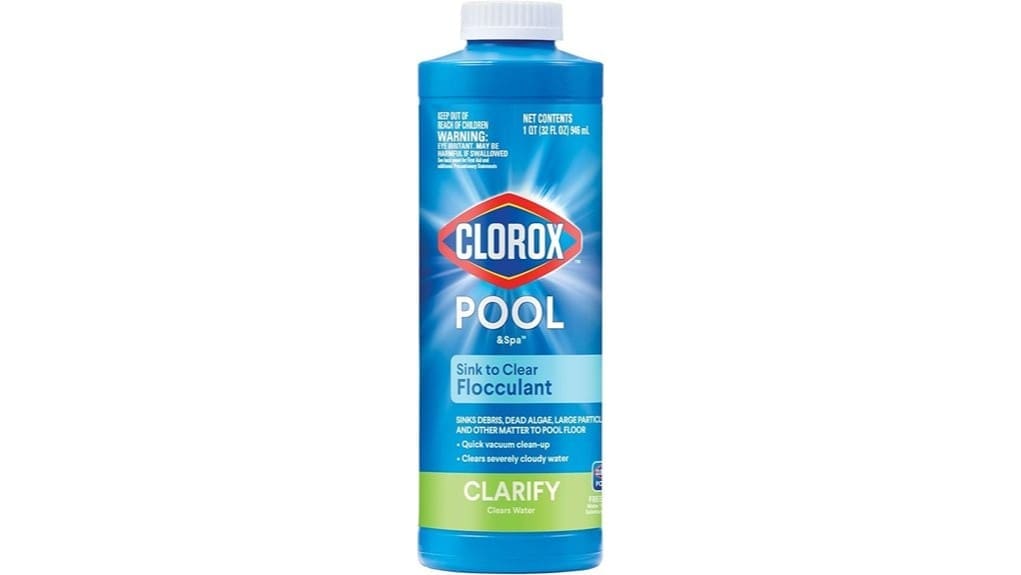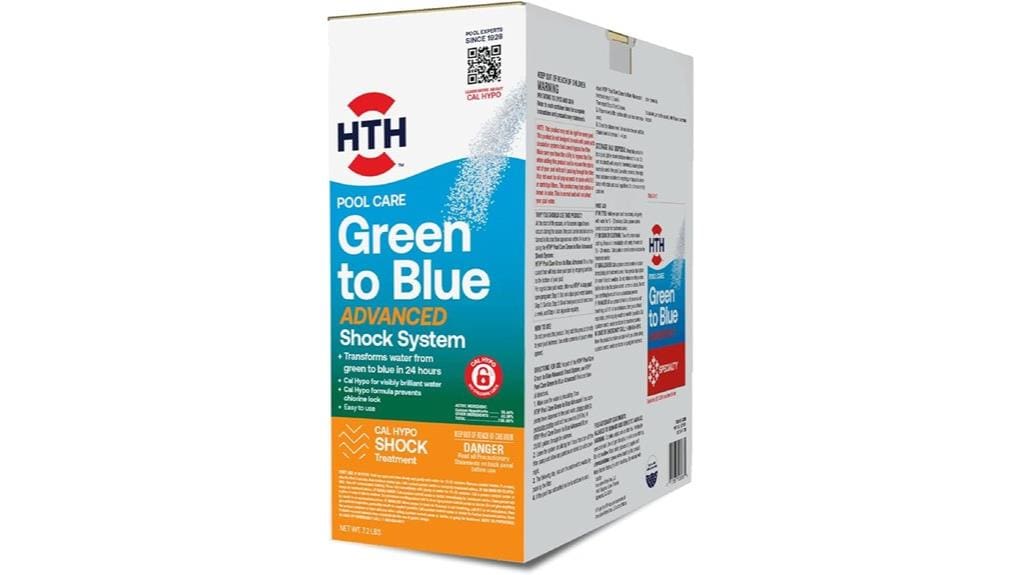
You get two powder packs: a concentrated calcium‑hypochlorite shock (Pack I) to rapidly oxidize heavy algae, then a flocculant (Pack II) to coagulate dead cells into vacuumable flocs. When used sequentially with proper pH, 12+ hours circulation, and vacuum‑to‑waste, it restores clarity and lowers turbidity quickly; severe blooms may need brushing and repeat treatment. It’s effective for vinyl pools with waste plumbing, safe with PPE, and the detailed protocol that follows explains timing and precautions.
Some Key Takeaways
- HTH 52038 pairs a high‑dose calcium hypochlorite shock with a flocculant to rapidly kill algae and coagulate dead biomass for removal.
- Best results require pH 7.2–7.6, running the pump 8–12+ hours after shock, then applying flocculant and shutting pump 6–24 hours to settle.
- Designed for vinyl‑lined pools and systems that can vacuum to waste; vacuuming settled flocs to waste is essential for clarity.
- Safety: powders are reactive—use PPE, never mix chemicals, store separately, and monitor filters during treatment.
- Effective for severe green algae where fast remediation is needed; repeated treatments or professional help may be necessary for heavy organic loads.
What This Kit Includes and How the Two-Step Green to Blue System Works
When you open the HTH 52038 kit, you get two distinct powder packs designed to work sequentially: Pack I contains calcium hypochlorite shock that delivers a high-concentration chlorine dose to kill severe algae, and Pack II contains a flocculant that coagulates dead algae and fine particles so they settle for vacuuming to waste. You’ll apply Pack I to initiate rapid shock chemistry, oxidizing organics and neutralizing blooms. After contact time and recommended circulation, you’ll add Pack II to promote particle settlement and form removable flocs. The procedure is methodical, repeatable, and intended for pools that vacuum to waste. This system is aimed at homeowners who enjoy their outdoor spaces and want an effective shock treatment option for restoring pool clarity.
How Effective Is the HTH 52038 at Clearing Severe Algae and Restoring Blue Water?
Evaluate the HTH 52038 by its kill rate, settling efficiency, and measurable water-quality improvements after treatment. You’ll see fast efficacy: cal hypo shock rapidly oxidizes algae, dropping viable counts so suspended biomass responds within 24 hours. The flocculant yields high settling efficiency, consolidating fines for vacuum-to-waste removal. You can measure success via reduced turbidity, restored clarity, and stabilized free chlorine without CYA buildup. For severe blooms you’ll need thorough brushing and vacuuming after treatment. Expect a clear endpoint when test strips show balanced pH and free chlorine; then implement long term maintenance to prevent recurrence and preserve results. This product is intended for homeowners maintaining pool water chemistry and residential pools as part of regular outdoor space care.
Compatibility, Safety, and Pool-Care Limitations You Need to Know
Although the HTH 52038 kit effectively kills and settles algae, you need to take into account compatibility constraints, safety protocols, and operational limits before use. You’ll confirm pool compatibility: it’s suitable for vinyl-lined and any pool that can vacuum to waste, but systems without waste plumbing or delicate finishes may limit floc removal. Treat powders as reactive; follow PPE, avoid mixing with other chemicals, and store separately to mitigate chemical hazards. Expect operational limits: heavy organic load may require repeated treatment, and pumps/filters need monitoring during settling. You’ll coordinate testing, vacuuming, and support to assure safe, effective results. Keep a stocked supply of essential pool opening chemicals and tools on hand to streamline the opening process and address common issues.
Step-by-Step Use, Timing, and Tips for Best Results (Pack I Shock → Pack II Flocculant)
Begin by confirming pool balance and equipment readiness: test and adjust pH (7.2–7.6), alkalinity (80–120 ppm), and calcium hardness per manufacturer guidance, make certain pump and filter are operating, and verify you can vacuum to waste. Follow this equipment checklist: skimmer clear, pump running, filter clean, vacuum-to-waste set. Apply Pack I shock evenly at dusk; run circulation 8–12 hours — ideal timing maximizes contact without sun degradation. After visible clearing or minimum 12 hours, apply Pack II flocculant per label, shut off pump 6–24 hours to settle, then vacuum to waste. Rinse filter and retest; repeat only if necessary. Homeowners who value outdoor living often use pool clarifiers and clear pool water to maintain inviting pools.
Who Should Buy It and Alternatives to Consider Before Purchasing
If you’re dealing with a severe algae bloom and can vacuum to waste, this two-step HTH 52038 kit is designed for you: its calcium hypochlorite shock delivers rapid, high‑strength chlorine while the flocculant collapses suspended algae for vacuuming. You should buy it if you need fast remediation, understand vacuum‑to‑waste procedures, and plan consistent seasonal maintenance. It’s efficient for pool owners who value proven chemistry and community-tested protocols. Alternatives: single‑step non‑cal hypo shocks for simpler handling, enzymatic clarifiers for gentler upkeep, or professional remediation for extensive biofilm. Budget buyers may prefer lower‑dose options despite slower results. Consider pairing shock treatments with natural enzyme maintenance products to help keep your pool clearer between intensive remediations.
Some Questions Answered
How Long Does the Kit Last for Routine Maintenance After Algae Removal?
You’ll get roughly one to two maintenance treatments from the kit after algae removal, depending on pool size and algae recurrence risk. Calculate dosage based on pool gallons and follow a strict maintenance schedule: test twice weekly, shock as needed, and vacuum settled flocculant to waste. If you’ve a larger pool or frequent algae recurrence, plan for additional kits; smaller, well-balanced pools will stretch this kit farther within your care community.
Can I Store Unopened Packs Outdoors or in High Heat?
No — you shouldn’t store unopened packs outdoors or in high heat. Keep the kit in a cool, dry place with stable storage temperature and minimal UV exposure to preserve calcium hypochlorite potency and prevent decomposition. High temperatures or sunlight can degrade effectiveness and raise safety risks. Store away from combustibles, moisture, and direct light, label clearly, and join others managing pool chemicals responsibly to maintain safety and performance.
Is This Kit Safe to Use With Pool Automatic Chlorinators?
Yes — you can use the kit with pool automatic chlorinators, but you should avoid adding Pack I (calcium hypochlorite) directly into the chlorinator to prevent corrosion and unpredictable chemical interactions. Treat manually per instructions, allow residual chlorine to return to normal, then resume chlorinator operation. Test frequently for free chlorine and stabilizer; this minimizes chlorinator compatibility issues and guarantees safe, collective pool chemistry while keeping you part of a responsible pool-care community.
Will the Flocculant Affect My Pool Filter’s Lifespan?
Yes — the flocculant can shorten filter lifespan if you don’t vacuum to waste promptly. You’ll settle particles to the floor; if you instead backwash or run them through the filter, you risk accelerated media abrasion and trapped solids that wear media and laterals. You should vacuum to waste and perform routine maintenance to minimize media abrasion. Doing so preserves filter lifespan and keeps your pool equipment working reliably while you belong to a care-focused community.
Are Refill Packs Available for Just Pack I or Pack II?
No—manufacturer sells the kit as a paired system; separate replacement packs for Pack I or Pack II aren’t commonly offered. You can contact customer service for warranty or sourcing, and they can advise on replacement packs or compatible alternatives. Check a compatibility chart if you plan to substitute components to confirm pool type and vacuum-to-waste capability match. You’ll stay supported by the community and technical resources when making replacements.