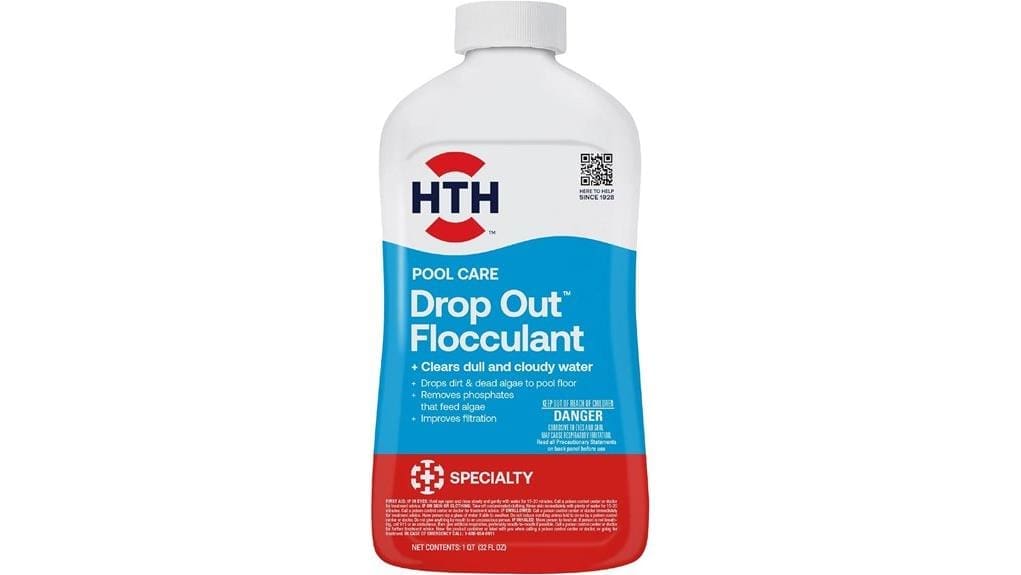
You’ll find HTH 67080 Drop Out flocculant reliably gathers colloids and fine organics into larger flocs that settle to the pool floor within 6–24 hours, letting you vacuum-to-waste rather than strain through the filter. A 1-qt dose treats typical residential pools, works in salt systems, and shows no measurable pH shift; it speeds settling, reduces turbidity and filter load, and minimizes backwashes. If you want practical steps, safety notes and buying guidance, keep going for specifics.
Some Key Takeaways
- Rapidly aggregates colloids and fine organics into larger flocs for quick settling and easier removal.
- One 1-qt dose clarifies typical residential pools, showing visible improvement within hours and near-clear by next day.
- Requires pool filtration set to waste and vacuum-to-waste removal; not effective if you must strain flocs through the filter.
- Compatible with saltwater systems and chlorine generators, with no measurable pH shift reported.
- Reduces filter load and backwashes but is a recurring expense and not a substitute for routine filtration maintenance.
How HTH 67080 Drop Out Flocculant Works and Who Should Use It
Because suspended particles and fine organics resist normal filtration, HTH 67080 Drop Out Flocculant gathers those colloids into larger flocs that sink to the pool floor, letting you vacuum them to waste rather than strain them through the filter. You’ll apply the 1-qt formula directly, following package instructions, for targeted particle aggregation that accelerates settling. Data-focused users will note compatibility with saltwater and neutral pH impact. This product suits pool owners who can vacuum to waste and want measurable sediment removal without altering equipment. You’ll get a practical, predictable method for converting cloudy water to clear with minimal system changes. Many homeowners appreciate how this fits into simple pool care routines for maintaining clear pool water.
HTH 67080 Performance: Clearing Cloudy Water and Improving Filtration
When you apply HTH 67080 Drop Out Flocculant as directed, it rapidly aggregates colloidal and suspended particles into larger flocs that sink to the pool floor, enabling efficient vacuum-to-waste removal and reducing the load on filtration systems. You’ll observe a predictable clarity timeline: visible improvement within hours and near-complete clearing by the next day under recommended conditions. Measured particle settling speeds are enhanced compared with untreated water, decreasing turbidity and extending effective filter run times. You’ll benefit from fewer filter backwashes and clearer water without altering pH or harming equipment, reinforcing confidence in routine pool maintenance. Homeowners who enjoy their outdoor spaces often find that using flocculants simplifies maintenance and preserves clearer pool water for longer.
Step-by-Step Application and Best Practices for Vacuum-to-Waste Pools
To move from observed clarity improvements to practical removal, start by confirming your pool’s filtration can be set to waste and that you’ll vacuum directly to drain rather than through the filter; this lets the flocculated solids leave the system without overloading or clogging filter media. Test and record baseline turbidity and chlorine in pre treatment testing. Apply HTH 67080 per label, allow particle settling 6–24 hours, then vacuum slowly to waste at low suction. Dispose of removed solids. Conduct post application monitoring of turbidity and sanitizer one and 24 hours after removal. Share results with peers for consistent outcomes. For routine maintenance and effective chemical handling, incorporate proper shock treatment and follow manufacturer recommendations.
Compatibility, Safety, and Maintenance: Salt Pools, pH, and Equipment Impact
Although you’ll be treating cloudy water quickly, you can use HTH 67080 Drop Out Flocculant confidently in saltwater pools since it’s formulated to be compatible with saline systems and won’t interfere with your chlorine generator, won’t alter pH, and won’t harm filter components. You’ll monitor sanitizer and pH as routine; product data indicate no measurable pH shift and no chloride-related interactions. Regular vacuum-to-waste removal prevents residue buildup that could stress equipment. Use as directed to support equipment longevity and maintain filtration efficiency. This keeps your pool systems unified, predictable, and easier to maintain for everyone sharing care responsibilities. Store flocculant in a cool, dry place and use approved chemical storage containers designed for pool products.
Pros, Cons, and Buying Recommendations: When to Choose HTH 67080
If you’re deciding whether HTH 67080 Drop Out Flocculant fits your needs, consider that it’s optimized for quickly settling fine suspended particles so you can vacuum them to waste rather than relying on extended filter cycles. Pros: rapid clarification, compatible with saltwater, won’t alter pH or harm equipment; one 1-qt dose treats typical residential pools per label. Cons: requires pools with waste-vac capability; not a substitute for routine filtration; recurring purchases add to annual maintenance cost. For buying, weigh a cost comparison against alternative clarifiers and factor shelf life for long term storage; buy single-use quantities if usage is infrequent. For best results, integrate flocculation into your regular pool maintenance routine to keep your outdoor spaces inviting all summer long.
Some Questions Answered
Can I Use HTH 67080 in Indoor Pools With Poor Ventilation?
Yes — you can use it, but you should be cautious about air quality and respiratory protection. The product is applied directly to water and doesn’t off-gas noticeably, yet poor ventilation can concentrate any chemical fumes from pool maintenance. You’ll want to guarantee adequate ventilation, use a mask if you’re sensitive, and follow package instructions. That minimizes inhalation risk and keeps the indoor pool environment safer for everyone who belongs there.
How Long Before Swimming Is It Safe After Treatment?
You should wait at least 8–24 hours before swimming to assure swimmer safety; this wait time lets the flocculant settle and be vacuumed to waste per instructions. Check that water is clear and free of visible particulates, and confirm chemical levels (chlorine/pH) are within normal ranges. If unsure, extend the wait time and consult package guidance or a pool professional to maintain safety and shared confidence among swimmers.
Is This Product Safe for Vinyl or Fiberglass Pool Liners?
Yes — you can use it with vinyl or fiberglass liners; the formulation is vinyl compatibility-tested and won’t cause liner discoloration when used as directed. You’ll follow package instructions, apply directly, and vacuum settled material to waste if possible. It won’t alter pH or harm filters, so you’ll get rapid particle settling without damaging surfaces. If you’re unsure, test a small area or consult your pool professional for peace of mind.
Does HTH 67080 Leave Visible Residue on Pool Surfaces?
No — you shouldn’t see a visible film or surface staining when you use it per instructions. Data and manufacturer guidance indicate the flocculant aggregates suspended particles that settle; it doesn’t leave residue on vinyl or fiberglass if you vacuum settled material to waste. You’ll want to follow dosage and waste-vacuum procedures precisely; doing so keeps filtration effective and minimizes any potential for localized deposits that could be mistaken for staining.
Can I Mix This Flocculant With Other Pool Chemicals?
Yes — you shouldn’t mix chemicals directly; maintain chemical compatibility and stagger application timing. You’ll add the flocculant to pool water per package instructions, not combine it in a container with other treatments. Wait until other adjustments (sanitizer, pH, alkalinity) are complete and levels are stable before applying. That timing minimizes reactions and guarantees performance. You’ll preserve equipment and results by following manufacturer guidance and testing before and after application.