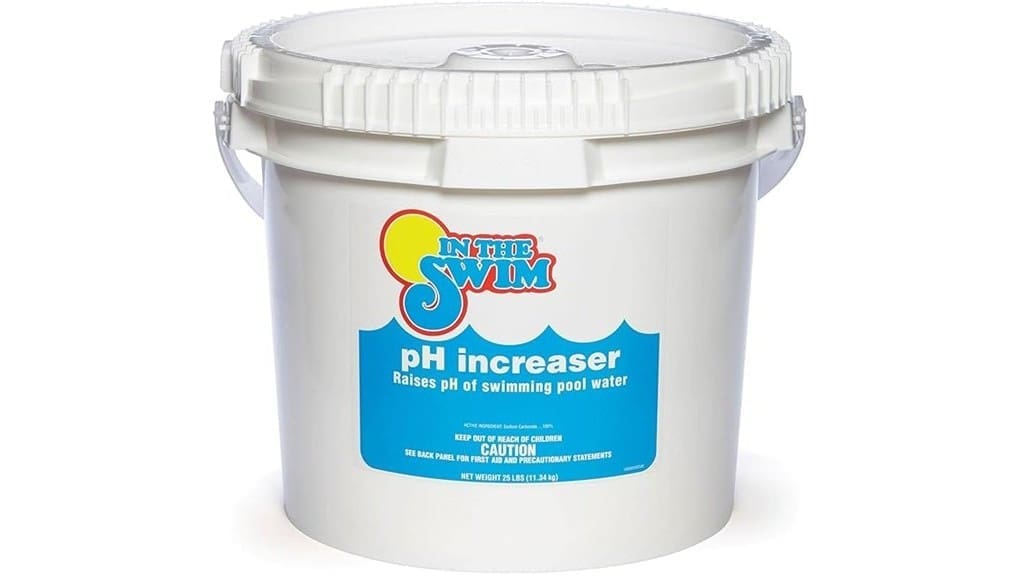
You’ll find In The Swim pH Increaser is a granular 100% sodium carbonate designed to raise pool pH and total alkalinity with predictable, stoichiometric results. You’ll measure pool volume and current chemistry, broadcast the granules with the pump running, and retest after 4–8 hours. It works fast, can cause temporary cloudiness, and requires careful dosing to avoid pH overshoot. Keep PPE and sealed storage; continue for detailed dosing guidance and alternatives.
Some Key Takeaways
- In the Swim pH Increaser is granular sodium carbonate sold in 25-pound bags for raising pool pH and total alkalinity.
- It acts quickly and predictably, shifting carbonate equilibrium to consume H+ and raise pH within hours.
- Dosage is volume-based; follow test readings and add no more than the recommended dose per 24 hours.
- Temporary cloudiness or precipitates can occur; filtration/backwash restores clarity.
- Handle with gloves, eye protection, and a dust mask; store sealed, dry, and away from acids.
What This Product Is and Who Should Use It
Because it’s a granular, 100% sodium carbonate formulation, In The Swim pH Increaser for Pools is a straightforward chemical for raising pool pH and total alkalinity. You’ll get a 25-pound granular product (unit count 400 ounces) designed to correct acidic water and stabilize pH. You use measured doses based on pool volume and current pH/alkalinity readings; follow manufacturer guidance and safety precautions. This product suits pool owners who want a focused, predictable pH adjustment and those managing routine maintenance. It’s also appropriate for chemical novices who follow dose charts and testing protocols rather than experimenting without measurement. Maintain recommended dosage and testing for balanced pool pH to ensure clearer, safer water.
How In The Swim pH Increaser Works (Sodium Carbonate Explained)
Having covered who should use this product and why, let’s examine how sodium carbonate adjusts pool chemistry. You add granular sodium carbonate (soda ash) to increase hydrogen ion consumption, shifting the carbonate equilibrium toward carbonate and bicarbonate species. This raises pH by reducing free H+ while engaging carbonate chemistry to supply buffering capacity. As bicarbonate/carbonate proportions change, total alkalinity increases, providing alkalinity buffering that resists rapid pH swings. The compound is fully soluble and reacts predictably; you’ll monitor pH and alkalinity after application to confirm target ranges. The process is stoichiometric, rapid, and well-characterized for pool maintenance. Many homeowners find that using a proper stabilizer schedule helps maintain overall water balance and reduces the frequency of large corrections by supporting consistent pH.
Real-World Performance: Raising pH and Alkalinity-Dosage and Results
Measure pH and total alkalinity before adding In The Swim pH Increaser, then calculate dose based on your pool volume and the desired pH/alkalinity change. You’ll apply granular sodium carbonate in measured increments, dispersing it around the perimeter with the pump running. Track dosage timing: add no more than recommended dose per 24 hours to avoid overshoot. Expect pH rise within hours; alkalinity increases more gradually as carbonate equilibrates. Temporary cloudiness can occur as precipitates form; clarity returns after filtration and backwash. Re-test 4–8 hours post-dose and adjust with smaller follow-up additions if required. This product is aimed at homeowners who enjoy their outdoor spaces and prefer natural pH methods to maintain healthier water.
Pros, Cons, and Safety Tips for Handling and Storage
When you handle In The Swim pH Increaser, treat it as a dry, alkaline reagent and use personal protective equipment—chemical-resistant gloves, eye protection, and a dust mask—to prevent skin or eye contact and inhalation. You’ll find pros: effective, fast-acting sodium carbonate granules that reliably raise pH and alkalinity with predictable dosing and low contamination risk. Cons: dust can irritate respiratory tract and eyes; overuse elevates pH above 8 causing irritation. For chemical handling, keep product sealed in original container, label clearly, and store off the ground. Secure Storage ventilation in storage areas, away from acids, heat, and moisture. Many pool owners also pair pH adjustments with regular chlorine tablet maintenance to keep pools safe and balanced for swimmers.
Is It Worth Buying? Price, Packaging, Alternatives, and Final Recommendation
Although the upfront cost per 25-lb bag is modest compared with specialty pH products, you’ll want to factor in packaging size and dosing frequency to judge value: the 25-pound granular bag (400 oz) delivers many typical seasonal treatments for medium-to-large pools, but if you only maintain a small spa or test infrequently, the bulk pack may be overkill and a smaller, single-dose alternative could be more economical. In price comparison, In The Swim offers low cost per ounce; assess your usage rate. Packaging durability is adequate for storage but reseal carefully. Recommendation: buy for pools; choose smaller packages for spas or occasional users. Closing your pool properly each season helps protect outdoor spaces and prevent damage to equipment.
Some Questions Answered
Is This Product Safe for Vinyl and Fiberglass Pool Surfaces?
Yes. You’re safe using this product on vinyl and fiberglass surfaces when applied properly. Its active ingredient is sodium carbonate, which raises pH without harsh acids or abrasives, so surface compatibility is high. You’ll avoid etching or degradation if you dissolve granules and distribute evenly, maintain recommended pH (7.2–7.6), and follow dosing guidance. Always test water and rinse any undissolved residue from pool walls promptly.
Can I Use It With Chlorine Tablets or Liquid Chlorine?
Yes — you can use it with chlorine tablets or liquid chlorine. Sodium carbonate (soda ash) raises pH and total alkalinity without reacting dangerously with common chlorine sanitizers. Maintain proper dosing and test frequently to avoid elevated pH that reduces chlorine efficacy. Monitor sanitizer interactions: high pH lowers free chlorine activity, so adjust dosing and circulation, and add chemicals separately to prevent localized concentration spikes. Follow label and test strips.
How Long After Adding Can Swimmers Re-Enter the Pool?
You can usually let swimmers re-enter after 15–30 minutes, once you’ve circulated the water and confirmed pH and alkalinity are within safety guidelines. Add the granular sodium carbonate with the pump running, wait one circulation cycle (typically 15–30 minutes), then test pH (target 7.2–7.6) and total alkalinity. If readings are in range, it’s safe to swim; if not, adjust and retest before allowing bathers back in.
Does It Affect Calcium Hardness Levels Over Time?
No, it won’t directly change calcium hardness; sodium carbonate raises pH and buffer capacity, not calcium concentration. However, by increasing pH and total alkalinity you alter equilibrium, which can promote scale formation if calcium hardness is high, or increase corrosive risk if hardness is low. You should monitor buffer capacity, calcium hardness, and stabilizer levels; adjust calcium hardness separately to prevent equipment corrosion or scaling as chemistry shifts.
Are There Environmental Disposal Concerns for Excess Product?
Yes. You should avoid releasing excess product into storm drains or natural waters, because chemical runoff can raise local alkalinity and pH, harming aquatic ecosystems. You’ll store and dispose of unused sodium carbonate per local hazardous-waste guidance, neutralize diluted spills before discharge, and contain residues to prevent wildlife toxicity. Follow municipal disposal rules and manufacturer instructions; document actions and use licensed waste handlers for large quantities to guarantee regulatory compliance.