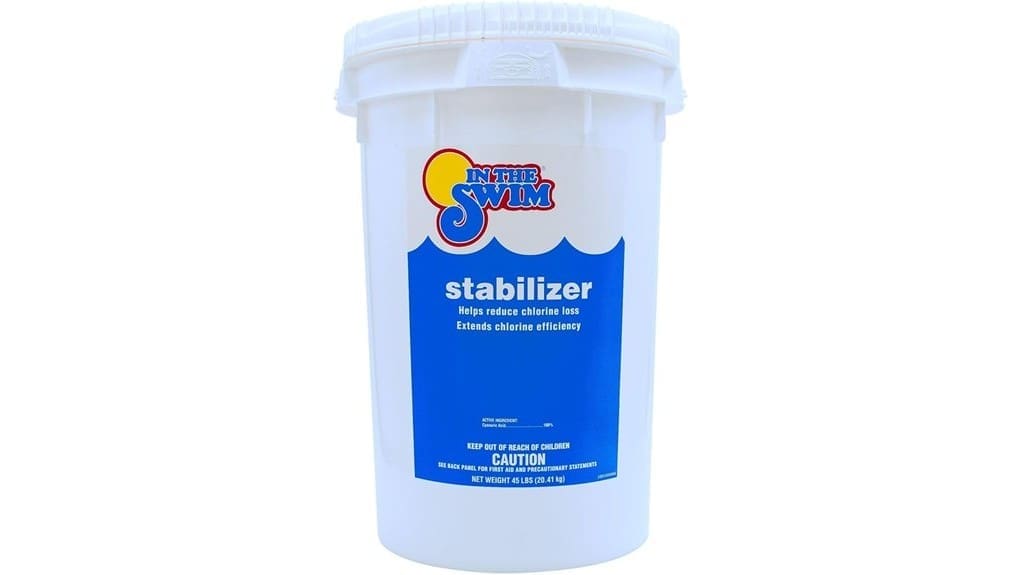
You’ll get a predictable, fast-dissolving 100% cyanuric acid that shields free chlorine from UVA/UVB and typically cuts sunlight-driven loss by up to 25%, letting you use about 15–25% less chlorine weekly when dosed to the 20–50 ppm target. It’s compatible with salt and chlorine pools, works in-ground or above-ground, and dissolves within 24–72 hours; follow label grams-per-10,000-gallon charts, test weekly, and keep handling and storage dry and sealed — more specifics follow.
Some Key Takeaways
- In The Swim Pool Stabilizer is 100% cyanuric acid that protects chlorine from UVA/UVB degradation in pools.
- It dissolves predictably, making dosing simple and reducing overshoot when following grams-per-10,000-gallon guidelines.
- Proper use typically raises CYA to target within 24–72 hours, with weekly testing recommended after initial dose.
- Compatible with salt and chlorine systems, it reduces sunlight-driven chlorine loss by up to 25%, lowering chlorine usage ~15–25%.
- Safe handling requires PPE, dry storage, and applying after shock; maintain target CYA 20–50 ppm for best sanitizer efficiency.
Quick Verdict and Key Specs for In The Swim Pool Stabilizer
If you want consistent chlorine protection, In The Swim Pool Stabilizer delivers a precise dose of 100% cyanuric acid to shield sanitizer from UVA and UVB degradation, improving chlorine efficiency and cutting sunlight-driven chlorine loss by up to 25%. You’ll find compact packaging design with clear dose charts and tamper-proof seals for accurate handling. Product specs list high-purity cyanuric acid, compatibility with salt and chlorine pools, and expected reduction in chlorine consumption. Recommended application frequency is based on initial CYA target and dilution: typically monthly or after heavy rain/dilution events. Follow label dosing to maintain target 20–50 ppm CYA. Natural enzyme additives can complement stabilizers by helping manage organic contaminants and supporting pool water health.
How Well It Protects Chlorine and Controls Cyanuric Acid Levels
Because it supplies 100% cyanuric acid in controlled doses, In The Swim Pool Stabilizer effectively shields free chlorine from UVA and UVB breakdown while allowing you to maintain CYA in the recommended 20–50 ppm window. You’ll see measurable chlorine longevity: UV attenuation reduces photolytic loss, so residual free chlorine stays within target ranges longer. The formulation dissolves predictably, simplifying dosing and minimizing overshoot. For precise cyanuric monitoring, test weekly after initial dose and adjust per manufacturer charts. That controlled approach reduces chlorine consumption and avoids over-stabilization, keeping sanitizer activity efficient without compromising water balance or filtration performance. Homeowners who enjoy their outdoor spaces often use clarifiers and related products to maintain clear pool water as part of routine pool care.
Real-World Performance: Dosage, Results, and Pool Types (Inground, Above-Ground, Salt)
When you dose In The Swim Pool Stabilizer, follow the label’s grams-per-10,000-gallon guidelines and measure CYA weekly to reach and hold 20–50 ppm; predictable dissolution means you’ll see target increases within 24–72 hours, allowing stepwise adjustments rather than large corrective additions. You’ll account for dosage variability across volumes and refill events, and adjust for seasonal effects like intense sun or heavy rain dilution. Inground, above-ground, and salt systems all respond predictably, though equipment interactions—filter backwash, salinity, and chemical feeders—affect retention. Monitor results and compare user experiences to validate profiles and refine dosing schedules. Keeping your pool balanced with proper stabilizer management helps homeowners enjoy their outdoor spaces poolstabilizers and protect sanitizer effectiveness.
Cost, Savings, and How It Reduces Chlorine Consumption Up to ~25
Although sunlight relentlessly breaks down free chlorine, adding In The Swim Pool Stabilizer cuts that photolytic loss and lets you use roughly 15–25% less chlorine by keeping cyanuric acid in the effective 20–50 ppm range; this lowers both the frequency and mass of chlorine additions required to maintain target free chlorine levels, reducing ongoing chemical expense and dosing labor. You’ll see measurable savings: calculate reduced weekly chlorine mass × local price per pound for a direct price comparison. Factor stabilizer cost into seasonal budgeting; payback typically occurs within one season for moderate-size pools, longer for minimal-use setups. Stabilizer use also helps protect chlorine from rapid UV degradation, which is especially helpful when managing outdoor pools.
Who Should Buy It and How to Use It Safely for Best Results
If you want to lower chlorine costs and stabilize sanitization in pools exposed to sunlight, In The Swim Pool Stabilizer is aimed at owners of outdoor inground and above‑ground pools, including saltwater systems, who maintain free chlorine and monitor cyanuric acid (CYA) levels. You should buy it if you seek UV protection, reduced chlorine consumption, and consistent sanitizer performance. For safe, effective use follow safety precautions: wear PPE, avoid inhalation, and keep product dry. Observe application timing after shock, disperse evenly, and retest. Conduct balancing tests to maintain CYA 20–50 ppm. Make sure proper storage in a cool, sealed, labeled container. The product is sold alongside pool shock treatments and other maintenance supplies for homeowners who enjoy their outdoor spaces, offering complementary options for pool shock and related care.
Some Questions Answered
Does It Affect Pool pH or Alkalinity Levels?
No, it doesn’t directly change pH or alkalinity; you won’t see significant pH drift from cyanuric acid itself. You’ll rely on alkalinity buffering agents to control total alkalinity and resist pH drift. Stabilizer (CYA) primarily protects chlorine and can slightly affect perceived sanitizer activity, but you should monitor and adjust alkalinity buffering and pH separately to maintain 7.2–7.8 pH and proper TA levels.
Is It Safe for Vinyl, Plaster, and Fiberglass Pool Surfaces?
Yes — it’s safe for vinyl, plaster safety, and fiberglass surfaces when used per instructions. You’ll avoid direct overdosing; cyanuric acid (CYA) won’t harm liners or gel coats at recommended 20–50 ppm. You should add dissolved product away from surfaces, circulate thoroughly, and test levels routinely. This maintains vinyl compatibility, preserves plaster finishes, and prevents surface etching or staining while optimizing chlorine protection and sanitizer performance.
How Quickly Does It Dissolve When Added to Water?
It dissolves relatively quickly if you use fast solubility practices: you’ll pre-dissolve granular application in warm water, stirring until fully dissolved before adding to the pool. With proper agitation and temperature, full dissolution typically occurs within 10–30 minutes for a normal treatment batch. You’ll avoid clumping by dissolving small portions sequentially, maintaining circulation, and monitoring CYA levels to confirm uniform distribution and concentration.
Can It Be Used With Non-Chlorine Sanitizers Like Bromine?
No — you shouldn’t use it with bromine; cyanuric acid offers bromine compatibility issues. Cyanuric acid binds chlorine, not bromine, so adding this stabilizer won’t protect bromine from UV and can reduce bromine efficacy. If you’re using non-chlorine sanitizers, consider stabilizer alternatives such as UV systems, enzyme treatments, or periodic shock dosing designed for bromine pools. Monitor sanitizer levels closely and follow manufacturer guidance to maintain safe, balanced water.
Are There Storage or Expiration Concerns for Unused Product?
Yes — you should store unused product properly to preserve storage lifespan and container integrity. Keep it sealed, dry, and away from heat or moisture; avoid metal contact and store at moderate temperatures. Inspect the container integrity before use; discard if damaged or wet caked. If stored correctly, cyanuric acid remains stable for years, but label any opened supply with date and use within manufacturer-recommended timeframe for best performance.