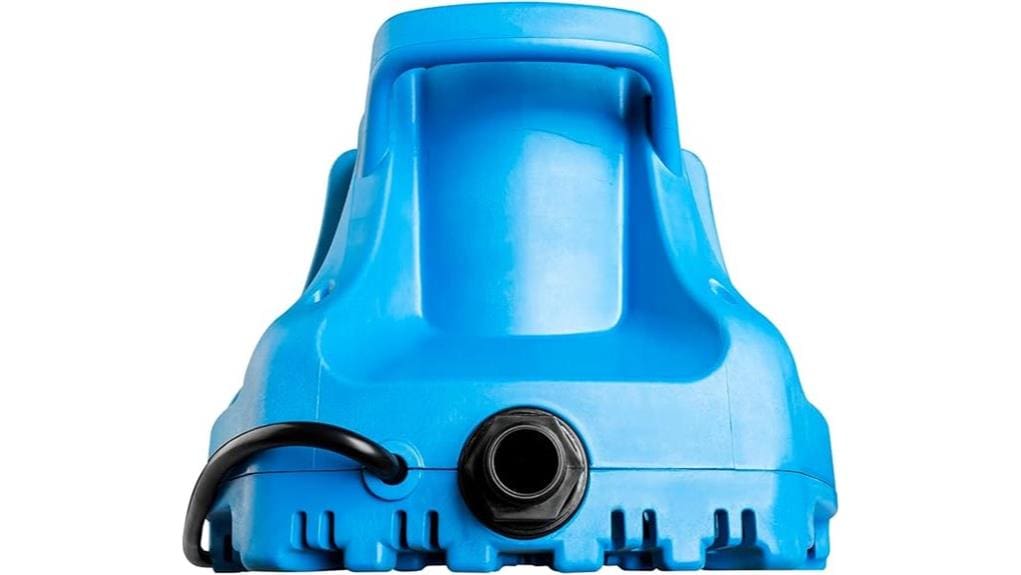
You’ll get a competent, no‑frills submersible cover pump that reliably clears standing water from pool, boat, and rooftop covers without breaking the bank. It delivers roughly 1,700 GPH at minimal lift, draws about 2.2 A, and uses an integrated float switch that starts around 2″ and shuts near 1″. It’s portable, easy to maintain, and best for routine short cycles; it’s less suited for heavy industrial duty — more details follow.
Some Key Takeaways
- Reliable, no-frills submersible pump delivering about 1,700–1,745 GPH at minimal lift, suitable for pool and boat covers.
- Automatic float switch starts at ~2 inches and shuts off near ~1 inch for hands-free water removal.
- Draws roughly 2.2 A (~270 W) from 115 V, matching specs and keeping operating costs low.
- Compact, weighted design with 25‑ft cord, 1″ FNPT outlet, and 3/4″ adapter for easy setup and portability.
- Best for routine cover drainage and short frequent cycles; not for heavy industrial dewatering or ultra-quiet continuous use.
Verdict Up Front: Is the Little Giant APCP-1700 Worth Buying?
Decide quickly: the Little Giant APCP-1700 is a competent, no-frills automatic submersible cover pump that’s worth buying if you need reliable, easy-to-use water removal for pool covers, boat covers, or rooftops. You’ll get straightforward features—automatic float switch, compact weighted body, easy-clean access—and simple installation that matches common needs. Customer reviews often praise value and ease of use, though some note concerns about long term durability under heavy cycles. You should weigh upfront cost, typical use frequency, and community feedback. If you want a practical, trusted tool that fits a shared standard, this fits that role. Keep your pool area dry with proper cover pump selection and maintenance, including choosing models designed for pool cover pumps and following manufacturer guidance.
How the APCP-1700 Performs: Flow, Shutoff, Power, and Real-World Pumping Results
Start by matching the APCP-1700’s rated specs to what you’ll see in use: it’s listed at roughly 1,700–1,745 GPH at a 1‑ft lift, draws about 2.2 A (270 W) from a 115 V supply, and has a listed shutoff around 21.5 (as specified). In practical flow testing you’ll find near‑rated throughput at minimal head; performance tapers predictably as lift increases. The float-controlled shutoff is reliable and repeatable, preventing overrun. Measured energy draw aligns with specs, so operational costs stay low. Overall, you’ll get consistent, predictable pumping for cover drainage and small dewatering tasks. For homeowners managing outdoor water features, consider proper installation and code-compliant pool electrical boxes to ensure safe, durable power connections and protection from the elements — see pool electrical boxes for guidance.
Design and Features That Matter: Float Switch, Compact Weighted Body, Hose Fitting, and Cord Length
Because a few key design choices determine day-to-day usability, the APCP-1700’s float switch, weighted compact body, garden-hose-ready discharge, and 25‑ft cord deserve close attention. You’ll like the integrated float for automatic activation—it turns the pump on at about two inches and off near one—so you don’t babysit water levels. The compact weighted body gives weighted stability and resists tipping on uneven covers while remaining portable via the ergonomic handle. A 1″ FNPT discharge with included 3/4″ garden-hose adapter simplifies hookup to standard hoses. The 25‑ft cord extends reach for flexible placement without frequent repositioning. Ideal for homeowners upgrading their outdoor pump setup, the APCP-1700 supports efficient pool pump installation and integration with other outdoor living equipment.
Best Use Cases and Setup Tips: Pool Covers, Boat Covers, Rooftops, and Quick Installation Guide
When placed on a flat section of a pool, boat cover, or rooftop, the APCP-1700 handles routine standing water quickly and with minimal fuss; its 1,745–1,700 GPH rating at a 1‑ft lift and automatic float switch make it well suited for frequent, short-duration pumping tasks. You’ll use it for pool maintenance, rapid drainage of rain pockets on covers, and dewatering small roof depressions. Position the weighted pump near the lowest point, attach the 3/4″ hose, and test float activation. For cover tensioning and winter prep, remove excess water promptly to avoid sagging and ice loading. Keeping your outdoor space cozy through proper winter pool cover care helps prolong cover life and prevent damage, especially when you regularly remove standing water with winter pool covers.
Pros, Cons, and Who Should (or Shouldn’t) Buy the APCP-1700
Though small in footprint, the APCP-1700 delivers reliable, automatic water removal for cover and rooftop low spots. You’ll appreciate strong flow, compact weight, and easy hose connections; the integrated float switch simplifies operation and reduces oversight. Pros: portable, no-tools access for cleaning, affordable power for seasonal needs, clear maintenance schedule fits shared routines. Cons: not for heavy industrial dewatering, limited shutoff height precision, and modest noise levels during run cycles. Buy if you want a communal, dependable cover pump for pools, boats, or roofs. Don’t buy if you need high-capacity or ultra-quiet continuous service. Consider pairing it with durable pool equipment pads to protect surfaces and extend the life of your outdoor gear.
Some Questions Answered
Is the Pump Safe for Continuous Use in Freezing Temperatures?
No, you shouldn’t run it continuously in freezing temperatures. The pump’s materials and seals aren’t rated for extended ice exposure, so ice can damage the float, impeller and motor. For winter storage, drain and store the unit indoors and consider thermal insulation for nearby plumbing if you must run intermittent clearing cycles. You’ll protect the pump and maintain group confidence in safety by following manufacturer care, avoiding prolonged operation in subfreezing conditions.
Can the APCP-1700 Run Dry Without Damage?
No — you shouldn’t let the APCP-1700 dry run; dry running risks motor damage. The pump’s design expects water to provide cooling and lubrication; running without water can overheat internal components and shorten lifespan. You’ll want to rely on the integrated float switch and monitor operation to prevent dry running. If you need continuous protection, consider external safeguards or scheduled checks so your unit and community of users stay protected.
Does This Model Come With a Warranty or Customer Support?
Yes — the pump is backed by a manufacturer warranty, and you can contact customer support for help. You’ll want to register the product and keep your receipt to validate coverage. Customer support can assist with troubleshooting, replacement parts, or warranty claims. If you prefer community advice, join user groups for shared tips. Keep records of service interactions to streamline any future warranty or support requests.
Is the Pump Compatible With Larger-Diameter Discharge Hoses?
Yes — you can use larger-diameter discharge hoses, but you’ll need hose adapters to fit the pump’s 1″ FNPT/3/4″ garden hose connection. Using a bigger hose can reduce flow restrictions and backpressure, potentially improving performance for long runs. You’ll want secure fittings and to avoid sharp bends. If you’re swapping sizes, check adapters’ seals and thread compatibility so your setup stays leak-free and reliable for the group.
How Noisy Is the Pump During Operation?
You’ll find the pump offers relatively quiet operation for its class; it isn’t silent but won’t dominate the space. You’ll notice some audible vibration when it runs, especially if it sits on a hard surface or an uneven cover. You’ll reduce noise by placing it on a soft mat or ensuring stable, weighted positioning. Overall, it’s acceptable for communal settings where you want effective performance without constant disruption.