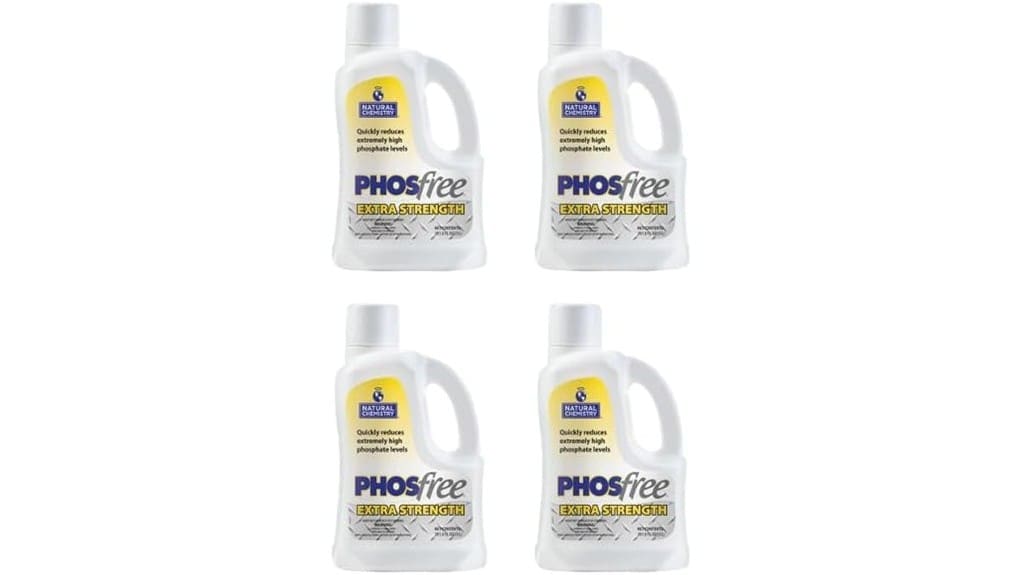
You’ll find PhosFree Extra Strength reliably cuts high orthophosphate when dosed through the skimmer and paired with effective filtration. It uses soluble lanthanum salts to precipitate orthophosphate as insoluble lanthanum phosphate particles that the filter captures, so you’ll see reductions within hours to days depending on dose, load, pH and turnover. Follow label PPE, dosing and disposal rules, monitor phosphates 24–72 hours, and maintain filters; continue for guidance on dosing, maintenance and commercial use.
Some Key Takeaways
- Effectively and rapidly lowers high orthophosphate levels when dosed per instructions, often within hours to days.
- Uses soluble lanthanum salts that bind phosphate into insoluble particles removed by filtration.
- Dosing through the skimmer coats media for mechanical capture, requiring active circulation and regular filtration.
- Performance varies with phosphate load, turnover, pH, organic matter, and filter type (sand, cartridge, DE).
- Commercial 3-L pack is cost-effective for frequent treatments but requires careful handling, PPE, and disposal compliance.
Quick Verdict : Does PhosFree Extra Strength Work for High Phosphate Pools?
Yes — Natural Chemistry PhosFree Extra Strength effectively lowers high phosphate levels when used as directed: its lanthanum-based chemistry binds phosphates and, when dosed through the skimmer so the product coats filter media, it rapidly reduces phosphate concentrations and helps maintain low levels in large or commercial pools. You’ll see phosphate reduction documented within hours to days depending on load and turnover; vendors report repeatable, measurable drops in ppb when dosing matches contamination. You’ll follow label rates, monitor phosphate and sanitizer levels, and adjust dosing. Regulatory-safe handling and proper filtration are required to achieve consistent rapid results and compliance with pool health standards. Many homeowners combine phosphate removal with regular filter maintenance to sustain low phosphate levels over time.
How PhosFree Extra Strength Works and What’s in the Bottle
Having confirmed that PhosFree Extra Strength can rapidly cut phosphate levels when applied correctly, you should understand what’s actually doing the work and why it’s safe to handle. The formulation uses lanthanum chemistry—soluble lanthanum salts that bind orthophosphate to form insoluble lanthanum phosphate particles. You add the liquid to the skimmer; as water circulates, particles deposit on filter media, enabling mechanical removal via filter interaction and backwash. Concentration, dose rate, and contact time drive efficacy; follow labeled PPE and dosing instructions to meet regulatory guidance. No bleach or acids are required; waste is captured in the filter and disposed per local rules. Many pool owners pair phosphate removers with natural enzymes to support overall water quality and reduce maintenance needs.
Real-World Performance: Lab-Style Tests and Expected Results
When you run lab-style tests on PhosFree Extra Strength, you’ll see rapid orthophosphate reduction driven by lanthanum binding under controlled circulation and filtration conditions; measured declines typically occur within hours depending on dose, initial phosphate load, and turnover rate. In lab controlled trials you’ll get repeatable kinetics and clear endpoint criteria for compliance monitoring. Field tested results mirror trends but show variability from organic load, pH, and hydraulic patterns. You’ll assess filter compatibility—sand, cartridge, and DE—since media capture affects removal efficiency and backwash demands. For long term control, integrate routine phosphate monitoring and record treatment-response data for regulatory reporting. This complements pool mineral systems designed to enhance water quality and reduce chemical demand by stabilizing mineral balances and improving overall swimmer comfort with mineral system benefits.
How to Use PhosFree Extra Strength for Pools and Spas (Dosage & Filter Tips)
Start by calculating the required dose from your pool or spa’s volume and measured phosphate level: PhosFree Extra Strength is lanthanum-based and binds orthophosphate rapidly under circulation, so dose to target a defined ppm reduction (follow manufacturer’s dose table or calculate mg/L of lanthanum needed per µg/L phosphate removed). For application, use skimmer dosing while circulation and filtration run; avoid overdosing. Monitor phosphate reduction with validated test kits at 24–72 hours. Implement routine filter maintenance to remove lanthanum-phosphate complexes—backwash or clean cartridges per manufacturer intervals. Record doses, test results, and maintenance for regulatory traceability. Also maintain balanced total alkalinity to support water quality and treatment effectiveness, as proper alkalinity helps stabilize pH and overall pool chemistry for healthy outdoor spaces; see total alkalinity for more.
Pros, Cons, and Who Should Buy the 3‑Liter Commercial Pack
Although designed for commercial and large residential systems, the 3‑liter PhosFree Extra Strength pack gives you a concentrated, lanthanum‑based option that removes high orthophosphate loads rapidly while minimizing dosing frequency and handling compared with multiple small bottles. You’ll benefit from reduced reagent logistics, lower per‑liter pricing and measurable cost savings for frequent treatments. Application speed is high: dosing via skimmer and filter contact treats large volumes quickly. Cons: heavier handling, storage and hazard communication requirements, and single‑batch waste if unused. Buy if you manage pools/spas with recurrent high phosphate burdens, need regulatory traceability, and prioritize operational efficiency. Many homeowners and facility managers also pair such treatments with filter powder to improve overall water clarity.
Some Questions Answered
Is Phosfree Extra Strength Safe for Swimming Immediately After Use?
Yes — you can usually swim soon after dosing, but follow label instructions and allow proper filtration run time. You won’t get significant skin irritation if dosed correctly; lanthanum compounds bind phosphates in the filter, not free-swimming agents. PhosFree Extra Strength does not cause chlorine neutralization when used per directions, though you should test chlorine and phosphate levels post-treatment and confirm water chemistry meets regulatory/safety thresholds before re-entry.
Will It Affect Saltwater Chlorinator Systems or Pool Chemistry?
No, it won’t harm your chlorinator if used correctly; PhosFree Extra Strength is chlorinator compatibility tested and won’t directly deactivate chlorine generators. You should monitor salt balance and overall water chemistry after application because lanthanum can bind phosphates and slightly alter filter loading and pH buffering. Test salt, free chlorine, pH, and total alkalinity within 24–48 hours; adjust salt balance and sanitizer settings as needed per manufacturer specifications.
Can It Be Used With Cartridge or DE Filters Long-Term?
Yes — you can use it with cartridge or DE filters long-term if you follow instructions. Cartridge compatibility is good because lanthanum binds phosphates and coats media; you’ll need routine cleaning to prevent buildup. For DE, backwash per manufacturer guidelines. Monitor pressure and phosphate levels; schedule periodic deep cleaning to preserve filter longevity. Keep dosing within labeled rates and document maintenance for regulatory and warranty compliance.
How Should Leftover Product Be Stored and What’s Its Shelf Life?
You should store leftover product in a cool, store dark location and refrigerate unopened if local regulations or label recommend; avoid freezing. Maintain original container with label intact and tight cap. Note expiration dating on the label and record receipt/opening dates for inventory control. Use within manufacturer-recommended shelf life; if unknown, treat as single-season supply. Dispose per local hazardous-waste rules if product shows precipitation, color change, or odor.
Is It Safe for Use Around Pets, Landscaping, and Concrete Surfaces?
Yes — when used per label directions, you’re unlikely to harm pets, landscaping, or concrete surfaces. Product testing indicates low acute toxicity; follow pet safety precautions (keep animals off treated areas until diluted and filter cycles complete). Plant tolerance is generally good, but avoid direct concentrate contact with sensitive species. Rinse concrete spills promptly to prevent staining. Always consult label/regulatory data and use recommended dosages for large-volume applications.