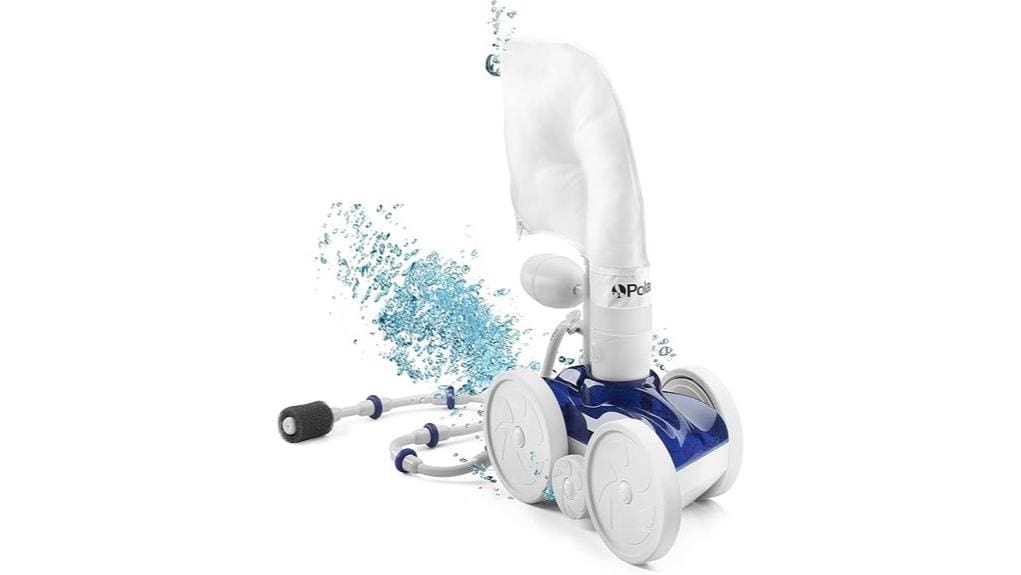
The Polaris Vac-Sweep 280 gives you pressure-side scrubbing, vacuuming, and strong debris pickup—thanks to dual Venturi jets and a large 2.25-inch inlet—but it needs a separate booster pump and compatible plumbing. It handles leaves, pebbles, and acorns well and works on vinyl and most in-ground finishes, though delicate surfaces may see wear over time. Hose routing and bag sealing are critical for consistent performance. Keep spares and inspect fittings, and if you want specifics, there’s more to learn.
Some Key Takeaways
- Powerful dual Venturi jets deliver strong, consistent suction and predictable cleaning across most in-ground pools.
- Large 2.25-inch inlet and single-chamber bag handle leaves, pebbles, and acorns effectively.
- Requires a dedicated booster pump and compatible plumbing, adding equipment cost and installation needs.
- Gentle on vinyl liners but may cause long-term abrasion on pebble or gunite surfaces; monitor wear.
- Easy to install and maintain with proper hose routing, bag sealing, and occasional hose or jet troubleshooting.
What the Polaris Vac-Sweep 280 Does and How It Works
When you attach the Polaris Vac-Sweep 280 to a separate booster pump, it uses dual Venturi jets to propel itself, sweep the pool floor and scrub walls, and vacuum up debris into a single-chamber filter bag. You’ll notice improved water circulation as the jets push and pull water, directing leaves and pebbles into the bag. It’s efficient but depends on that booster pump; you’ll need to factor pump compatibility into your maintenance schedule. Expect reliable cleaning across surfaces, though you should inspect hoses and the bag regularly. Join others who value predictable results and straightforward upkeep. This cleaner is popular with homeowners who enjoy their outdoor spaces and want low-effort maintenance with robotic pool vacuums.
Key Specs: Cleaning Performance, Debris Capacity, and Power Needs
Although it needs a separate booster pump to run, the Vac-Sweep 280 delivers strong, predictable cleaning: dual Venturi jets drive the unit to sweep and scrub floors and walls, finishing most pools in three hours or less when paired with the right pump. You’ll appreciate the consistent cleaning duration and straightforward setup, though you’ll need that booster pump and compatible plumbing. The large 2.25-inch inlet size lets the single-chamber bag handle leaves, pebbles, and acorns that other cleaners miss. Overall, it’s powerful and reliable for in-ground pools, but plan for the extra pump cost and plumbing considerations. It’s a solid choice for homeowners who value effortless pool cleaning and relaxing outdoor living with automatic pool vacuums.
How It Performs on Different Pool Types and Common Debris
Beyond the straightforward specs, you’ll want to know how the Vac-Sweep 280 handles different pool surfaces and the common yard debris it encounters. You’ll find it navigates vinyl safe maneuvering without harsh scraping, so liners stay intact while corners get good coverage. On pebble and gunite, watch for pebble surface abrasion over long term—its wheels are gentle but constant contact can dull fragile finishes. It excels with leaves, acorns, and pebbles thanks to a large 2.25-inch inlet and dual Venturi suction, capturing mixed debris quickly. Overall, it’s versatile, but monitor delicate surfaces for wear. It’s a popular choice among homeowners who prefer low-maintenance outdoor pool care and easy installation, making it well-suited for above-ground pools.
Installation, Operation, and Troubleshooting Tips for Best Results
If you want the Vac-Sweep 280 to perform reliably, start with a correct installation: connect the cleaner to a dedicated booster pump, run the supplied 31-foot feed hose straight from the pump outlet to the cleaner, and fit the single-chamber filter bag securely so it seals around the inlet. Check hose routing for kinks and keep sections taut; poor routing reduces suction and causes erratic movement. Consider booster placement near the pool equipment pad to minimize bends and maintain consistent pressure. If it stalls, inspect jets and bag, verify pump flow, and swap hose sections to isolate leaks. Keep spare hose and clamps handy. For optimal long-term performance, match your booster pump and plumbing to the needs of your pool and cleaner to avoid power losses and premature wear booster pump sizing.
Pros, Cons, and Who Should Buy the Polaris Vac-Sweep 280
When you weigh the Vac-Sweep 280‘s strong vacuum, large 2.25-inch inlet, and reliable debris pickup against its need for a separate booster pump, you get a clear sense of who benefits most: owners of in-ground pools who want robust cleaning power and can accommodate or already have a booster pump. You’ll like its fast, thorough cleaning, dual Venturi jets, and ability to handle leaves, pebbles, and acorns. Downsides include added pump cost and hose management. Consider budget considerations and compare warranty options before buying. Choose this if you prioritize powerful debris removal and join a community of serious pool owners. Many homeowners also upgrade their systems with variable speed pumps to improve efficiency and reduce operating costs.
Some Questions Answered
Does It Come With a Warranty and What’s Covered?
Yes — it typically includes a limited warranty; you’ll find the warranty duration listed in the owner’s manual or on the manufacturer’s site. It usually covers defects in materials and workmanship and offers parts coverage for failed components within that period, though consumables and normal wear (like bags, hoses, jets) are often excluded. You’ll want to register your purchase and keep proof of purchase to guarantee smooth claims and support.
Can It Be Used With a Variable-Speed Booster Pump?
Yes — you can use it with a variable-speed booster pump, but you’ll need proper pump calibration. You’ll want to set speeds so the dual Venturi jets get enough pressure for reliable propulsion and suction without starving the cleaner. Test and adjust flow rates; if you’re in a pool-owner group, share settings that worked for you. Don’t assume lowest speed works — calibrate for consistent cleaning performance and debris pickup.
Are Replacement Filter Bags and Hoses Readily Available?
Yes — replacement parts like filter bags and hoses are generally easy to find; you’ll see OEM and aftermarket accessories widely sold. You’ll want to compare materials and seam strength, since cheaper aftermarket accessories might wear faster. Join owner forums or local pool shops to learn which vendors offer durable replacement parts, and share tips so you and other owners can choose wisely and keep your cleaner running reliably.
How Noisy Is It During Operation?
It’s moderately noisy; you’ll hear noticeable motor noise from the booster pump and some vibration levels transmitted through the hose and pool walls. You’ll still feel included in the pool-care community because many users accept this trade-off for strong suction and debris pickup. If you’re sensitive to sound, you’ll want a quieter pump or place the booster farther from lounging areas. Overall noise is expected but manageable for most owners.
Can It Be Stored Outdoors or Needs Climate-Controlled Storage?
You can store it outdoors short-term, but you shouldn’t leave it exposed long-term. For summer storage you’ll be fine if you keep it shaded and off the ground, but prolonged UV exposure and weather will degrade hoses, bags, and plastics. You’ll feel smarter protecting the unit in a breathable bin or climate-controlled area when possible. Treat it like part of your pool family: dry it, rinse salt/chlorine, and store protected to extend life.