Pyrock Chemical Pool Shock is a 65% calcium hypochlorite granular shock that you’ll use to quickly raise free chlorine and oxidize algae and organics. You’ll dose by pool volume, scatter granules around the perimeter, run filtration continuously, and brush spots where granules settle. It dissolves faster in warm, well‑circulated water and can cloud water temporarily while filters work. Handle and store dry with gloves and eye protection; more details on dosing, timing, and tradeoffs follow.
Some Key Takeaways
- Pyrock Pool Shock contains 65% granular calcium hypochlorite, offering high available chlorine for fast shock treatments.
- Non-stabilized formula avoids cyanuric acid buildup but gradually increases pool calcium hardness with repeated use.
- Granules dissolve faster with warm water, good circulation, and brushing; cold water and poor circulation slow dissolution.
- Dose precisely per package, broadcast around the perimeter, run filtration continuously, and keep swimmers out until safe chlorine levels.
- Handle and store dry with gloves and eye protection; avoid dumping into skimmer to prevent localized bleaching and corrosion.
How Pyrock Chemical Pool Shock Works and What’s in the Bag
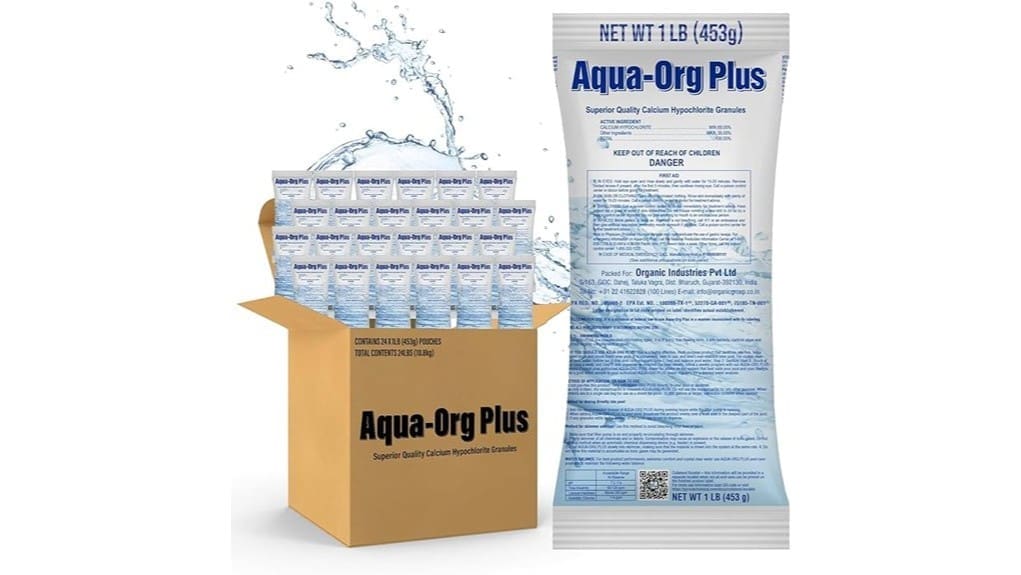
Open the bag and you’ll find 65% granular calcium hypochlorite—the active oxidizer that rapidly raises free chlorine to kill algae, bacteria, and organic contaminants. You’ll note the chemical composition on the label: high-purity Ca(OCl)2 with inert fillers, non-stabilized to avoid cyanuric acid buildup. Handle cautiously: granules are reactive with moisture and organics. Your dissolution behavior will depend on water temperature, circulation, and granule dispersion; colder water slows dissolution, poor circulation risks sediment contact. You’ll distribute granules evenly per instructions, keep filter running, and avoid direct skimming to prevent undissolved pockets and localized bleaching or corrosion. Homeowners who enjoy their outdoor spaces should follow safe storage and handling practices and consider shock treatment tips to keep their pool sparkling.
Real‑World Performance: Killing Algae, Clearing Cloudy Water, and Boosting Chlorine
When you need a fast, reliable shock treatment, Pyrock’s 65% calcium hypochlorite acts quickly to raise free chlorine and oxidize algae and organic contaminants. You’ll see measurable chlorine increase within hours, which supports rapid algae eradication when combined with circulation and brushing. Cloudy water often clears after filtration runs a few cycles; expect progressive clarity recovery rather than instant polish. You should monitor levels and avoid recontamination while chlorine remains elevated. For stubborn blooms you’ll notice longer clearing times, but the product’s oxidizing strength reduces organic load efficiently. Overall, performance is direct, predictable, and effective when used responsibly. For routine maintenance between shocks, many homeowners find that using chlorine tablets helps maintain stable chlorine levels and reduces the frequency of shock treatments.
How to Use Aqua Org Plus Safely and Effectively (Dosage, Timing, Tips)
Start by testing your water and calculating the exact volume of your pool so you dose Aqua Org Plus precisely; follow the package directions for pounds per 10,000 gallons, run the pump and distribute granules evenly around the perimeter (never dump them into the skimmer or a floater), brush areas where granules may settle, and keep the filter running until chlorine returns to a safe level. Use accurate dosing tools and a scale for grams or pounds, add at dusk to optimize application timing, avoid swimmers until chlorine is safe, document treatments for pool maintenance, store product dry, and wear gloves and eye protection. Consider also monitoring water temperature with a pool thermometer to help maintain ideal swimming conditions and chemical balance pool thermometer.
Pros, Cons, and How It Compares to Other Calcium Hypochlorite Shocks
Although calcium hypochlorite shocks share a common active ingredient, Aqua Org Plus Pool Shock stands out for its 65% formulation and quick-dissolving granules, so you’ll get rapid chlorine boost and algae control with smaller doses than weaker products. You’ll appreciate pros: high available chlorine, fast action, non-stabilized formula reducing cyanuric acid buildup, and convenient 1 lb bags for measured use. Cons: higher chlorine concentration requires cautious handling, adds calcium to water over time, and storage risks if exposed to moisture. For cost comparison, per-pound price is competitive versus lower-strength shocks; consider environmental impact from chlorine residuals and packaging disposal. This product is aimed at homeowners who enjoy maintaining their outdoor pool spaces and want reliable opening chemicals for a sparkling start, especially when using essential pool opening chemicals.
Who This Product Is Best For and Final Recommendation
If you manage a backyard pool or maintain multiple commercial pools and want a fast, high-strength shock that minimizes cyanuric acid buildup, Aqua Org Plus Pool Shock is a strong choice. You’ll appreciate its 65% calcium hypochlorite power for clearing algae, raising chlorine quickly, and avoiding stabilizer buildup. It’s suited for family pools needing periodic shock and for commercial facilities requiring reliable, professional-grade treatments. Use precise dosing, run filtration, and wait for safe chlorine levels before swimming. Don’t use near incompatible chemicals, and store securely. Overall, it’s effective but demands careful handling and routine water testing for safe, consistent results. Regularly testing and removing excess phosphates can help keep the pool water clear and reduce algae recurrence.
Some Questions Answered
Can I Use This Shock in a Pool With a Salt Chlorine Generator?
Yes — you can use it, but be cautious. The non‑stabilized calcium hypochlorite provides fast shock and is salt compatibility acceptable for occasional use, yet repeated heavy dosing can accelerate generator corrosion and shorten cell life. You should follow manufacturer dosing, avoid adding granules near the cell, run the filter, and test chlorine/CYA levels before returning to normal generator operation. Consider potassium monopersulfate alternatives for frequent shocking.
Is This Product Safe for Vinyl Pool Liners Long-Term?
Yes — you can use it safely long-term if you follow precautions. Because it’s calcium hypochlorite, occasional high chlorine can cause vinyl fading and, over time, liner brittleness if levels spike or you neglect balancing. You’ll want to dose per instructions, avoid granules settling on the liner, maintain proper pH and stabilizer, run filtration, and test regularly. Store and handle safely to prevent concentrated contact with the liner.
How Long Is the Unopened Product Shelf Life?
Unopened product shelf life is typically 1–3 years. You should check expiration dates on the packaging, but under proper storage conditions—cool, dry, away from sunlight and moisture—you’ll usually get about two years of stable potency. Store it sealed and off concrete to avoid dampness. Don’t keep it near combustibles or acids. If packaging is damaged or you see clumping/discoloration, don’t use it and contact the manufacturer for guidance.
Are These 1 Lb Bags Resealable or Moisture-Resistant?
No — the 1 lb bags aren’t resealable or designed for moisture control. You’ll need to transfer contents to an airtight, moisture-resistant container or use heavy-duty resealable bags with desiccant packs to keep the calcium hypochlorite dry. Store in a cool, dry place away from sunlight and incompatible materials. Handle cautiously, avoid contact with moisture, and label containers clearly. Follow manufacturer safety guidelines and replace desiccants regularly to maintain effectiveness.
Can I Mix This With Other Pool Chemicals Safely?
No — you shouldn’t mix it directly with other pool chemicals. You’ll prevent dangerous reactions by keeping chemical compatibility and handling precautions in mind: add granules to water separately, never combine with acids, cyanuric acid, or other oxidizers in concentrated form. Store chemicals apart in cool, dry places. Always follow package instructions, run filtration for dilution, test chlorine levels before allowing swimming, and wear gloves and eye protection when handling.