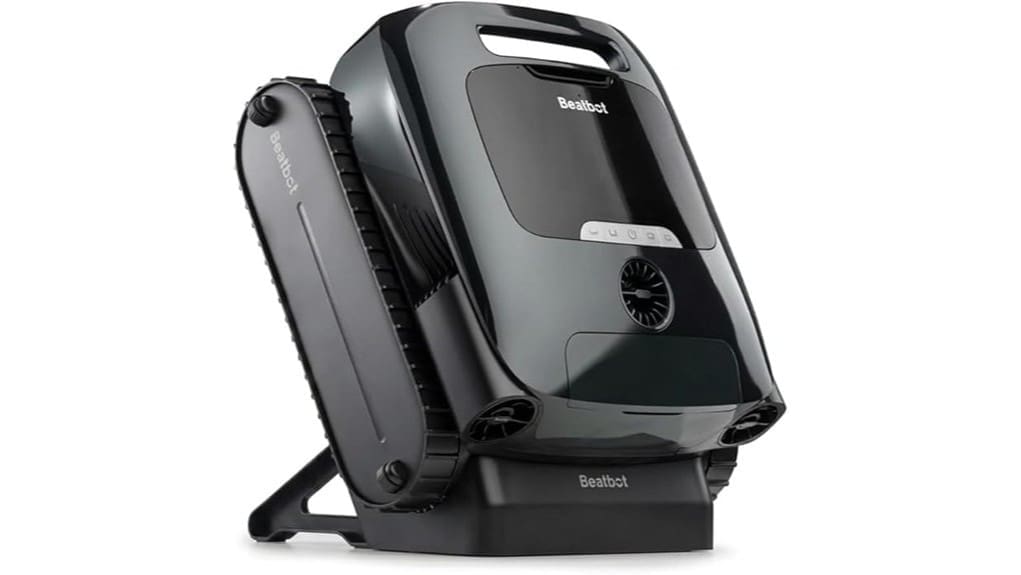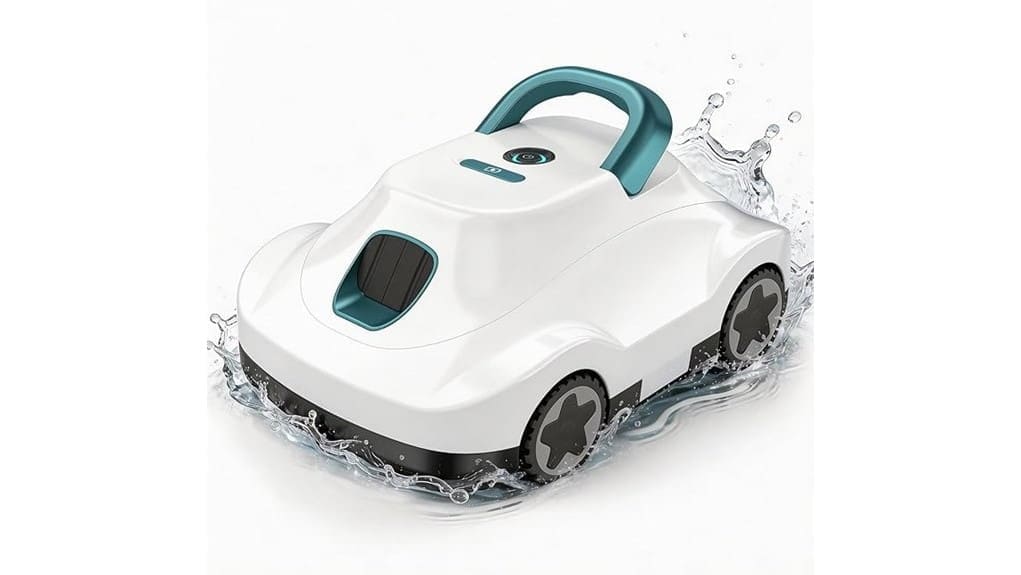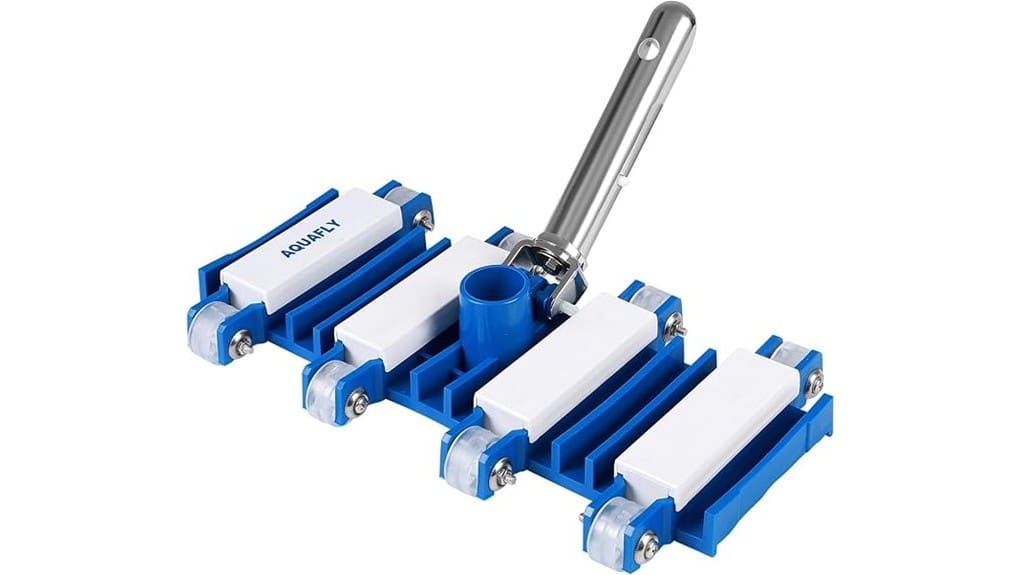
You’ll find the 14″ Aquafly manual vacuum head delivers steady suction and smooth, wheel-assisted handling for routine pool floors and lower walls, and it’s built tough with stainless-steel ball-bearing wheels and a heavy-duty handle. It picks up standard debris efficiently, rolls around corners and steps, and lets you adjust hose flow for delicate surfaces. It’s best for homeowners and small properties rather than heavy-duty public pools, and keep checking wheels and bearings for long life if you want more details. the professional tidymister vacuum head features advanced filtration technology that ensures debris is captured effectively. This head is designed to maximize cleaning efficiency on various surface types, making it a versatile choice for different pool environments. Additionally, its lightweight design allows for easy maneuverability, enhancing the overall user experience.
Some Key Takeaways
- Durable 14″ vacuum head offers strong suction for routine floor and lower-wall debris in residential pools.
- Smooth-rolling wheels with stainless-steel ball bearings enable easy maneuvering around corners and steps.
- Built-in suction channels and optional brush improve pickup efficiency and loosen stuck particles.
- Manual operation requires more passes and effort than robotic models; not ideal for large, heavy-debris pools.
- Easy to maintain: check bearings, clear debris, adjust hose flow, and store dry indoors before freezing weather.
What the PVH-2 Pool Vacuum Head Includes and How It Works
Get the PVH-2 ready and you’ll see it’s a straightforward, no-fuss cleaning tool: the 14″ Aquafly vacuum head includes a heavy-duty handle, smooth-rolling wheels, a rotating connection for left/right motion, and a stainless-steel ball-bearing assembly that keeps the head gliding easily across pool surfaces. You’ll attach it to a telescoping pole and hook to your circulation or cleaning line; no assembly’s needed. A built-in suction channel pulls debris while you steer, and a brush attachment option helps loosen stuck particles. Use simple flow adjustment at the hose to balance suction for delicate surfaces or heavy pickup. It’s designed specifically for homeowners who value their outdoor living space and want reliable above-ground pool maintenance.
Quick Performance Verdict: Suction, Mobility, and Build Quality
While it’s compact and simple to use, the PVH-2 delivers impressively strong suction for pulling standard debris from pool floors and lower walls, and you’ll notice consistent pickup without frequent rework. You’ll appreciate the suction efficiency: built-in flow channels grab dirt and leaves quickly, keeping passes short. Wheel maneuverability is solid — stainless steel bearings and smooth-rolling wheels let you steer around corners and along steps with minimal fuss. The heavy-duty handle and durable construction feel confident in your hands and resist wear. Overall, performance balances power and control, giving you a dependable tool that fits into your maintenance routine. It’s an ideal choice for homeowners who enjoy their outdoor spaces and want reliable, low-effort upkeep for their pools, especially when using manual pool vacuums.
Who This Vacuum Head Is Best For (Pool Types and Use Cases)
Having seen how the PVH-2 balances suction, mobility, and build quality, you can judge where it fits best. You’ll appreciate this 14″ manual head if you own a private pool or maintain multiple residential spas — it’s light, durable, and glides smoothly for routine floor and wall cleanup. It also suits small commercial resorts or boutique properties that need efficient, low-cost spot cleaning without complex gear. You won’t rely on it for heavy-duty debris in large public pools or water parks, but for targeted maintenance, quick touch-ups, and teams valuing simplicity, it’s a practical, inclusive choice. We carry a selection of top pool vacuum heads designed for homeowners who enjoy their outdoor spaces and need reliable maintenance tools, including models comparable to the PVH-2 that prioritize durability and mobility.
Installation, Daily Use, and Maintenance Tips for Long Life
Because regular care keeps the PVH-2 working smoothly, you should install and use it with attention to connection points, wheels, and suction fittings. Mount the head to a sturdy telescoping pole, confirm the rotating attachment spins, and secure the ball bearing assembly. On daily use, sweep methodically, avoid sharp impacts, and monitor suction performance; adjust hose flow if pickup drops. Perform routine inspections weekly: check wheels for wear, clear debris, and rinse salt or chlorine residue. Before freezing weather, follow seasonal storage: dry completely, store indoors, and keep parts together. Small habits extend service life and build shared confidence. For homeowners who enjoy outdoor living, pairing the PVH-2 with automatic pool vacuums can help maintain a consistently clean pool with minimal effort.
Pros, Cons, and Buying Decision Checklist (When to Buy or Skip)
If you want a straightforward, low-cost tool for routine pool upkeep, the PVH-2 delivers strong value with its durable build, smooth rotating attachment, and wheel-assisted mobility that make manual vacuuming faster and less tiring. You’ll appreciate pros: heavy-duty handle, stainless-steel bearings, compatibility with inground and above-ground systems, and easy maintenance. Cons: manual effort limits use in very large pools, no powered suction, and narrower 14″ head may need more passes. For buying, weigh a cost comparison against robotic or pressure vacs, read user reviews for durability reports, and buy if you want affordable, hands-on control. Also consider matching the vacuum hose length to your yard and pool layout for optimal reach and performance with proper hose sizing.
Some Questions Answered
Does It Fit My Existing Telescoping Pole Brand and Size?
Yes — it’ll likely fit your telescoping pole if you use common pole compatibility details and available handle adapters. You’ll want to check your pole’s end diameter and locking style against the vacuum head’s standard threaded/insert connection. If they differ, you can swap in a compatible handle adapter to secure a snug, wobble-free fit. You’ll feel confident joining this head to your existing gear with the right adapter on hand. Once your connections are secure, you can perform a thorough pool vacuum head performance analysis to ensure optimal functionality. This evaluation helps to identify any inefficiencies or features that could enhance your cleaning experience. Proper maintenance, including regular checks on the vacuum head’s performance, will prolong its lifespan and keep your pool looking pristine.
Can It Connect Directly to a Leaf Skimmer or Only to a Suction Line?
You can connect it to a leaf skimmer if your skimmer inlet accepts standard hose adapters, but it’s primarily designed for a suction line. Check hose adapters to match fittings; using the skimmer may reduce flow rate and cause pressure loss if the skimmer throat is narrow. You’ll want to test fit and measure flow rate; if it feels weak, switch to a direct suction line for peak performance and consistent debris pickup.
Are Replacement Wheels or Bearings Available Separately?
Yes — you can get spare bearings and wheel spacers separately, though availability depends on the seller. You’ll want to confirm parts compatibility with your model and ask for stainless steel replacement bearings to match the original smooth glide. Request wheel spacers sized to the axle and wheels to avoid wobble. If the seller doesn’t stock them, community groups and pool-part retailers often share compatible part numbers and sourcing tips so you’re not alone.
Is It Safe for Vinyl-Lined or Fiberglass Pool Surfaces?
Yes — you can use it on vinyl-lined and fiberglass pools safely. You’ll appreciate vinyl safe materials and non abrasive wheels that protect surfaces while you clean. The unit’s gentle suction avoids gouging or stressing liners, and its fiberglass compatibility means it won’t chemically react or abrade finishes. You’ll feel confident maintaining shared pool spaces, knowing the design balances effective debris pickup with surface-friendly performance and durability.
Does the Warranty Cover Corrosion or Water-Damage Issues?
Usually warranty exclusions limit coverage for corrosion claims and water-damage issues, so you shouldn’t assume full protection. Check the seller’s warranty for specifics: many cover manufacturing defects but exclude corrosion from improper storage, chemical exposure, or normal wear. You’ll want documented proof and timely claims to have a chance. If you’re unsure, contact the seller for clarification and keep photos and purchase records to support any corrosion claims.