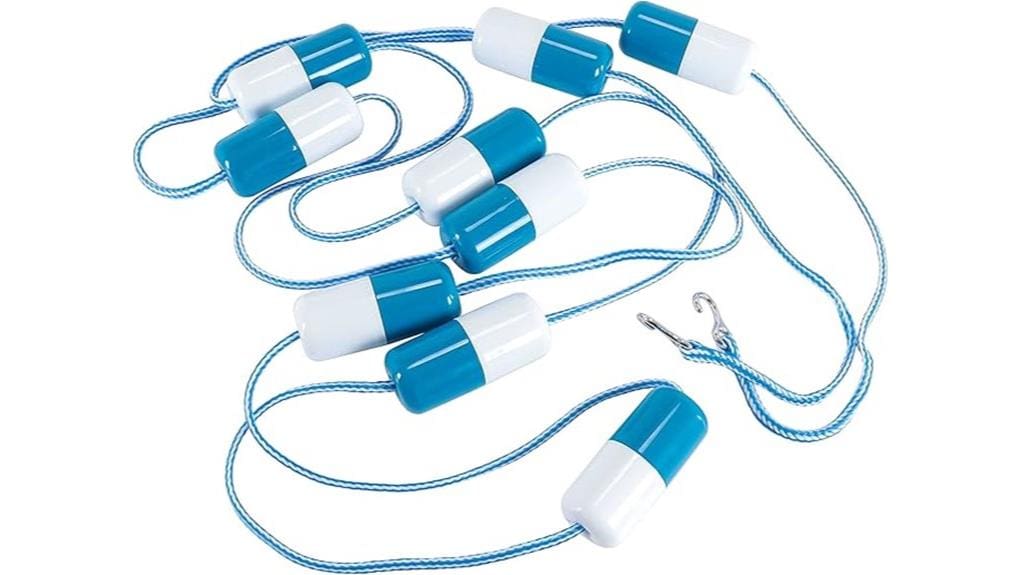
You’ll find the U.S. Pool Supply pool rope is a straightforward, durable option for dividing a residential pool: bi-tone white and blue floats stay visible, braided polymer rope resists chemicals and UV, and included aluminum hooks hold well on common pool lips. It’s adjustable (about 16–20 ft), light and easy to install, and raises perceived safety for families and hosts; check hooks periodically for corrosion and follow simple care tips to extend service life if you want more specifics.
Some Key Takeaways
- Durable braided polymer rope and bi-tone white/blue floats provide clear, long-lasting visibility for dividing residential pools.
- Adjustable length (16–20 ft) fits typical small-to-medium pool widths for temporary dividers or training lines.
- Aluminum anchor hooks hold taut and grip most pool lips, though monitor for corrosion over time.
- Simple installation and lightweight design suit homeowners, swim instructors, and casual lap swimmers.
- Regular rinsing, ventilated storage, and periodic knot/anchor checks extend service life and safety.
Quick Verdict: Is the U.S. Pool Supply Pool Rope Worth Buying?
Cut through the options: if you need a simple, durable pool divider that’s visible and adjustable, the U.S. Pool Supply rope earns a clear nod. You’ll find the bi-tone floats and braided rope give reliable visibility and decent longevity for residential pools. In a value comparison, it balances cost, durability, and straightforward installation without extras you might not use. You’ll appreciate how it raises safety perception among family and neighbors, marking shifts so everyone feels included and aware. It isn’t a barrier, but it’s practical, affordable, and purpose-built—good for most home pools seeking obvious, low-fuss division. Many homeowners choose these ropes because they effectively divide pool areas and improve perceived safety.
What You Get : Specs, Materials, and Adjustable Sizing
While it looks simple, the U.S. Pool Supply Pool Rope Floats To Divide Pool gives you clear, practical specs: adjustable 16–20 feet (listed as a 20 Safety Rope), bi-tone white and blue buoys, braided polymer rope, and aluminum anchor hooks. You’ll appreciate the item weight (1.68 lb) and model/UPC details for purchase and support. In a material comparison, braided polymer wins for chemical and UV resistance versus basic rope, while aluminum hooks balance strength and corrosion risk. Sizing options let you tailor fit small to medium residential pools. It’s straightforward, dependable gear that helps you feel part of a safety-minded pool community. Our catalog focuses on pool safety fencing options and related outdoor products to keep homeowners safe and stylish.
Real-World Performance: Visibility, Durability, and Anchoring
Because you’ll rely on it every swim season, the U.S. Pool Supply rope performed predictably in visibility tests: bi-tone white and blue floats stayed conspicuous against varied water tones and glare, helping you spot the division line quickly. Durability held up—braided polymer resisted chemicals and UV with minimal fading after weeks of sun-soaked use. Anchoring methods using aluminum hooks kept the rope taut; you’ll need to check hooks for corrosion over time but they gripped most pool lips securely. Overall, the line balances visual clarity, material resilience, and straightforward anchoring so your group feels safer and seen. Homeowners will also appreciate how these ropes work well with common pool cover clips to keep the line in place when the pool is not in use.
Who Should Buy It and Common Use Cases for Pools
After seeing how the rope holds up in visibility and anchoring tests, you can judge whether it fits your pool needs. If you’re a homeowner who hosts kids, the rope’s clear demarcation helps families supervising feel included in a shared safety routine. Swim instructors training small groups will appreciate the adjustable length and visible bi-tone floats for quick lane or depth markers. It’s also suited to casual lap swimmers wanting a temporary divider, pool-party hosts managing activity zones, and caregivers monitoring mixed-ability swimmers. You’ll want this if you value straightforward, durable visual control without permanent installation. Enhance your outdoor space with stylish lane dividers like those designed for backyard pools.
Setup, Care, and Tips to Get the Best Life From the Rope
For a reliable setup, anchor the rope at shoulder height along your chosen boundary and adjust the length to fit between the pool sides (16–20 ft), ensuring the aluminum hooks seat securely into the coping or anchor points. You’ll want Proper storage in a ventilated bag when not in use to prevent mildew and abrasion. Schedule regular Anchor inspection for corrosion or bending, and tighten connections after heavy use. Practice Knot maintenance on spare line—use figure-eight or bowline knots and retie monthly. Rinse the braided polymer after heavy chemical exposure and use UV protection sprays sparingly to extend buoy lifespan and color. Keep your pool skimmer running smoothly all season by checking the boundary rope regularly for wear and alignment with the pool’s skimmer system.
Some Questions Answered
Can This Rope Float Withstand Boat or Jet-Ski Contact?
No — you shouldn’t expect it to withstand boat or jet-ski contact. The float durability is designed for swimmers and pool chemicals, not heavy impacts; collision testing for marine craft isn’t provided. You’ll want something rated for watercraft mooring or heavy-duty marine lines if you need impact resistance. If you care about community safety, choose a certified, reinforced option and communicate boundaries clearly to others who share your water space.
Are Replacement Floats or Parts Available Separately?
Yes—you can often find replacement options and spare components, but availability varies. Check the manufacturer or retailer for matching floats, rope sections, or aluminum hooks; they’ll confirm part numbers and fit. If direct spares aren’t sold, you can source comparable buoys and braided rope from pool-supply vendors and swap hooks yourself. Reach out to U.S. Pool Supply for warranty guidance and community tips so you’ll keep your divider dependable.
Is the Rope Suitable for Saltwater Pools or Ocean Use?
Yes — you can use it in saltwater pools and near the ocean, but expect some maintenance. The braided polymer rope offers saltwater durability and the floats have UV resistance, so they resist sun and chemical exposure. You’ll still rinse and inspect metal/aluminum hooks regularly for corrosion, tighten anchors, and replace parts as needed. You’ll feel confident using it if you join others who prioritize upkeep for long-term performance.
Does the Rope Meet Any Official Safety Standards or Certifications?
No, it doesn’t list specific regulatory compliance or certification labels on the product page, so you shouldn’t assume formal safety certifications. You’ll want to check the manufacturer’s warranty and ask U.S. Pool Supply directly for documentation if compliance matters to you. The rope appears sturdy and chemical-resistant, but lacking explicit certifications means you and your community should verify standards for public or commercial use before relying on it for mandated safety.
Can Anchors Be Used on Vinyl or Fiberglass Pool Walls?
Yes — you can generally use vinyl safe anchors and cushioned fasteners on vinyl or fiberglass pool walls, but you should confirm compatibility with your pool maker. You’ll want anchors that distribute load, avoid sharp metal contact, and use rubber or padded backing to prevent abrasion. Install gently, follow manufacturer torque and placement guidance, and check anchors periodically. Doing this protects your pool surface and helps your community of swimmers feel safer.