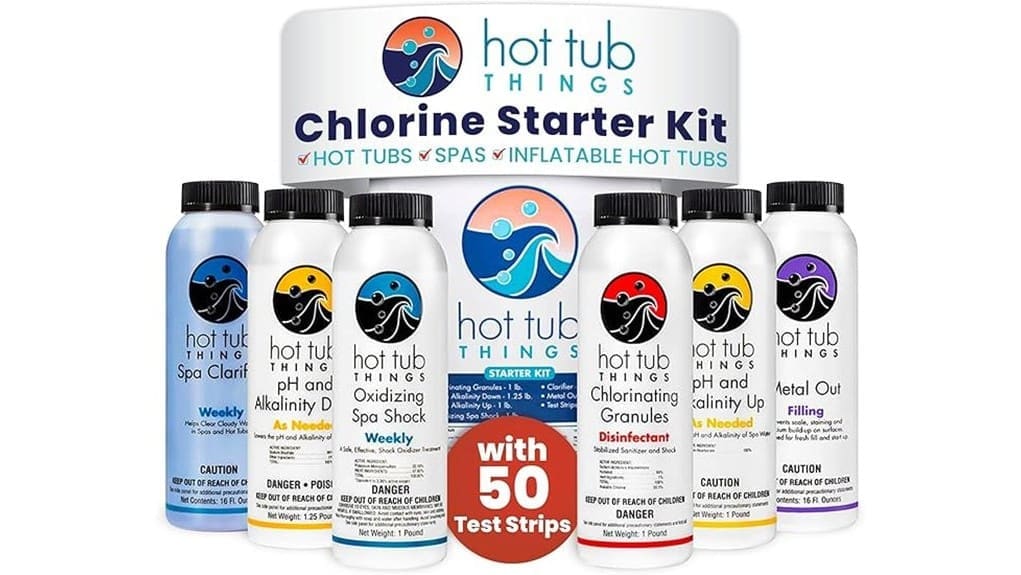
You get a compact, travel-friendly chlorine starter kit that’s tailored for inflatable and small traditional hot tubs, with chlorinating granules, oxidizing spa shock, pH up/down, clarifier, Metal Out, and 50 test strips. You’ll rinse and fill the tub, run circulation, test and balance alkalinity/pH, then dose sanitizer and shock per directions. Weekly, you’ll monitor strips, rebalance pH/alkalinity, add chlorine and shock, and use clarifier/Metal Out as needed — keep going to learn full dosing and troubleshooting.
Some Key Takeaways
- Includes chlorinating granules, oxidizing spa shock, pH up/down, clarifier, Metal Out, and 50 test strips for small/inflatable spas.
- Best suited for routine weekly maintenance and initial setup of inflatable, portable, or small traditional hot tubs.
- Setup requires rinsing shell/filters, filling, circulating 15+ minutes, then testing and adjusting alkalinity and pH.
- Maintenance: broadcast chlorine, follow with oxidizing shock, add clarifier/Metal Out as needed, and inspect equipment regularly.
- Troubleshoots cloudy water, foaming, pH drift, and stains with targeted adjustments, shock treatments, and metal sequestration.
What This Kit Includes and Who It’s Best For
Although it’s compact, the Hot Tub Things Chlorine Starter Kit gives you all core chemicals and tools to set up and maintain a small spa: chlorinating granules and oxidizing spa shock for sanitation, pH up and pH down for acid/alkalinity control, a clarifier and Metal Out for clarity and stain prevention, plus 50 test strips. You’ll get measured granular doses (1 lb chlorinating, 1 lb shock, 1.25 lb pH down, 1 lb pH up), two pint liquid treatments, and test strips—packaged for inflatable compatibility and travel convenience. It’s best for inflatable, portable, and small traditional spas needing routine weekly maintenance. Keeping track of sanitizer and chemical levels is simple with test kits designed for homeowners who enjoy outdoor spaces on their property.
Quick Setup: How to Start Treating a New or Drained Hot Tub
When filling a new or freshly drained hot tub, start by rinsing the shell and filters, then fill to the manufacturer’s waterline and run the circulation pump for at least 15 minutes to mix in-line water and remove air pockets. After initial circulation, remove and inspect the fill filter, then reinstall. Test total alkalinity and pH with the included strips; adjust using pH up or down to target ranges. Broadcast chlorinating granules per kit dosing for initial sanitization, wait one hour, then add oxidizing spa shock. Use clarifier and Metal Out as recommended to optimize clarity and prevent staining before first use. Consider adding a pool opening chemicals clarifier or metal sequestrant from a trusted supplier to ensure the best start for your outdoor water feature.
Step-by-Step Weekly Maintenance Routine Using the Kit
Regularly perform a concise weekly routine to keep your hot tub water balanced, sanitized, and clear: test total alkalinity and pH with the included strips and adjust using the pH up or pH down granules to bring alkalinity and pH into recommended ranges, broadcast the chlorinating granules at the kit’s maintenance dose for ongoing sanitation, follow with an oxidizing spa shock to remove combined chlorine and organic contaminants, and add the clarifier and Metal Out as needed to optimize clarity and prevent stains and scale. Use this weekly checklist as your maintenance schedule: test, adjust pH/TA, dose sanitizer, oxidize, clarify, inspect equipment, and log results. For homeowners who enjoy their outdoor spaces, consider incorporating periodic shock treatments to keep the water crystal clear and protect surfaces from buildup—learn more about shock treatment basics.
How Each Product Works: pH, Sanitizer, Shock, Clarifier, and Metal Out
Because each component targets a specific chemical or physical issue, you should use them deliberately to maintain balanced, sanitary hot tub water. pH Up raises alkalinity and pH by adding carbonate/bicarbonate compounds to stabilize water and prevent corrosion or scale; pH Down lowers them with muriatic-like acids to stop cloudy water and equipment damage. You monitor pH dynamics with strips, adjust before sanitizer dosing to guarantee effectiveness. Chlorinating granules provide residual sanitizer; sanitizer interactions require stable pH. Oxidizing spa shock removes organics—observe shock timing after heavy use. Clarifier mechanisms aggregate particulates for filtration. Metal Out provides metal sequestration to prevent staining. Regular testing and the right test strips help homeowners keep pool and hot tub water clear by guiding correct dosing and timing, especially after heavy use or when adjusting chemicals for safe outdoor spaces.
Troubleshooting Common Water Problems and When to Add Extra Chemicals
If you spot cloudy water, foaming, rapid pH drift, or visible stains, diagnose the cause before adding more chemicals; improper dosing can worsen issues or damage equipment. Test alkalinity, pH, and free chlorine with the kit strips. For cloudy water, run the filter, add clarifier per label, and correct alkalinity/pH—avoid shock if high chlorine persists. Foaming issues usually signal organics; use shock and clean filters, but only after lowering combined chlorine. Algae blooms require brushing, shocking with oxidizer, and maintaining residual sanitizer. Use Metal Out for stains; retest and adjust gradually to avoid overcorrection. Consider using digital testers for more accurate readings and easier maintenance of pool water.
Some Questions Answered
Is This Kit Safe for Acrylic and Wooden Hot Tub Shells?
Yes — you can use this kit with acrylic and wooden hot tub shells if you follow precautions. You’ll maintain surface compatibility by using recommended dosages, testing water with the included strips, and avoiding prolonged high chlorine or shock levels. For wooden shells, prioritize seal maintenance: keep seals treated, dry edges between uses, and rinse chemical spills. Proper balance prevents scale, corrosion, and finish damage, extending your spa’s life.
Can I Use Bromine Instead of Chlorine With These Products?
You can’t directly substitute bromine with these chlorine-based products; they’re formulated for chlorine chemistry, so bromine compatibility is limited. For sanitizer conversion you’d need bromine-specific sanitizer and compatible shock/clarifier products, plus a conversion procedure: drain or neutralize remaining chlorine, rebalance pH/TA, and dose bromine tablets or granules per manufacturer instructions. Test frequently with appropriate test strips and follow bromine product guidelines to make certain safe, effective sanitation.
How Long Do Opened Chemical Containers Remain Effective?
Opened chemical containers typically remain effective for 6–12 months, though exact shelf life varies. You should perform label checks for manufacturer guidance and storage instructions. Maintain container integrity—keep lids tight, dry, and away from heat or sunlight to preserve chemical stability. If granules clump, liquids change color, or odors appear, discard them. Regular testing of your spa water confirms whether chemicals still perform as expected.
Are These Products Safe for Swimwear and Skin Contact After Treatment?
Yes — once water is properly treated and chemical levels are within recommended ranges, you can safely have skin contact and wear swimwear. You should test and adjust pH, chlorine and oxidizer levels to avoid skin irritation and minimize fabric fading. Rinse swimwear after use and shower to remove residual chemicals. Follow dosing instructions, allow proper circulation and shock oxidation times, and store chemicals securely to maintain safe bath conditions.
Can I Store This Kit Outdoors or in Unheated Garages?
No — you shouldn’t store it outdoors or in unheated garages. You’ll risk UV degradation of containers and active ingredients, plus temperature cycling that degrades chemical stability and can cause clumping, reduced efficacy, or container failure. Store the kit in a cool, dry, climate-controlled area away from sunlight, heat sources, and moisture. Keep chemicals sealed, upright, and separate from incompatible materials to maintain safety and product performance.