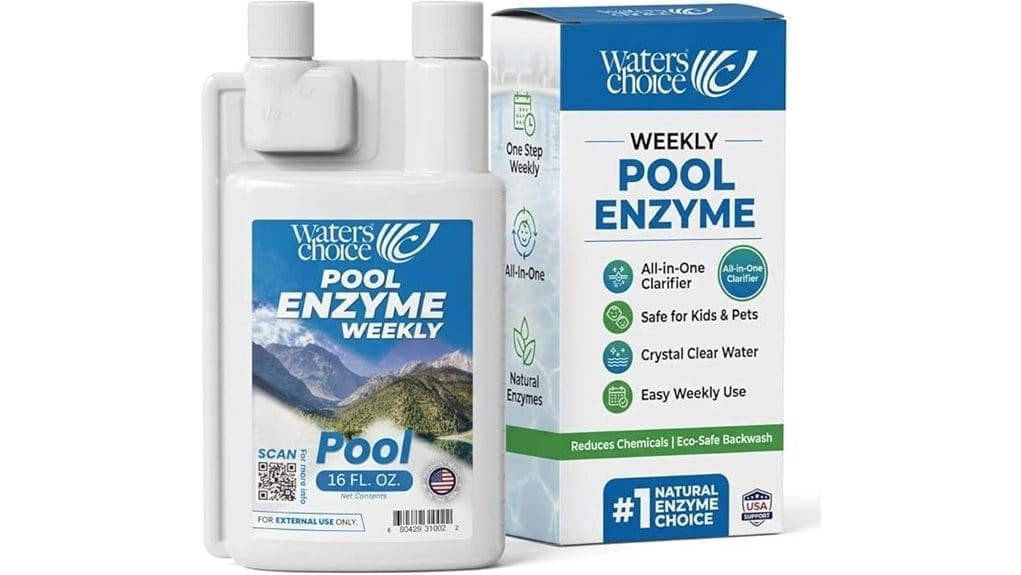
Waters Choice Weekly is an enzyme concentrate that helps you break down organic scum, reduce cloudiness, and ease filter strain with a simple weekly dose. You’ll apply it in the evening after filtration, use spot treatments for heavy deposits, and keep regular weekly dosing for best results. It’s biodegradable, chlorine‑compatible, and not a sanitizer replacement—use alongside proper chemistry. Expect clearer water and less backwashing; keep going and you’ll find dosing tips, safety notes, and buying advice.
Some Key Takeaways
- Weekly enzyme concentrate effectively breaks down organic scum, improving water clarity and reducing surface films within a few treatment cycles.
- 16-ounce bottle supplies weekly doses for most residential pools, lowering filter load and decreasing frequency of backwashing.
- Best applied in the evening after filtration runs; spot-treat heavy deposits and run pump at least one full cycle.
- Compatible with chlorine and bromine; enzymes are biodegradable and non-toxic but do not replace sanitizers or treat major algae blooms.
- Value depends on pool size and usage; regular weekly dosing recommended to prevent buildup and maintain results.
What Waters Choice Weekly Pool Enzyme Concentrate Does and Who It’s For
Typically used once a week, Waters Choice Weekly Pool Enzyme Concentrate uses naturally derived enzymes to break down organic matter that causes scum, cloudiness, and odors, reducing strain on your filter and cutting down on manual cleaning. You’ll find it suits pool owners seeking enzymatic maintenance that complements sanitizers and reduces routine labor. It fits a weekly regimen, helping maintain clear water, limit chlorine odor, and support swimmer comfort. Practical for residential pools, it aids algae prevention indirectly by removing organics that feed growth. You won’t get miracle cures, but you’ll reduce filter load and skip some scrubbing. The product is aimed at homeowners who enjoy their outdoor spaces and want to use natural enzymes as part of a low-effort pool care routine.
How to Use WC16 Weekly: Dosage, Timing, and Application Tips
Now that you know what the enzyme concentrate does and who it suits, here’s how to use WC16 weekly to get reliable results: Follow the dosage chart on the label — typically measured per 10,000 gallons — and adjust for pool size. Apply as an evening application after filtration runs; enzymes work best overnight. For visible concentrated deposits use a spot treatment directly on the scum or oils, then run the pump for at least one full cycle. Don’t overdose; weekly maintenance avoids buildup. Monitor results and adjust only if organic load or swimmer frequency increases, keeping applications consistent. Many homeowners prefer enzyme treatments because they help reduce organic buildup in outdoor pool environments, contributing to clearer water with less chemical dependence pool enzyme treatments.
Performance Review: Clear Water, Scum Control, Filtration Relief
Regularly using Waters Choice Weekly you’ll notice clearer water and less surface scum within a few treatment cycles. You’ll see organic films break down, reducing visible scum and cloudiness without masking problems. Algae prevention appears improved as enzymes target organics that feed growth, though severe blooms still need targeted treatment. Filtration relief is measurable: your filter cycles clog less often and backwashing frequency can drop, easing pump maintenance. Results depend on consistent weekly dosing and baseline water chemistry. Overall performance is effective for routine upkeep, cutting manual skimming and filter load, but it’s not a standalone cure for major contamination. Homeowners using this product often find it complements pool clarifiers to maintain clear pool water without extra effort.
Safety, Environmental Profile, and Compatibility With Pool Chemicals
Alongside clearer water and reduced filter load, you’ll want to take into account safety, environmental impact, and how the enzymes interact with your existing pool chemistry. You’ll find WC16 uses naturally derived, biodegradable enzymes labeled non-toxic, which limits eco toxicity compared with harsh chemical alternatives. That profile supports lower environmental risk and simpler disposal, though local regulatory compliance for commercial pools may still apply. In use, enzymes don’t replace sanitizers; they’re compatible with chlorine and bromine when dosed per instructions and won’t neutralize sanitizers. Follow label directions, avoid overdosing, and consult manufacturer guidance if you run advanced water treatment systems or have municipal restrictions. Our product selection focuses on eco-friendly chemicals for homeowners who enjoy outdoor spaces.
Value, Packaging, and Buying Guide : Is WC16 Worth It?
If you’re weighing cost versus benefit, Waters Choice WC16 delivers a focused value proposition: a 16-ounce bottle provides weekly doses for most residential pools, cuts down on scum and filter workload, and reduces routine cleaning time thanks to biodegradable, naturally derived enzymes. You’ll judge worth by your pool size and maintenance habits; perform a price comparison against multi-pack or concentrated alternatives to see savings. Packaging durability is adequate — sturdy plastic with clear labeling — but you’ll want secure sealing during shipping. If you prioritize eco-friendly, low-effort upkeep and modest weekly cost, WC16 is a practical, reasonable choice. Enhance your outdoor oasis with pool mineral systems to complement enzyme-based care and improve overall water quality.
Some Questions Answered
Can I Use WC16 in Hot Tubs or Spas?
Yes — you can use WC16 in hot tubs and spas if you follow label directions and adjust dosage for smaller, warmer volumes. You’ll get hot tubcompatibility benefits like improved spaclarity and reduced organic buildup, but don’t overuse enzymes in concentrated, high-temperature environments. Test water chemistry regularly, maintain sanitizer levels, and rinse filters more often. If unsure, contact the manufacturer for specific spa dosing to avoid unintended effects.
Does WC16 Affect Saltwater Chlorine Generators?
Yes — WC16 is generally compatible with saltwater chlorine generators and won’t interfere with the salt cell’s chlorine production. You should monitor for electrode buildup since organic breakdown products can deposit; regular cell inspections reduce corrosion risk. For maintenance tips, run the generator per manufacturer guidance, clean the cell on schedule, and keep sanitizer and pH balanced. If you notice performance changes, pause use and consult the generator manufacturer.
Is WC16 Safe for Vinyl and Fiberglass Liners?
Yes — you can use WC16 with vinyl and fiberglass liners; it’s formulated from naturally derived enzymes and is labeled safe materials-friendly. You’ll find it supports liner care by reducing organic buildup, scum and staining without harsh chemicals that can degrade surfaces. Be impartial: follow the manufacturer’s dosing and weekly schedule, test a small area if concerned, and continue regular water balance checks to protect liner integrity and prolong lifespan.
How Long Does One 16 Oz Bottle Typically Last?
One 16 oz bottle typically lasts about 8–16 weeks depending on pool size and dosing frequency. If you dose weekly at the manufacturer’s recommended rate for a standard residential pool, you’ll get roughly two to four months of usage duration. If you have a larger pool or increase dose during heavy use, expect the lower end. You should monitor water clarity and adjust dosing frequency to maintain peak results.
Are Enzymes Compatible With Algaecides or Metal Sequestrants?
Yes — enzymes are generally compatible with algaecides and metal sequestrants when used correctly. You’ll avoid negative enzyme interactions by following recommended treatment sequencing: add enzymes weekly, then wait before dosing shock or strong oxidizers. Algaecides and sequestrants usually work alongside enzymes without deactivating them, but harsh oxidizers can. Remain impartial: check product labels and manufacturer guidance to confirm timing and compatibility for best results.