You’ll get convenient continuous‑release 3‑inch trichlor tablets that reliably maintain free chlorine and add cyanuric acid for UV protection, but you’ll sacrifice shock flexibility and risk cumulative CYA and localized corrosion if misused. They include algicide/clarity adjuncts and binders to aid filtration capture, so routine maintenance and algae prevention are straightforward, though heavy turbidity or established blooms respond slowly. Use dispensers, calculate dissolution to match ppm targets, and follow safe storage—more details follow.
Some Key Takeaways
- 3-inch trichlor tablets (84% active) provide convenient continuous chlorine release and simple routine sanitation.
- Built-in cyanuric acid stabilizer reduces UV chlorine loss but causes gradual CYA buildup with ongoing use.
- Integrated algicide/clarity adjuncts help prevent algae and improve clarity, but won’t quickly clear heavy blooms or turbidity.
- Continuous-release tablet format limits shock dosing flexibility and risks localized corrosion if placed in skimmer or near surfaces.
- Best for homeowners wanting low-maintenance dosing; monitor FC and CYA regularly and store tablets dry and segregated.
What the 3-Inch 5-In-1 Super Multi-Tabs Are and What’s Inside
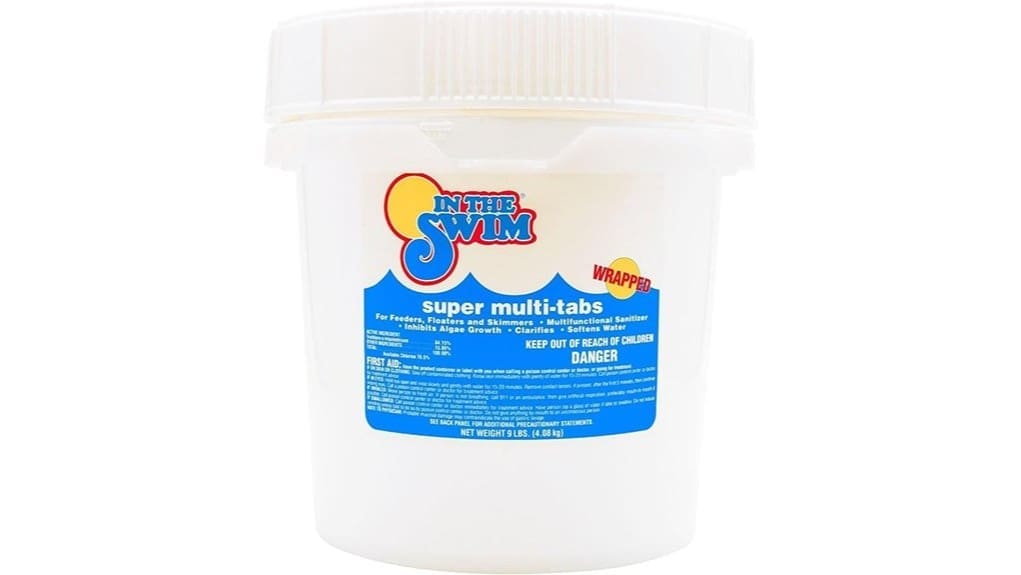
Think of the 3-inch 5-in-1 Super Multi-Tabs as a consolidated pool-treatment tablet that packs five functions into a single 3-inch trichlor pellet. You’ll find a formulation dominated by 84% Trichloro-S-Triazinetrione; the chemical composition lists oxidizing chlorine supplemented with adjuncts for algae control and clarification. Tablet ingredients include binders and a measured active stabilizer to slow UV breakdown, plus co-formulants that aid filtration capture. You should note concentrated delivery and limited dosing flexibility; formulation details favor convenience over tailored chemistry. Assess integration trade-offs if you require precise, component-specific control in your maintenance regimen. These tablets are often sold alongside other pool shock treatment products for homeowners who enjoy outdoor pool maintenance and sparkling pools.
How These Tablets Perform for Sanitation, Algae Control, Stabilizing, and Clarity
While a single 3-inch Tri‑Chlor tablet delivers measurable residual chlorine and broad-spectrum biocidal action, you should expect strengths and limits across functions: sanitation is effective for routine microorganism control when dosed to maintain free chlorine in the target range, algae control is preventative but slower against established blooms, stabilization reliably reduces UV decay of available chlorine due to the built‑in cyanuric component, and the clarifier effect aids filtration by promoting particle agglomeration but won’t replace mechanical clarity treatments for heavy turbidity. You’ll find sanitation efficacy solid for maintenance, algae prevention best as prophylaxis, chlorine stabilization consistent, and clarity enhancement modest under low particulate load. Maintaining proper pH is essential for these tablets to perform optimally, so monitor and adjust pool pH to keep water clearer and safer.
How to Use the Tablets Safely and Set the Right Dosing for Your Pool
Handle these 3-inch Tri‑Chlor tablets with care and dose deliberately: they’re potent (84% active) and continuously release chlorine, cyanuric acid and adjuncts, so your regimen must control residual free chlorine, cumulative stabilizer (CYA) levels, and tablet placement to avoid localized corrosion or bleaching. You should use an inline feeder or floating dispenser placed away from metal and vinyl surfaces; never toss tablets into skimmer. Establish pool dosing by calculating ppm required, then convert tablet dissolution rate to tablets/week for your volume, verifying with test strips. Follow label safety precautions: gloves, eye protection, dry storage, and separate incompatible chemicals. Homeowners who enjoy their outdoor spaces should consider routine testing and maintenance to keep water safe and equipment protected, and learn more about pool chlorine tablets.
Pros, Cons, and Who Should (or Shouldn’t) Buy These Multi-Tabs
Because these 3-inch 5‑in‑1 Super Multi‑Tabs combine five functions into a single, high‑strength (84% Tri‑Chlor) tablet, you’ll get clear benefits in simplified dosing and routine maintenance, but you must weigh trade‑offs like cumulative stabilizer buildup, continuous chlorine release, and potential material compatibility issues. Pros: reduces handling, streamlines feed schedules, controls algae, and clarifies with predictable residuals. Cons: less control over individual chemistries, risk of cyanuric acid overaccumulation, not ideal for weekly shock strategies, and continuous release may affect chemical compatibility with some metals and vinyl. Buy if you want convenience; avoid if you need precise dosing or frequent adjustments. These tablets are commonly used by homeowners who maintain outdoor pool spaces and may be paired with simple pool water test kits for routine monitoring.
Buying and Packaging Details, Storage, and Best-Practice Tips for Value
When you buy In The Swim 3-inch 5‑in‑1 Super Multi‑Tabs, prioritize package integrity and unit economics: a single case contains 144 high‑strength (84% Tri‑Chlor) 3‑inch tablets weighing about 9–10.4 lb per unit, so check seals, UPC/ASIN, and Manufacturer Part Number (F039009036AE) to confirm authenticity and avoid damaged or counterfeit product. Inspect cartons for moisture, crushed tablets, or odour breaches. Packaging tips: prefer sealed, original cases; document lot numbers for traceability. Storage safety: store dry, cool, ventilated, away from organics and metals; keep locked, upright, and segregated from incompatible chemicals. Rotate stock FIFO to preserve potency. For homeowners, ensure you follow safe chemical storage practices to protect family and property.
Some Questions Answered
Do These Tablets Affect Pool Surfaces or Equipment Warranties?
They can affect surfaces and warranties if misused; you should verify surface compatibility and warranty implications before use. The 5-in-1 tablet’s high trichloro concentration can discolor or etch sensitive finishes (vinyl, painted, some metals) and accelerated chemical exposure may void manufacturer equipment warranties. Follow dosing, avoid direct tablet contact with surfaces or equipment, use appropriate feeders, and retain manufacturer documentation to minimize warranty disputes and material degradation.
Can They Be Used in Saltwater or Mineral Pools?
Yes — you can use them, but be cautious: saltwater compatibility exists because the tablets deliver stabilized trichlor chlorine that works in salt and mineral pools, yet their high chlorine and trichlor acidity can accelerate corrosion and raise combined chlorine if chlorinator settings aren’t adjusted. You’ll need to monitor chlorine, cyanuric acid, and pH frequently, avoid dropping tablets directly into salt chlorine generators, and follow equipment manufacturer limits to protect heaters and liners.
Are They Safe for Swimmers Immediately After Application?
No, you shouldn’t let swimmers enter immediately after application. Chlorine release from Tri‑Chlor tablets can produce high free‑chlorine spikes that risk skin irritation and respiratory irritation. You should wait until levels stabilize to typical pool ranges (1–3 ppm free chlorine) and cyanuric acid/stabilizer is balanced. Perform immediate testing after tablets dissolve and again before swimming; only allow bathing when chemical readings are within safe, recommended limits.
Do They Interact With Other Common Pool Chemicals?
Yes — they can interact with other pool chemicals. You’ll need to monitor chemical compatibility: Tri‑Chlor releases cyanuric acid (stabilizer) and lowers pH, so Stabilizer interactions matter when adding separate CYA or shock. Avoid simultaneous addition with alkaline powders, metal-based algaecides, or non-chlorine shock to prevent reactions or reduced efficacy. Test levels frequently, stagger additions, and follow dosing guidelines to prevent precipitation, over‑stabilization, or safety hazards.
What Is the Environmental Impact of Leftover Tablet Residue?
Leftover tablet residue can harm ecosystems: you’ll increase aquatic toxicity from persistent trichloro-s-triazinetrione by releasing oxidizers and stabilized chlorine into water. You’ll also promote sediment buildup as insoluble binders and precipitated metals accumulate, smothering benthic habitats and impairing filtration. Manage dosing, avoid overdosing, collect fallen tablets, and prevent runoff to reduce environmental load. Regular monitoring and neutralization steps will limit chronic toxicity and sediment-associated impacts.