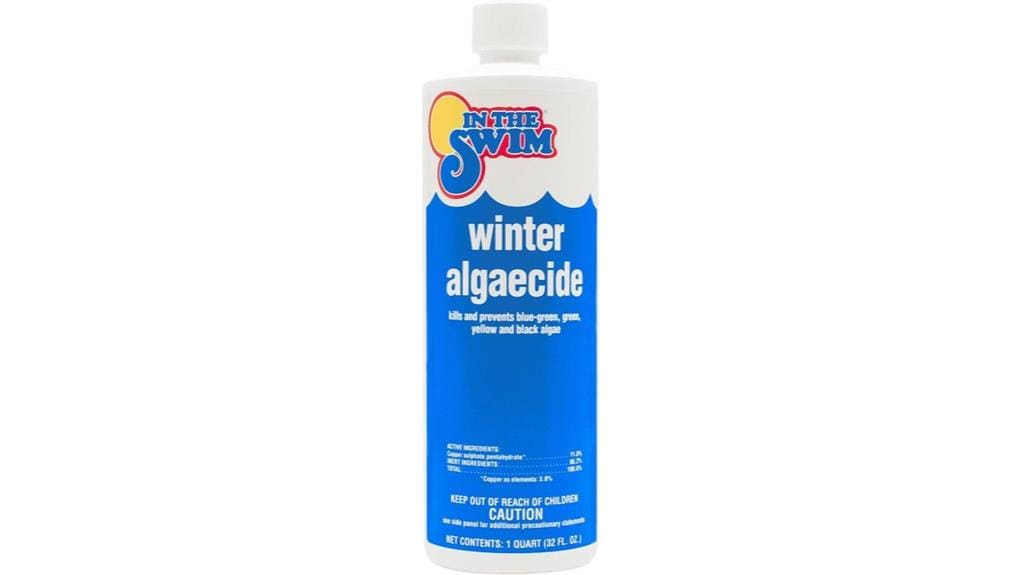
You’ll find In The Swim’s Winter Algaecide a practical, low-effort preseason treatment that keeps pools algae-free under ice and snow. You’ll apply one quart per ~10–12k gallons after balancing chemicals, run the pump a few hours, and cover the pool. It’s freeze-stable, non-foaming, and safe for vinyl, plaster, and fiberglass when used as directed. Watch for concentrated spills on porous items. It’s economical compared with repeated shocks, and more details explain usage and alternatives. In addition to these benefits, the Poolrx pool unit effectiveness review highlights how it can assist in maintaining water clarity and reducing the need for other chemical treatments. Users report a noticeable improvement in overall water quality, making it a valuable addition to any pool maintenance routine. Investing in such products can save time and effort, especially during the challenging winter months.
Some Key Takeaways
- Quart-sized, single-preseason dose treats ~10,000–12,000 gallons to provide winter-long algae protection.
- Freeze-stable and non-precipitating, it remains active under ice and snow to prevent spring blooms.
- Safe for vinyl, plaster, and fiberglass surfaces and compatible with pool filtration when used as directed.
- Reduces spring cleanup and need for extensive shock treatments, saving time and maintenance costs.
- Avoid concentrated spills (may stain porous items) and do not mix with other chemicals; follow label instructions.
What This Algaecide Is and Who It’s For
While you’re closing your pool for winter, In The Swim Winter Algaecide gives you a simple, one-application way to prevent algae growth through ice and snow. You get a quart-sized liquid treatment designed for winter maintenance, made to stay active under ice and snow so your pool aesthetics stay intact. It’s for homeowners and caretakers who want reliable, low-effort protection and a community of users who value predictable results. Safe for all surfaces and systems, non-foaming and non-staining, it reduces spring cleanup and shock needs. You’ll feel confident returning to clear water and fewer surprises. Many pool owners also use essential winter chemicals like algaecide treatments as part of their seasonal maintenance routine.
How the Formula Works in Winter and What Protection to Expect
Because it stays active at low temperatures, the Winter Algaecide continuously inhibits algae spores through ice and snow so you don’t get a spring bloom. You’ll appreciate its freeze stability: the formula won’t precipitate or lose potency during cold spells, so protection remains uniform. Microbial inhibition targets algae before visible growth, cutting spring cleanup and unexpected black or green water. You can trust a single preseason dose to guard dormant conditions, reducing shock needs later. It’s straightforward, dependable, and meant to keep your pool community’s space ready—less worry, more shared swim seasons when warm weather returns. Homeowners who enjoy their outdoor spaces will value its role in keeping pools sparkling with minimal maintenance.
Real-World Use: Dosing, Application Timing, and Compatibility With Pool Systems
When you’re closing the pool for winter, apply the recommended dose of In The Swim Winter Algaecide evenly across the water surface to guarantee continuous protection; a typical rate is one quart per 10,000–12,000 gallons (check the label for your exact pool volume), and you’ll want to run the pump for several hours afterward to distribute the product. For application timing, do this after balancing chemicals and before adding covers so everyone in your pool community feels confident. You’ll appreciate that one treatment lasts through cold months. This algaecide works with all surfaces and filtration; follow label directions and note pump runtime. Many homeowners pair algaecide use with stain removers to keep winter pools clear and free of discoloration.
Pros, Cons, and Safety Considerations (Staining, Surfaces, Filtration)
Now that you know how to dose and apply the algaecide at closing, let’s look at what you’ll gain and what to watch for. You’ll appreciate reliable winter-long algae control and simplified spring openings. Pros: proven surface compatibility with vinyl, plaster, fiberglass and peace of mind about filtration safety — it’s non-foaming and won’t foul filters. Cons: any concentrated spill could raise staining risks on porous items; rinse immediately. Watch for chemical interactions if you mix with other treatments—don’t. You’ll belong to a group of owners who value low-maintenance winter care when you follow label directions. Homeowners often include winterizing kits as part of their closing routine to protect outdoor spaces.
Is It Worth Buying? Cost, Value, and Alternatives to Consider
Although the quart bottle costs a modest amount compared with seasonal pool-opening bills, you’ll get the most value if you winterize correctly and use the recommended one-time dose; this product prevents costly spring algae blooms and reduces the need for extra shock treatments, cleanup labor, and wasted weeks before swimming. You’ll find the price comparison favors this In The Swim quart versus multiple shock treatments or professional cleanings. If you want community-tested reliability, it’s economical and simple. Still, weigh alternative brands for promos or organic options. Choose based on pool size, budget, and whether you prefer DIY or pros. Natural enzyme treatments can further reduce maintenance by breaking down organic waste and improving water clarity, making them a smart complement to algaecide use for many homeowners natural enzyme treatments.
Some Questions Answered
Can I Use This Algaecide in Spas or Hot Tubs?
No — you shouldn’t use this algaecide in spas or hot tubs. Spa compatibility isn’t specified; formulas for pools can be too strong for smaller volumes and warm water. For hot tubging safety, pick products labeled for spas/hot tubs to avoid damage, foaming, or skin irritation. You’ll feel reassured using spa-specific treatments that protect surfaces, equipment, and your community of fellow tub users without risking costly problems or awkward surprises.
Does It Have an Expiration Date or Shelf Life?
There’s no fixed expiration date, but you should treat it like a stable product with a practical shelf life. Store it per labeled storage conditions—cool, dry, away from sunlight—and it’ll stay effective for years. If you’re unsure, contact the manufacturer; they’ll confirm potency and any precautions. Keep your receipt and note warranty details: the manufacturer warranty may cover defects, not natural degradation, so test before critical use.
Is It Safe Around Pets and Wildlife if Spilled?
No — you shouldn’t assume it’s safe; if spilled it can harm pets and wild animals. You’ll want to avoid contact, keep animals away, and clean spills promptly per label directions to minimize wildlife impact. If exposure happens, rinse animals with water and call a vet or local wildlife rehab. You’ll stay safer by storing it securely, using gloves, and following disposal instructions so your community feels protected and included.
Can I Mix It With Other Winter Pool Chemicals?
Yes — you can usually combine it, but prioritize chemical compatibility and proper treatment sequencing. You’ll want to add this algaecide after balancing pH, alkalinity, and sanitizer levels, and avoid mixing it directly with concentrated oxidizers or incompatible algicides. Wait between treatments when switching chemistries, follow label directions, and when in doubt, consult the manufacturer. That way you’ll protect your pool and join other owners who’ve kept winter care simple and effective.
How Should I Dispose of Unused Product or Empty Containers?
Dispose unused product as hazardous waste — don’t pour it down drains or onto soil. Contact your local household hazardous waste facility for drop-off instructions. Rinse empty containers per label directions if allowed, then use container recycling where accepted; if rinsing isn’t permitted, treat empties as hazardous waste too. You’ll protect your community and waterways, and joining local recycling efforts helps everyone keep pools and neighborhoods safe.