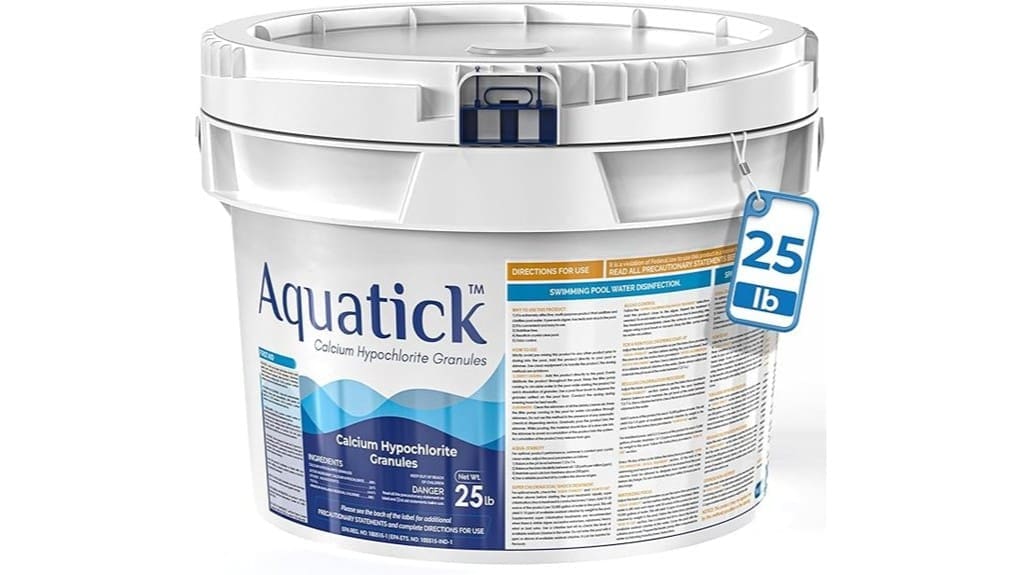
You’ll get a 25 lb bag of 68% calcium hypochlorite shock that rapidly boosts free chlorine, strips chloramines, and clears organics when pre‑dissolved and dosed near returns. It raises alkalinity and can shift pH, so you’ll monitor levels and wear PPE; sunlight degrades residuals fast without cyanuric acid so frequent shocks may be needed. It’s cost‑efficient per dose and broadly compatible with pool types — keep going to see dosing, safety, and long‑term effects.
Some Key Takeaways
- Concentrated 25 lb calcium hypochlorite (68% available chlorine) delivers fast, high-impact shock dosing for pools and spas.
- Pre-dissolve before adding; pour near return jets to protect liners and ensure rapid distribution.
- Typical startup dose 10–20 oz per 10,000 gallons; re-test free chlorine one hour after dosing.
- Effective algae control and chloramine removal when maintaining 5–10 ppm residual; improves clarity within minutes.
- Lacks cyanuric acid, so chlorine degrades faster in sunlight and requires closer monitoring of FAC and stabilizer.
What the Pro-Grade Chlorine Pool Shock 25lb Actually Is and Who It’s For
Although it looks like a simple 25 lb bag, the Pro-Grade Chlorine Pool Shock is a high-strength calcium hypochlorite granular sanitizer (68% available chlorine) designed for professional and serious residential pool maintenance. You’ll treat water fast: it’s a concentrated oxidizer for shock dosing, algae control, and restoring clarity without cyanuric acid. Target users include pool service techs, facility managers, and committed homeowners who need predictable, high-residual boosts. You’ll pre-dissolve to protect liners and follow dosage per 10,000 gallons. Plan maintenance frequency based on bather load and weather — typical shock intervals are weekly to biweekly for routine use. It’s ideal for homeowners who want to keep their pool sparkling while enjoying outdoor spaces on their property.
How 68% Cal-Hypo (No Cyanuric Acid) Performs in Real Pools
In real pools, 68% calcium hypochlorite without added cyanuric acid delivers rapid, high-impact oxidizing power that you’ll notice in minutes rather than hours: it raises free available chlorine efficiently, breaks down combined chloramines, and clears organics that cloud water. You’ll measure swift chlorine spikes and improved clarity, but stability concerns mean that free chlorine drops faster under direct UV. Monitor pH closely because cal-hypo raises alkalinity and affects ph chlorine impact on efficacy. Expect sunlight degradation to shorten residual life; implement long term monitoring of FAC and cyanuric levels if you’re relying on cal-hypo regularly. Homeowners should pair cal-hypo use with regular testing and storage best practices to keep pools safe and equipment protected, especially when following Keep Your Pool Sparkling guidance.
Step-by-Step Dosing and Safe Application for Common Pool Types
Having seen how 68% cal-hypo behaves in real pools—fast spikes in free chlorine, rapid breakdown in sunlight, and upward pressure on alkalinity—you should apply it with precise dosing and handling to get predictable results and avoid damage. For pool startup, calculate volume, add 10–20 oz per 10,000 gallons pre-dissolved in a bucket, pour around return jets with circulation running, wait one hour, then test free chlorine and alkalinity. For weekly maintenance, dose lower amounts to maintain 1–3 ppm free chlorine, avoid adding granules to shallow water or directly on liners, store dry, and wear gloves and eye protection. This product is a staple among homeowners who maintain their outdoor pools for the season and backyard enjoyment, especially when following proper pool opening chemical practices like careful dosing and storage of shocks and sanitizers pool opening chemicals.
Pros and Cons After Weeks of Use: Algae Control, Clarity, and Comfort
When you run Pro-Grade 68% cal-hypo regularly over several weeks, you’ll see decisive effects on algae control, water clarity, and swimmer comfort because the high available chlorine provides rapid oxidation and sustained sanitization when dosed correctly. You’ll suppress algae resurgence effectively if you maintain 5–10 ppm residual and follow pre-dissolve dosing to avoid hot spots. Clarity improves as organics oxidize; filtration captures fines faster. For swimmer comfort, reduced chloramines lower odor and irritation when routine shocking is combined with proper circulation and pH control. Downsides: you must monitor calcium buildup and handle granular cal-hypo safely to prevent bleaching. Regular use also complements other pool care practices and supports outdoor spaces maintenance for homeowners who enjoy their yards.
Value and Buying Verdict: Cost, Compatibility, and Final Recommendation
Although the upfront cost per 25 lb bucket is competitive, you’ll get straightforward value if you factor concentration, dose rate, and compatibility. You’ll compare price comparison metrics by calculating cost per ppm delivered: 68% available chlorine yields higher effective doses versus lower-strength shocks, so your cost per treatment drops. Compatibility with vinyl, salt, above- and inground systems reduces need for alternate products. Dosage (10–20 oz/10,000 gal) gives predictable consumption; pre-dissolve to protect liners. For routine maintenance and emergency oxidizing, you’ll see long term savings through fewer treatments and less chemical juggling—recommended for pragmatic pool owners. Maintaining proper alkalinity balance helps ensure that shock treatments work effectively and protect pool surfaces.
Some Questions Answered
Is This Safe to Ship During Hot Weather or Summer Months?
Yes — you can ship it in summer, but you should take precautions. You’ll note heat transportability is limited: calcium hypochlorite needs cool, ventilated containment. Use temperature stability measures like insulated packaging, heat-reflective wrapping, and rapid transit to minimize exposure above 104°F. Avoid enclosing with combustible materials, keep humidity low, and label for hazardous oxidizer handling. Follow carrier rules and local regulations for safe, compliant summer shipment.
Can It Be Stored Near Other Pool Chemicals Like Muriatic Acid?
No, you shouldn’t store it near muriatic acid. Storage compatibility is critical: keep calcium hypochlorite isolated from acids, ammonia, organics and metals to prevent violent reactions. Store in a cool, dry, well-ventilated area and use a sealed, corrosion-resistant container; make certain container ventilation is minimal but prevents pressure buildup. Maintain separate, clearly labeled cabinets with secondary containment, spill kits, and distance or partitioning to eliminate cross-contamination risks.
Does It Affect Pool Heater or Solar Panels Over Time?
Yes — prolonged high cal-hypo exposure can cause corrosion concerns and reduce heater efficiency if free chlorine and pH aren’t controlled. You should maintain proper chlorine residuals, stable pH, and rinse spilled granules; avoid direct contact with metal heater components or solar panel surfaces. Regularly inspect heat exchanger and solar collectors for scaling or corrosion, and follow manufacturer maintenance intervals to preserve heater efficiency and prevent premature degradation.
Is It Safe for Use in Pools With Vinyl Liners Older Than 10 Years?
Yes—you can use it, but exercise caution with older liners. Calcium hypochlorite is effective yet raises free chlorine and can accelerate vinyl brittleness in aged liners. Perform liner compatibility testing on a hidden sample or small area first, pre-dissolve the granules, follow recommended dosages, and avoid prolonged high concentrations. Monitor chlorine and pH closely, limit shock frequency, and replace liners showing cracking or stiffness to prevent failure.
Are There Special Disposal Instructions for Unused Granules?
Yes — you should treat unused granules as hazardous solid waste. You’ll avoid environmental impact by not dumping granules into drains, soil, or waterways. Transfer unused material to its original, labeled container; keep it dry and sealed. Check local hazardous-waste disposal or municipal landfill guidelines for chemical disinfectants. If allowed, follow container recycling instructions only after triple-rinsing and ensuring no reactive residue remains; document disposal per local regulations.