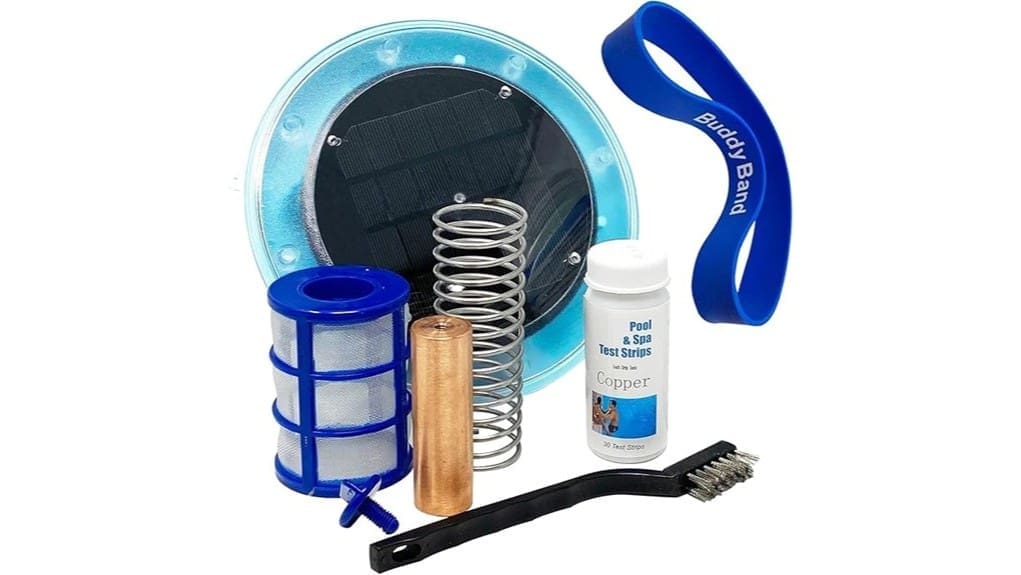
The Original Solar Pool Ionizer works as a solar-powered copper anode that releases ions to inhibit algae and some microbes in pools up to 35,000 gallons, so you’ll see chlorine savings when circulation and sunlight are adequate. It’s supplemental—won’t replace chlorine—and it won’t work with H2O2 systems. Performance drops in stagnant or low-sun conditions and the electrode lasts about two years; proper mounting and panel cleaning are essential. Continue for details on installation, maintenance, and cost.
Some Key Takeaways
- Solar-powered copper ionizer provides supplemental algae control for pools up to 35,000 gallons, not a full chlorine replacement.
- Best performance requires good circulation and placement in a return flow path to evenly distribute copper ions.
- Effectiveness peaks in sunny months and drops with low sunlight, stagnant zones, or poor turnover.
- Expect an electrode lifespan near two years, with regular solar panel cleaning and periodic maintenance required.
- Not compatible with hydrogen-peroxide systems; measurable chlorine savings but verify warranty and replacement program details.
Is the Original Solar Pool Ionizer Right for Your Pool?
While no single device suits every situation, the Original Solar Pool Ionizer (OSPI-25-NMG) is a practical option if you want solar-powered copper ionization for pools up to 35,000 gallons. You’ll evaluate compatibility: in-ground, above-ground, chlorine, and salt-water pools are supported, but not hydrogen peroxide systems. You’ll appreciate minimal installation, a 1.39 kg unit, and easy maintenance with a two-year copper electrode life. Consider solar aesthetics and seasonal effectiveness: performance peaks in sunny months and declines with low insolation. Use it to reduce chemical load where sunlight and pool type align with device constraints and program support. Many homeowners also enhance their outdoor spaces with complementary lighting like pool LED lighting to brighten backyard evenings.
How the Solar-Powered Copper Ionizer Works and What It Does
Understand the device as a self-contained, solar-powered copper ionization system that releases copper ions into pool water to inhibit algae and microbial growth. You mount the Original Solar Pool Ionizer where sunlight powers an internal panel; generated current drives an underwater copper anode, producing controlled copper dispersion. You’ll circulate pool water past the anode so ions distribute evenly; the mechanism targets algal cells and some microbes, reducing biological load and assisting chemical stability. You monitor electrode wear and clean the panel per instructions. The unit doesn’t replace sanitation entirely but supplements treatment via passive solar ionization. This passive system is ideal for homeowners who enjoy their outdoor spaces and want low-maintenance supplemental sanitation for pools.
Performance in Real Pools: Coverage, Chlorine Reduction, and Durability
Because the Original Solar Pool Ionizer uses a passive copper anode driven by a small solar panel, its effective coverage depends on circulation and pool volume rather than raw solar output alone: you should expect peak ion distribution in well-circulated pools up to the specified 35,000-gallon capacity, with diminished efficacy in stagnant zones or poorly filtered systems. You’ll see coverage estimates tied to turnover rate; faster turnover equals more uniform copper dispersion. Measurable chlorine savings occur when ions supplement sanitizer demand, typically reducing routine chlorine addition. Real world durability aligns with an ion lifespan near two years under normal conditions; electrode wear and fouling determine replacement timing. These devices are popular additions for homeowners looking to brighten backyard spaces with solar-powered pool equipment.
Installation, Maintenance, and Compatibility Tips (Including H2O2 Warning)
If you install the Original Solar Pool Ionizer correctly, you’ll maximize ion dispersion and minimize maintenance issues: mount the unit where it gets consistent sunlight and ties into the pool’s return flow or circulation path so the copper ions are carried throughout the system rather than trapped in stagnant zones. Follow an installation checklist: site sun exposure, secure mounting, correct wiring (if applicable), and placement in return line for optimal distribution. Replace the copper electrode roughly every two years and clean the solar panel per included kit. Compatibility warning: do not use with H2O2 treatment systems—reactive chemistry will impair ionizer function and safety. Keep your backyard pool refreshingly cool this summer by integrating solar-powered solutions like pool chillers to enhance outdoor comfort and efficiency while reducing energy costs, especially when paired with solar-powered equipment.
Cost, Warranty, and Value: Who Should Buy the OSPI-25-NMG?
When you evaluate cost versus long‑term value, the OSPI-25-NMG targets pool owners who want lower routine chemical expenses and straightforward, solar‑powered ionization without complex electronics. You’ll weigh modest upfront cost, near‑zero operating energy expense, and electrode replacement roughly every two years against savings on chlorine and maintenance. Warranty and the Lifetime Replacement Program reduce ownership risk, though seller warranty details and return policies vary—confirm before buying. Ideal buyer profiles include budget‑conscious homeowners, owners of in‑ground or above‑ground pools up to 35,000 gallons, and those avoiding H2O2 treatments. If you prioritize simplicity and steady savings, it’s a practical choice. Solar heating options can also extend your swimming season by raising pool temperatures with solar pool heaters.
Some Questions Answered
Can the Ionizer Operate During Cloudy or Low-Light Days?
Yes — you can expect reduced output, not complete failure. The device will still produce ions during cloudy performance and low lightoperation, but at a lower rate because the solar panel receives less irradiance. You’ll notice slower copper ion dispersal and diminished contribution to chlorine reduction. For consistent results on overcast days, supplement with standard sanitizers or install auxiliary lighting/battery-backed power to maintain designed ionization levels.
Is It Safe for Pool Liners and Pool Equipment Materials?
Yes — you can use it safely with most pool liners and equipment when installed and maintained correctly. The ionizer’s controlled copper ion output is compatible with liner compatibility standards and won’t typically cause staining. Monitor copper levels and pH to minimize material corrosion risk to metal components. Replace the copper electrode per schedule, avoid H2O2 systems, and follow manufacturer maintenance to preserve liners, fittings, heaters, and pumps.
How Long Is the Solar Panel’s Expected Lifespan?
You can expect the solar panel’s operational lifespan to be several years under normal conditions, though exact longevity varies. Battery degradation isn’t applicable for this passive panel, but UV exposure, debris and corrosion affect output over time. Manufacturing defects can shorten life; the Lifetime Replacement Program and seller warranty address such issues. Regular cleaning and inspection will maintain performance and maximize useful service life.
Are Replacement Copper Anodes Readily Available?
Yes — replacement availability is good; you can source copper anodes through the manufacturer and select pool-supply vendors. Check anode sizing carefully: the OSPI-25-NMG uses a specific electrode dimension and connection type, so match length, diameter, and terminal style. You’ll find OEM and compatible aftermarket options; life expectancy is about two years, so plan routine replacements and confirm compatibility before purchase to make certain proper fit and ionization performance.
Does It Affect Pool Water Color or Staining Over Time?
Yes — you might see faint metallic tinting if copper levels rise, especially with inadequate filtration or overuse; regular monitoring prevents visible staining. The ionizer’s copper ions target algae suppression effectively, reducing biological growth that can discolor surfaces. You should test copper concentrations, clean the copper electrode per schedule, and maintain proper circulation and pH. Doing so minimizes staining risk while preserving the unit’s intended algae-control benefits.