You’ll get a compact solar-powered copper ionizer that continuously releases measured copper ions to cut chlorine demand and clarify water in above-ground or inground pools up to 10,000 gallons. It’s durable, low-maintenance, and drops into circulation zones to improve turbidity and odor while stabilizing pH. Expect measurable chemical savings and biweekly anode inspections with replacements every 1–2 quarters. It’s a cost-efficient complement to chlorine or salt systems; keep reading for installation, sizing, and trial details.
Some Key Takeaways
- Solar-powered ionizer provides continuous copper ionization for pools up to 10,000 gallons, reducing sanitizer demand with hands-off operation.
- Compatible with above-ground and inground pools and both chlorine and salt systems, but verify turnover and flow for copper dispersion.
- Users often see clearer water, reduced odors, and measurable chlorine savings—lab tests and weekly monitoring recommended.
- Maintenance is minimal: biweekly anode brushing and basket cleaning, with anode replacement every 1–2 quarters.
- Cost-effective long-term: up to ~85% chlorine reduction, 60-day trial available, but confirm warranty and keep spare parts.
What the Solar Pool Ionizer Is and Who It’s Best For
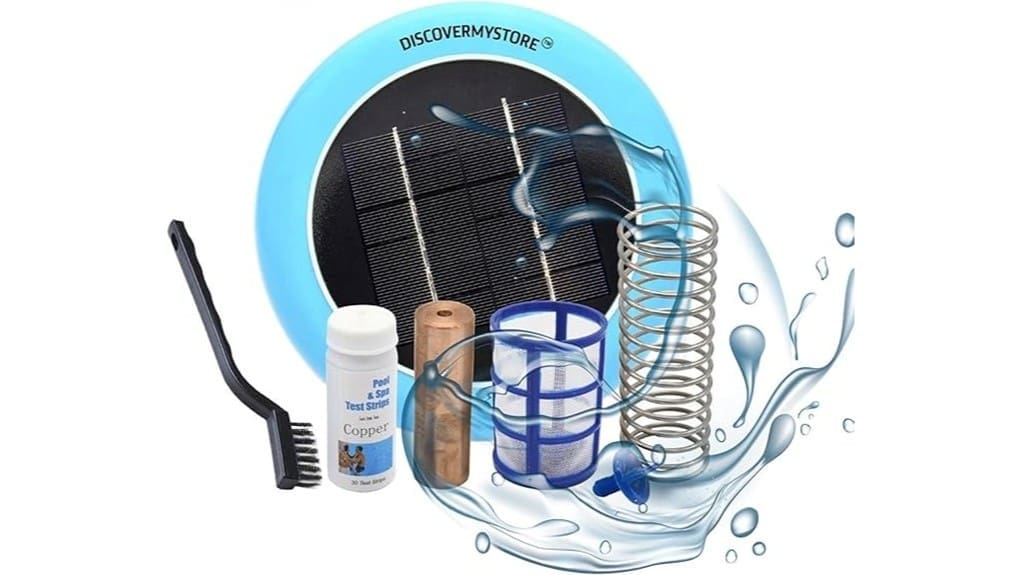
While powered only by sunlight, the Solar Pool Ionizer delivers continuous copper ionization to sanitize pools and spas up to 10,000 gallons, using a durable ABS housing with copper and stainless-steel components and a floating head cleaner for hands-off operation. You’ll find it’s a compact, maintenance-light sanitizer that complements chlorine or salt systems, reducing chemical load and stabilizing pH. Ideal users are homeowners with above-ground or inground pools seeking Solar simplicity and lower operating costs without complex plumbing. You’ll perform biweekly anode brushing and quarterly replacements; installation is drop-and-go, backed by complete accessory and documentation kits. It’s a great option for homeowners looking to keep their pool safe with low-maintenance UV-friendly sanitation solutions.
Real-World Performance: Cleaning, Chlorine Reduction, and Water Clarity
Because the ionizer continuously releases copper ions as soon as the solar float is active, you’ll see measurable reductions in free chlorine demand and visible improvements in clarity without complex intervention. You’ll verify performance through visual inspection and sensory testing: particulate load drops, turbidity clears, and odors diminish within weeks. Lab verification of copper and residual chlorine quantifies reductions (often approaching the claimed 85% chemical savings) and confirms safe ion levels. Longitudinal monitoring is essential: log weekly test-strip or meter readings, note anode oxidation, and correlate with cleaning cycles. This lets you optimize placement, maintenance, and chlorine supplementation with confidence. Many homeowners pair clarifiers and ionizers to maintain clear pool water and enhance overall outdoor enjoyment.
Compatibility and Sizing: Above‑Ground Vs Inground, Pools up to 10,000 Gallons
When sizing the Solar Pool Ionizer for your installation, match its 10,000-gallon capacity to the actual water volume and operational environment: above-ground and inground pools, as well as chlorine and saltwater systems, are supported, but you should verify pool gallons, turnover rate, and flow patterns to make certain adequate copper dispersion. You’ll perform a size comparison between nominal capacity and measured volume; err on conservative side if irregular geometry or heavy bather load increases demand. Check installation depth relative to skimmer or return placement to guarantee the floating head and anode operate in optimal circulation zones for even ion release and coverage. Consider pairing the ionizer with complementary equipment like pool cover reels to maintain cleaner water and reduce maintenance.
Installation, Routine Maintenance, and Lifespan of Parts
Now that you’ve confirmed the correct sizing and placement for effective ion dispersion, focus on proper installation, scheduled maintenance, and part replacement to preserve performance and safety. Use the installation checklist: verify pool compatibility, assemble float and basket screen, secure spring and blue screw, install copper anode, test float buoyancy, and position in sunlit area. Every two weeks, inspect and brush the copper anode and clean the basket screen; check for oxidation and replace the anode every 1–2 quarters. Keep spare anodes and the metal spring on hand for prompt part replacement to avoid downtime and maintain ionization efficiency. For homeowners, consider adding a pool liner lock to protect your outdoor pool investments and accessories.
Costs, Savings, and Returns: Price, Chemical Reduction, and 60‑Day Trial
While upfront pricing varies by retailer, you’ll typically find the DiscoverMyStore SPI35 positioned as a cost-efficient alternative to ongoing chemical purchases, and it’s designed to cut chlorine use by about 85%, which translates into substantial recurring savings on chlorine and shock treatments. You’ll recoup purchase cost through reduced chemical spend and lower maintenance frequency; project payback depends on pool size and baseline chemical usage. Warranty details are limited—confirm duration and coverage before purchase. A clean, documented unit can retain modest resale value. Take advantage of the 60-day trial to validate chemical reduction and operational claims. Consider integrating a pool mineral system to further enhance water quality and reduce chemical dependency.
Some Questions Answered
Does It Work With Saltwater Chlorinators and Salt Pools?
Yes — it’s salt compatible; you can use it with saltwater chlorinators and salt pools. The unit’s copper and stainless construction tolerates saline environments, but expect accelerated electrode corrosion compared with fresh water. You’ll need stricter maintenance: inspect and clean the copper anode biweekly and replace it every 1–2 quarters to preserve performance. Follow manufacturer guidance to monitor oxidation signs and make certain continued germ reduction and chlorine savings.
Can the Unit Operate During Cloudy or Low‑Sun Conditions?
Yes — it will operate in cloudy or low‑sun conditions, but with reduced efficiency. You’ll still get ionization because the solar cell continues generating current under diffuse light, though output drops. There’s no built‑in battery backup, so performance falls until sunlight returns. For continuous high output you’ll need supplemental power or a unit with a dedicated battery backup; otherwise expect variable copper release and intermittent peak effectiveness.
Is the Floating Cleaner Safe Around Pool Covers and Drains?
Yes — the floating cleaner is generally safe around covers and won’t cause drain interference when used properly. You’ll keep cover safety by stowing the float before closing a solid cover and avoiding entrapment points on automatic covers. For drain interference, you’ll position the unit away from main suction drains and skimmers so the spring and basket won’t obstruct flow. Inspect periodically and follow the manual for safe operation and placement.
Are Replacement Copper Anodes Sold Separately and Where to Buy?
Yes — replacement copper anodes are sold separately; you can buy them directly from the manufacturer, authorized retailers, or pool-supply vendors. For parts, search the model number (SPI35) and part listings under replacement parts. Prioritize reputable copper sourcing: OEM anodes or certified pool suppliers to guarantee correct alloy and dimensions. Keep receipts and part numbers for warranty and compatibility verification; compare prices across pool stores, Amazon, and the maker’s online store.
Does It Interfere With Pool Automatic Chemical Feeders or Sensors?
No — it typically won’t cause sensor interference or disrupt automatic chemical feeders if your system maintains proper chemical compatibility. You’ll want to monitor sanitizer and pH sensors after installation to confirm readings remain stable; some low-quality sensors can show drift near metallic electrodes. Feeders tied to redox or ORP may need recalibration because copper ionization alters oxidation-reduction balance, but timed or flow-based feeders remain unaffected.