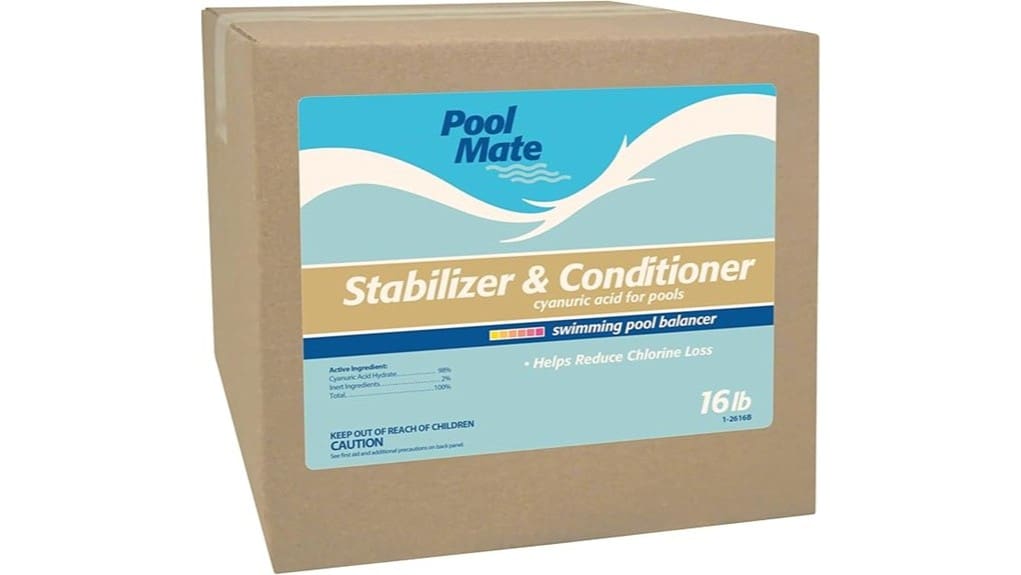
You’ll find Pool Mate 16-Pounds supplies concentrated cyanuric acid to stabilize your pool chlorine and cut chemical use when dosed properly. It’s designed to bring outdoor pools into the recommended 40–100 ppm CYA range; follow the rule of 6 oz per 5,000 gallons (or 4 oz per 1,000 for new fills), dissolve small batches if needed, and run the pump 24 hours before retesting. It’s cost-effective for regular maintenance, and more specifics follow below.
Some Key Takeaways
- Adds concentrated cyanuric acid to stabilize chlorine, reducing sunlight-driven chlorine loss and producing steadier residuals.
- Dosing rule: 6 oz raises CYA 10 ppm per 5,000 gallons; use 4 oz/1,000 gallons for new or drained pools to reach ~40 ppm.
- Apply by premixing small batches in warm water or slowly pouring into the skimmer, then run pump 24 hours and retest.
- Best for outdoor and saltwater pools aiming to maintain 40–100 ppm CYA, cutting chlorine use up to ~25% with proper maintenance.
- Test CYA and free chlorine before and after dosing; maintain free chlorine 2.0–4.0 ppm and proper pH for effective sanitization.
What Pool Mate 16-Pounds Does and Why Cyanuric Acid Matters
Because sunlight breaks down free chlorine quickly, Pool Mate 16-Pounds adds concentrated cyanuric acid to your pool to stabilize that chlorine so it lasts longer and works more efficiently. You’ll see reduced chlorine loss, steadier residuals, and up to 25% lower chemical consumption when levels sit in the recommended 40–100 ppm range. You should monitor with a reliable test kit to avoid over-stabilization, which can limit sanitizing effectiveness and complicate cyanuric degradation dynamics. Follow application and circulation instructions carefully. Be aware of health concerns tied to improper dosing and maintain proper chlorine and pH to assure safe, effective disinfection. This product is designed for homeowners who enjoy their outdoor spaces and want to keep their pool balanced.
How to Dose Pool Mate: Quick Rules and the 6‑oz / 5,000‑Gal Guide
Now that you know why cyanuric acid keeps chlorine working longer, here’s how to dose Pool Mate so you get the right stabilizer level without over- or under-treating. Use the rule: 6 oz raises CYA 10 ppm per 5,000 gallons. For a new or drained pool, add 4 oz per 1,000 gallons to reach ~40 ppm. Test before and after dosing with a reliable kit. Make seasonal adjustments—reduce target CYA in winter or increase in intense sun months. Follow safety precautions: wear gloves, avoid inhaling dust, add slowly to skimmer or premix, and recirculate per instructions. For best results, match your dosing and timing to your pool care routine and shock treatment schedule.
Step-by-Step Application: Adding, Dissolving, and 24‑Hour Recirculation
When you’re ready to add Pool Mate, start with a clean filter and test your current cyanuric acid level so you dose accurately; add the product slowly into the skimmer or premix in warm water, then pour the solution into the skimmer. Observe skimmer precautions: avoid dumping dry powder directly near equipment, and keep children and pets away. If you use a warm water premix, dissolve small batches in a plastic bucket, stirring until clear. Run the pump continuously and recirculate for 24 hours to distribute and dissolve fully. After recirculation, retest cyanuric acid and adjust only if needed. Many homeowners find regular use of test strips helps maintain clear pool water by monitoring key levels like chlorine, pH, and cyanuric acid.
Performance Snapshot: Stabilizer Effectiveness, Chlorine Savings, and Test Results
If you keep cyanuric acid in the recommended 40–100 ppm range, you’ll see noticeably slower chlorine degradation from sunlight and use less chlorine overall. You’ll notice stabilizer longevity in routine tests: 6 ounces raises CYA 10 ppm per 5,000 gallons, and levels hold between additions when dosing correctly. Independent test results show up to 25% reduced chlorine consumption versus unstabilized pools, confirming sunlight protection. Use a reliable test kit to monitor CYA and maintain chlorine 2.0–4.0 ppm. Follow dissolution and 24‑hour recirculation steps to guarantee even distribution and accurate readings. Homeowners can also find clarifiers and other pool care products to help maintain clear water and complement stabilizer use, especially for outdoor spaces where sunlight exposure is significant — see clear pool water for related tips.
Who Should Buy It and Practical Buying Tips (Pool Size, Maintenance, and Value)
While pool owners who want longer-lasting chlorine and lower ongoing chemical costs will get the most benefit, Pool Mate 16-Pound Premium Pool Stabilizer is especially well-suited for medium to large outdoor pools and anyone who tests and adjusts water chemistry regularly. You should buy it if you’re a budget conscious homeowner aiming to cut chlorine use up to 25% and maintain 40–100 ppm cyanuric acid. It works with saltwater pools but watch combined chlorine and maintain 2.0–4.0 ppm free chlorine. Measure accurately, add slowly via skimmer or premix, run filtration 24 hours, and retest before swimming. Maintaining pH within the recommended range is essential for clearer, safer water and optimal stabilizer performance.
Some Questions Answered
Is Pool Mate Safe for Vinyl or Fiberglass Pool Surfaces?
Yes — you can use it; Pool Mate’s cyanuric acid formulation is vinyl compatible and offers fiberglass safety when used as directed. You’ll add slowly to the skimmer or premix, keep filters clean, recirculate 24 hours, and test stabilizer levels to stay within 40–100 ppm. Maintain chlorine 2.0–4.0 ppm and pH 7.4–7.6 to avoid surface issues. Follow manufacturer guidance for best results and warranty compliance.
Can I Use This Stabilizer With Saltwater Chlorine Generators?
Yes — you can use this stabilizer with saltwater chlorine generators. You’ll maintain proper cyanuric acid levels for salt systems, improving chlorine longevity and saltwater compatibility. Just avoid over-stabilizing; high CYA can force higher chlorine setpoints. Also inspect your equipment, since stabilized pools don’t prevent generator corrosion — proper maintenance and monitoring minimize corrosion risk. Test regularly and follow recommended dosing to keep CYA in the 40–100 ppm range.
What Is the Product’s Shelf Life Once Opened?
You’ll typically get about 1–2 years of usable storage duration once opened, provided you keep the powder dry and sealed; exposure limits are low—avoid moisture and heat. Store in a cool, dry place with the lid tightly closed, use within that period for best effectiveness, and check concentration with a test kit before treating. If it cakes or discolors, discard—effectiveness may be compromised despite remaining product.
Are There Any Restrictions for Adding It Before or After Shocking?
You can add stabilizer either before or after shocking, but you shouldn’t mix timing carelessly: pre shock timing is fine if you’re establishing cyanuric acid beforehand, since it won’t react with shock. For post shock interactions, wait until chlorine levels return to the recommended 2.0–4.0 ppm before testing and adjusting stabilizer to avoid dilution errors. Always circulate 24 hours after adding and use a reliable test kit to confirm levels.
Does It Affect Algae Treatment or Require Different Algaecide Dosing?
Yes — it can affect algae treatment, so you’ll need dosing adjustments. Higher cyanuric acid increases algae resistance to chlorine, so you’ll often need stronger or more frequent algaecide and oxidizer treatments when stabilizer levels are high. Test cyanuric and chlorine regularly; maintain 2.0–4.0 ppm free chlorine and adjust algaecide per label guidance. If algae persists, shock at higher dose and follow algaecide manufacturer recommendations.