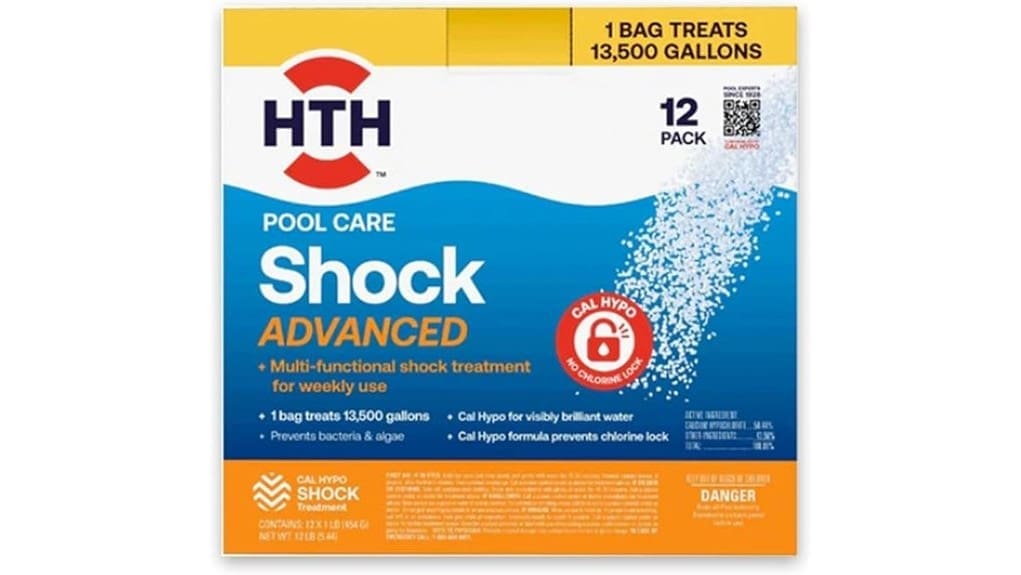
You’ll get a fast, predictable weekly shock with HTH 52037R’s Cal Hypo 4‑in‑1 formula that clears cloudiness, restores free chlorine without adding CYA, and oxidizes contaminants to reduce chloramine irritation. It dissolves quickly, works in salt and traditional systems, and is compatible with vinyl liners when dosed per label. Handle and store carefully—calcium hypochlorite is a strong oxidizer. Use routine testing and dusk dosing for best results, and keep going to learn full dosing and safety details.
Some Key Takeaways
- HTH 52037R (Cal Hypo 4‑in‑1) is a fast‑acting calcium hypochlorite shock that quickly clarifies and oxidizes contaminants without adding CYA.
- Dissolves rapidly, restores free chlorine predictably, and reduces chloramine irritation within about 24 hours for most issues.
- Recommended weekly maintenance dose: 1 lb per 10,000 gallons, with 25–50% increases for algae or heavy bather load.
- Compatible with salt systems and vinyl liners when used per label, and performs reliably with consistent filtration and pH control.
- Strong oxidizer requiring careful storage, PPE, and segregation from organics and acids to prevent degradation or hazardous reactions.
Quick Verdict : Is HTH 52037R Worth Buying?
While it’s a straightforward product, you’ll find HTH 52037R worth buying if you need a reliable, fast-acting weekly shock. You’ll get a Cal Hypo 4‑in‑1 formula that dissolves quickly, sanitizes without adding CYA, and targets bacteria and algae—delivering clear water and reduced chloramine irritation within 24 hours for most issues. For buying value, its 1 lb units in a 12‑pack lower per‑treatment cost versus singles. You’ll maintain compatibility with salt systems and vinyl liners. Expect consistent user satisfaction when you follow weekly dosing and twice‑weekly testing; performance is predictable and technically sound. This product is ideal for homeowners who enjoy using and maintaining their outdoor pool spaces and want straightforward shock treatment solutions.
How the Cal Hypo 4‑in‑1 Formula Performs in Real Pools
You’ve seen the value proposition; now examine how the Cal Hypo 4‑in‑1 formula actually behaves in real-world pool conditions. You’ll notice rapid clarification within hours: suspended particles coagulate and filter out faster than with unstabilized liquid oxidizers. Microbial loads drop predictably, restoring free chlorine to effective levels without introducing CYA. You’ll also appreciate minimized chlorine odor and irritation as contaminants are oxidized efficiently. Shock longevity is acceptable for weekly maintenance, maintaining residual sanitizer through typical bather load cycles. For consistent results, you should monitor free chlorine and pH post-treatment and run filtration until water clarity stabilizes. This product is one of the common options used in pool opening routines.
Safety, Compatibility, and Chemical Facts You Must Know
Because calcium hypochlorite is a strong oxidizer, you must handle HTH 52037R with care: store it in a cool, dry, well-ventilated area away from organic materials and acids, keep containers tightly closed, and avoid mixing with other pool chemicals. You should assess chemical stability; keep product dry and sealed to prevent degradation and gas release. Note storage hazards: segregate from combustibles and incompatible reagents, limit quantities, and use original packaging. Learn label interpretation for concentration, PPE, and disposal instructions. Follow emergency procedures for spills, inhalation, or fire—evacuate, ventilate, and contact emergency services or poison control immediately. Inspect your pool area regularly for proper storage and signage to maintain pool safety.
Weekly Use Results: Testing, Dosing, and Troubleshooting
After handling storage and safety, focus on weekly shock routines to keep water balanced and clear. You’ll follow test frequency of twice weekly using HTH 6-Way strips, measuring free chlorine, pH, and calcium hardness before dosing. Weekly dosing: apply one pound per 10,000 gallons as baseline, adjust for heavy bather load or after storms. Shock timing: add at dusk with pump running, avoid swim for recommended interval. For algae troubleshooting, increase dose 25–50% and brush surfaces; repeat within 24 hours if required. Record readings and doses to refine intervals and prevent recurrence. For maintaining consistent sanitizer levels, consider using chlorine tablets alongside shocks to simplify ongoing pool care.
Who Should Buy It : Alternatives, Pack Sizes, and Shopping Tips
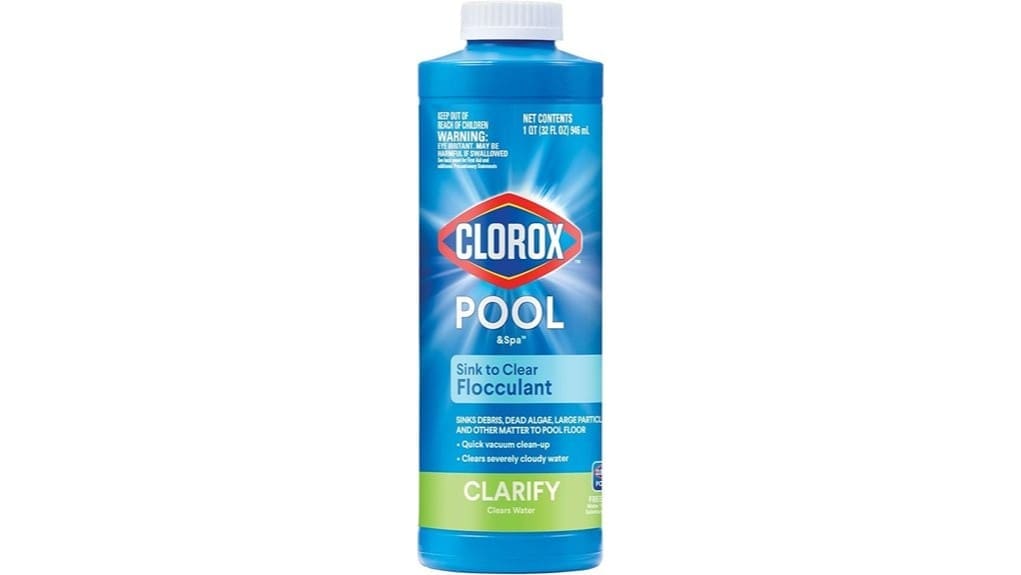
For pool owners seeking a reliable, fast-acting weekly shock, HTH 52037R is ideal: its calcium hypochlorite formula delivers rapid sanitization and algae control without adding stabilizer (CYA), so it works well for both traditional and saltwater systems and for vinyl-lined pools. You should buy it if you want predictable weekly maintenance, rapid remediation, and compatibility with salt systems. Alternatives include lithium or non-chlorine oxidizers for gentler options. The 1 lb unit sold in 12-pack bulk options suits larger pools or consistent dosing; budget buyers will save per-dose. Watch for retailer deals and occasional gift packs during peak season. Many homeowners also use pool clarifiers to maintain clear pool water as part of regular outdoor space care.
Some Questions Answered
Can I Store Opened Tubs Outdoors in Summer Heat?
No, you shouldn’t store opened tubs outdoors in summer heat. You’ll risk heat degradation of the calcium hypochlorite; elevated temperatures accelerate decomposition and gas release. Keep containers sealed, dry, and upright in a cool, ventilated area with limited sunlight. If you must place them outside temporarily, guarantee proper container ventilation to avoid pressure buildup, and monitor temperature. Follow label storage limits and local regulations for oxidizer storage.
Is This Shock Pet-Safe After Treatment?
No — you shouldn’t let pets enter the pool immediately after treatment. Pet safety requires waiting until free chlorine returns to safe levels (usually <4 ppm) and pH is balanced. Calcium hypochlorite causes elevated chlorine and can increase aquatic toxicity temporarily. Test water with reliable strips before allowing pets access. Rinse pets’ paws and fur after swimming and keep animals away during shock dosing and the subsequent stabilization period to minimize risks.
Will It Bleach Swimwear or Pool Liners?
Yes — it can cause color fading and fabric damage if swimwear or liners contact high chlorine concentrations or aren’t rinsed promptly. You should avoid wearing delicate or dark swimsuits during and immediately after shocking, follow dosing directions, circulate water fully, and wait until chlorine levels return to recommended ranges. For liners, maintain proper dilution and shock distribution to minimize localized bleaching; test chlorine before reentry to prevent unintended fading or damage.
How Long Until I Can Use a Pool Heater After Shocking?
You can restart the heater once free chlorine returns to safe operational levels—typically 8–24 hours after shocking. Monitor chlorine residuals with test strips; aim for chlorine ≤3 ppm for heater readiness, though manufacturer specs may vary. Maintain balanced pH and calcium hardness before initiating heat. If you’re using a Cal Hypo shock, expect faster dissolution but still validate heat wait time empirically. Record readings; only operate the heater when levels meet safety thresholds.
Can I Mix This With Other Pool Chemicals Safely?
No — you shouldn’t mix this shock directly with other pool chemicals; chemical incompatibilities can cause hazardous reactions. You can, however, apply it sequentially with proper application timing: add shock, circulate, test, and wait until chlorine and pH stabilize before adding other treatments. Follow label dilution and compatibility guidance, avoid combining with acids or ammonia compounds, and use test strips to confirm safe levels before resuming normal chemical additions.