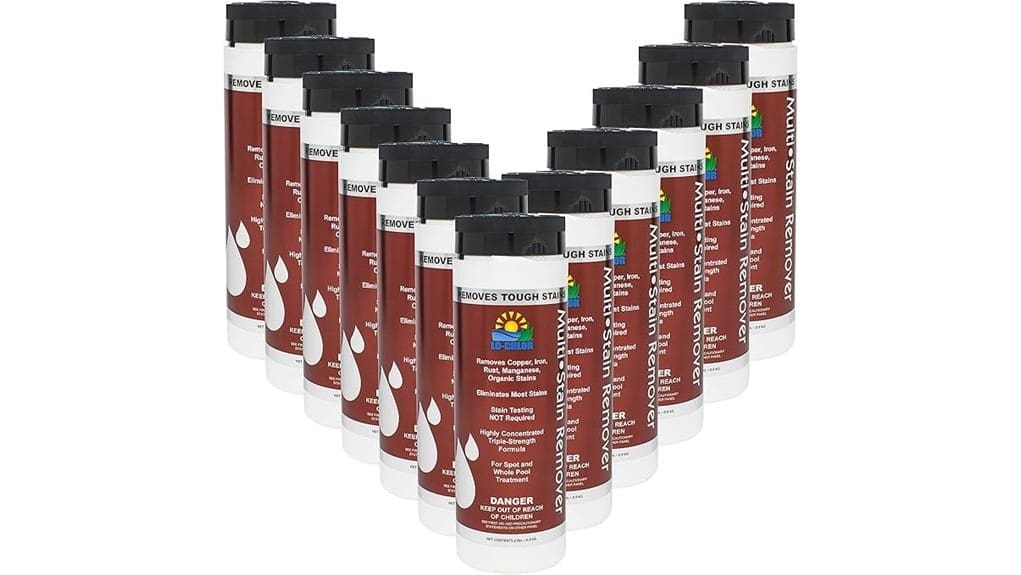
You’ll get an industry‑grade, triple‑strength powdered treatment that tackles iron, copper and manganese stains on cement, fiberglass and vinyl, often clearing most discoloration within 24 hours. It chelates dissolved metals and reduces oxides for faster removal, works across pH and sanitizer types (including salt), and treats large volumes per tub. Apply as a pre‑dissolved full‑pool dose or direct spot sprinkle, circulate 8–24 hours, then inspect—keep going for application tips and troubleshooting.
Some Key Takeaways
- Effective triple‑strength powdered formula removes iron, copper, and manganese stains, often clearing most within 24 hours.
- Works on cement, fiberglass, and vinyl when surfaces are prepped and pH is adjusted.
- Single-dose tubs treat large volumes (2 lb treats up to 15,000 gallons) for spot or full‑pool use.
- Compatible with all sanitizers, including salt systems, and requires no routine chlorination changes.
- Stubborn or layered stains may need 24–48 hours, light brushing, or checking source water/plumbing for recurring metals.
Quick Verdict: Is Lo‑Chlor Multi‑Stain Remover Worth Buying?
If you’re dealing with metal-based discoloration in your pool, Lo‑Chlor Multi‑Stain Remover is worth considering: its triple‑strength, powdered formula targets iron, copper, manganese and similar contaminants quickly and works on cement, fiberglass and vinyl surfaces as well as with any sanitizing system, including saltwater. You’ll get a concentrated, single‑dose treatment that clears most stains within 24 hours and treats large volumes per container. Skip elaborate pre application testing unless you need confirmation; follow label dosages. Assess environmental impact by avoiding overuse and preventing runoff. Practical, efficient — it’s a solid choice for metal stains. For homeowners maintaining outdoor pools, pairing shock treatments with stain removers helps keep water clear and surfaces protected, especially when using shock treatment products.
What Makes the Triple‑Strength Formula Different From Single‑Component Stain Removers?
Because it combines multiple chelating agents and targeted reducers, the triple‑strength formula tackles a wider spectrum of metal contaminants than single‑component stain removers do. You get multi action chemistry that both sequesters dissolved metals and reduces insoluble oxides, so iron, copper, manganese and mixed deposits respond faster. The powder’s higher active concentration increases contact efficiency and lowers required product per gallon. In practice, you’ll see faster discoloration breakdown and less need for repeat treatment versus single‑component products. Metal chelation occurs across different pH and sanitizer conditions, making this formula more versatile for diverse pool systems. It’s a great choice for homeowners who want to quickly restore their outdoor pool surfaces and keep water stain-free.
How to Use the Powder Safely and Effectively (Spot Treatment, Full‑Pool Application, Dosages)
Now that you know how the triple‑strength chemistry works, here’s how to apply the powder so it performs reliably. Read label, store sealed in a cool, dry place for safe storage. For spot treatment, pre‑wet stain, sprinkle directly, scrub lightly with a brush while wearing gloves usage to avoid skin contact. For full‑pool application, pre‑dissolve measured powder in pool water per dilution ratios on the container; broadcast evenly around perimeter with pump running. Observe application timing: apply in evening or low‑sun hours, circulate 8–24 hours, then inspect. Treat one time per event unless persistent discoloration remains. For best overall results, combine treatments with regular use of pool clarifiers to help maintain clear water.
Real Performance: Timeline, Compatible Surfaces, and Troubleshooting Common Stain Scenarios
When you apply Lo‑Chlor Multi‑Stain Remover, expect visible improvement within hours and substantial clearing by 24 hours for most metal‑based stains; this timeline holds for spot treatments and full‑pool applications provided circulation is maintained. You’ll see consistent results on cement, fiberglass, and vinyl liner finishes when you follow surface prep: brush, vacuum, and adjust pH. For stubborn manganese or layered iron, monitor 24–48 hours and perform light brushing; retreat rarely required. Use as part of seasonal maintenance to remove deposited metals before winterizing. If discoloration persists, check source water and plumbing corrosion; address root causes alongside treatment. For routine upkeep and preventing future staining, regularly test your water chemistry with pool test strips and adjust as needed.
Buying Guide: Coverage Per Tub, Pool Sizes, Sanitizer Compatibility, and When to Choose an Alternative
If you’re sizing treatments, note that each 2 lb tub treats up to 15,000 gallons, so one tub covers most small to mid-size residential pools and multiple tubs will be needed for larger volumes or repeated spot treatments. Use a coverage calculator to convert your pool volume to required tubs; round up for spot treatments or high-metal loads. It’s compatible with all sanitizers, including salt systems, so you won’t need to adjust routine chlorination. Choose alternative treatments only for non-metal stains, if staining persists after proper application, or when cost-effective chelants or professional hydroblasting are preferable. Many homeowners pair flocculants and stain removers with pool maintenance products to keep outdoor spaces looking their best.
Some Questions Answered
Is This Powder Safe for Pool Plants and Landscaping Runoff?
No — it’s not labeled safe for plant toxicity concerns; you shouldn’t let concentrated powder reach landscaping. You can minimize risk by avoiding direct contact and ensuring runoff dilution into large volumes before it reaches plants. Apply only to pool water per directions, keep treated backwash and spill containment, and rinse tools into sanitary sewers if local rules allow. If in doubt, contact the manufacturer for specific plant toxicity and environmental guidance.
Can Lo‑Chlor Multi‑Stain Remover Be Stored Long-Term After Opening?
Yes — you can store it long-term after opening if you keep it dry and sealed. Store the powder in its original packaging or transfer to an airtight container to prevent moisture and clumping. Maintain a cool, dry, ventilated location away from direct sunlight and incompatible chemicals. Expect a typical storage life of several years if protected; periodically inspect for caking or discoloration and discard if compromised.
Does It Affect Pool Water pH or Require Adjustment Afterward?
It may slightly alter pH, so you should do pH testing after treatment and adjust as needed. The product’s concentrated action can lower or raise pH depending on pool chemistry and metals present; plan to measure within 24 hours. If pH moves out of range, use a buffer addition (sodium carbonate or sodium bisulfate as appropriate) to correct it. Follow manufacturer dosing and retest to confirm stable pH.
Are There Special Disposal Instructions for Unused Product or Empty Tubs?
Yes — follow local waste regulations and hazardous labeling. You shouldn’t discard unused powder or tubs in regular trash or pour residues down drains. Treat unused product as chemical waste: consult the product’s safety data sheet and your municipality’s hazardous waste disposal program for drop-off or collection. Rinse empty tubs per label instructions if allowed, capture rinse water for proper disposal, and make certain transports and storage follow any hazardous labeling and containment requirements.
Is This Product Pet‑Safe if Animals Contact Treated Pool Water?
You shouldn’t let pets swim immediately after treatment; pet exposure to treated water can pose animal toxicity risks. Wait until the product has dispersed and water chemistry (pH, sanitizer levels) returns to normal—typically 24 hours after application when staining agent has cleared. Rinse pets if they contacted concentrated powder. If ingestion or unusual signs occur, contact your veterinarian or a poison control center with product details for guidance.