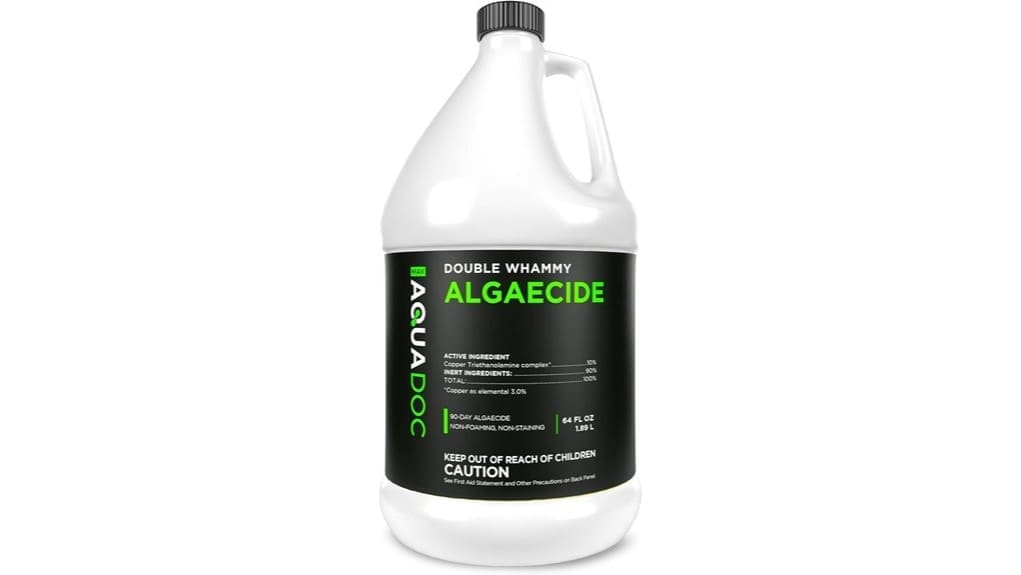
You’ll get up to 90 days of preventative algae control with AquaDoc Double Whammy when you follow label dosing, keep filtration running, and maintain balanced water chemistry. Its copper ions disrupt algal photosynthesis and membranes, clearing green and mustard blooms fast and tackling tougher blue‑green and black algae with higher or repeat doses. It’s salt‑system friendly and reduces chlorine demand, but monitor copper to avoid buildup and staining; continue for full guidance on dosing, safety, and troubleshooting.
Some Key Takeaways
- Provides up to 90 days preventative algae control when dosed correctly and filtration runs continuously.
- Copper-based formula kills green, mustard, blue-green, and black algae by disrupting photosynthesis and membranes.
- Visible clearing of green/mustard algae in 24–72 hours; cyanobacteria and black algae may need higher or repeat doses.
- Salt-friendly, non-foaming formula suitable for inground/above-ground pools, but avoid copper-sensitive surfaces.
- Use manufacturer dosing, monitor copper and sanitizer levels, maintain pH, and brush surfaces to prevent staining.
Quick Verdict: Does AquaDoc Double Whammy Algaecide Really Control Algae for 90 Days?
While individual results vary with pool conditions and maintenance, AquaDoc Double Whammy delivers reliable preventative control for up to 90 days when used as directed. You’ll find its copper-based formulation provides measurable long term effectiveness against common algae when dosing and circulation are consistent. Follow seasonal testing protocols—shock, stabilize pH, verify sanitizer residual—before application to maximize performance. You’ll monitor copper levels and adjust based on pool volume and bather load; automated filtration support improves outcomes. For routine prevention you’ll apply as scheduled and expect reduced algaecide demand and fewer corrective treatments, provided you maintain sanitizer and water balance. Maintain regular algaecide dosing as part of your pool care routine to keep outdoor spaces clear and inviting.
How the Copper Formula Works and Which Algae It Targets
Copper ions attack algae at the cellular level, disrupting photosynthesis and membrane integrity so cells die or can’t reproduce. You’ll see AquaDoc’s copper-based formula interfere with algal metabolism by binding to electron transport proteins and enzymes, collapsing energy production. Membrane damage increases ion leakage, accelerating cell death. The product targets green (chlorophyta), mustard (yellow), blue-green (cyanobacteria) and black algae, though cyanobacteria sometimes require higher dosing. Monitor for signs of copper resistance in persistent blooms; repeated use may select tolerant strains. Also watch metal accumulation in sediments and on surfaces, adapting treatment frequency to minimize buildup. Many homeowners pair algaecides with pool clarifiers to improve overall water clarity and treatment effectiveness.
Real-World Performance: Clearing, Preventing Regrowth, and Sanitizer Synergy
Because AquaDoc’s copper ions rapidly disrupt algal metabolism and membrane integrity, you’ll typically see visible clearing within 24–72 hours on green and mustard blooms and slower resolution on blue‑green and black algae, which often need higher doses or repeat treatments. In practice, you’ll find sustained control up to 90 days when initial dosing is correct and filtration runs continuously. That consistency minimizes algae rebound risk, though heavy infestations may require follow‑up. Copper lowers bioload and improves sanitizer compatibility by reducing chlorine demand, so your sanitizer maintains residuals more effectively. Monitor copper and sanitizer levels to optimize long‑term performance. Proper application and routine monitoring help maintain a sparkling, swim-ready pool and reduce the need for frequent shock treatments shock treatment tips.
How to Use It: Dosing, Timing, Safety, and Non-Staining Tips
Having seen how AquaDoc’s copper ions clear blooms and reduce sanitizer load, you’ll want precise dosing, timing, and handling to get the full 90-day benefit without staining or safety issues. Use the manufacturer dosage chart for initial shock and maintenance rates per pool volume; measure accurately. Follow application timing: add after filtration is running, during low bather load, and avoid sunlight peaks. Wear safety gear—gloves and eye protection—and keep children away until mixed. For stain prevention, maintain pH, chelate copper if needed, brush treated surfaces, and avoid overdosing; record doses and monitor copper levels regularly. For best results in keeping water clear and safe, also maintain balanced pH and proper chlorine levels to complement algaecide treatment and reduce overall chemical use — see more on Keeping Your Pool pH Balanced.
Who Should Buy It and Where It Fits vs. Other Algaecides (Value, Pool Types, and Cautions)
If you manage an inground or above-ground pool and need long-lasting, broad-spectrum algae control, AquaDoc Double Whammy is a strong choice because it delivers up to 90 days of protection, targets green/mustard/blue/black algae, and reduces sanitizer demand. You should buy it if you’re a budget conscious owner seeking a concentrated, non-foaming copper formula that’s salt friendly compatibility rated for saline systems. It fits between routine clarifiers and shock treatments: preventive and corrective. Avoid if you run copper-sensitive plaster or have green pool metal staining history. Follow label dosing and monitor copper levels to prevent buildup. Keep your pool water balanced with calcium boosters to help maintain overall water chemistry and prevent scaling or corrosion.
Some Questions Answered
Can This Algaecide Be Used With Saltwater Chlorine Generators?
Yes — you can use it with saltwater chlorine generators. You’ll get effective salt cell compatibility when you follow dosing and circulation guidelines. You should monitor salt cell electrode maintenance more frequently after application, rinsing deposits and brushing electrodes as needed to prevent copper buildup. Test copper and chlorine levels regularly, avoid overdosing, and follow manufacturer instructions to protect cell life and maintain sanitizer efficiency.
Is It Safe for Pools With Vinyl Liners or Plaster Finishes?
Yes — you can use it with vinyl liners and plaster finishes. The copper-based formula is labeled for vinyl compatibility and plaster safety when dosed per instructions. You’ll avoid staining because the non-staining, non-foaming liquid minimizes copper deposition. Still, test a small area and maintain proper pH and chelation levels; overconcentration or poor water balance can risk discoloration or surface issues. Follow manufacturer dosage and turnaround times.
How Long After Application Can You Swim?
You can usually swim 15–30 minutes after application once the product is fully dispersed and pool chemistry (pH, chlorine) is back in range; check label for exact wait time. You should avoid direct immersion if skin irritation or sensitivity occurs—shower before re-entering if you felt any contact during treatment. Test water and confirm manufacturer guidance to guarantee safety and minimize risk of irritation.
Will It Interfere With Pool Water Testing Kits?
No — it shouldn’t cause significant test interference if you follow label doses. You’ll want to wait recommended circulation time before testing, since concentrated copper can cause reagent degradation in some colorimetric kits. Use kits designed for metal-tolerant or copper-aware measurement, or send a water sample to a lab for metals. If you see inconsistent results, dilute samples or use alternative test methods to avoid false highs from reagent degradation.
Can It Cause Staining on Pool Accessories or Equipment?
You shouldn’t see widespread copper staining on properly maintained pools, but equipment discoloration can occur if copper levels get too high or if the algaecide contacts metal, porous stones, or light-colored surfaces directly. You’ll avoid problems by following dosing instructions, keeping pH and alkalinity balanced, and flushing or rinsing affected accessories after treatment. Test copper concentration regularly and remove or protect vulnerable fixtures to minimize equipment discoloration and copper staining.