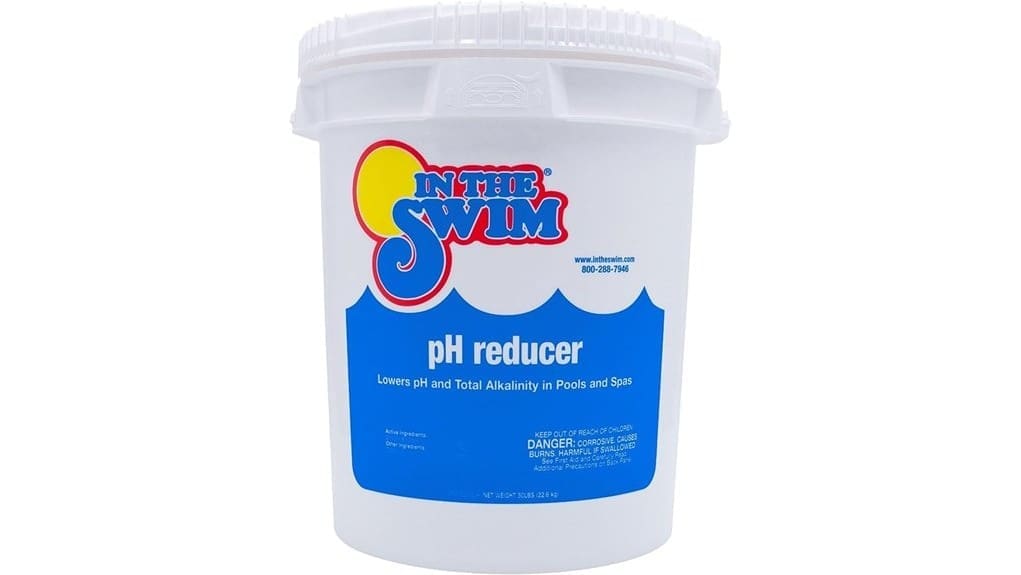
You’ll get a concentrated 90% sodium bisulfate pH reducer that reliably drops pH and total alkalinity in pools, spas, and hot tubs. You’ll use measured granules with circulation running, wear PPE, never mix chemicals, and retest after 4–6 hours to avoid overshoot. It restores chlorine efficiency, reduces scale and biofilm risk, and’s cost‑effective in 50 lb bags for frequent or multi‑unit use. Continue for dosing tips, safety notes, and alternatives.
Some Key Takeaways
- Concentrated 90% sodium bisulfate lowers pH and total alkalinity predictably for pools, spas, and hot tubs.
- Bulk 50 lb bag is economical for multiple systems or season-long maintenance with reduced repurchasing.
- Proper use requires PPE, dry storage, slow addition to deep water, and running circulation to avoid clumping.
- Targets pH 7.2–7.6 to optimize chlorine effectiveness, improve clarity, and reduce irritation when dosed accurately.
- Risks include overuse causing corrosion or eye irritation; mitigate via incremental dosing, retesting after 4–6 hours, and calculator guidance.
What In The Swim pH Reducer Is and Who It’s For
In The Swim pH Reducer is a concentrated sodium bisulfate formula (90% active) designed to lower pH and total alkalinity in pools, spas, and hot tubs. You’ll find it’s a technical solution for operators and homeowners needing reliable pH control to optimize sanitizer performance and prevent scale or corrosion. It targets recreational systems of varied sizes and suits those maintaining pools, spas, or hot tubs who demand consistent water chemistry. You’ll appreciate clear specifications, predictable dosing responses, and documentation emphasizing consumer safety. This product isn’t for casual guessing—it’s for anyone who monitors chemistry and follows established maintenance protocols. Keeping your pool pH balanced is essential for clearer, safer water and overall swimmer comfort.
How to Use the 50 Lb Sodium Bisulfate pH Reducer Safely and Effectively
Now that you understand what the product is and who should use it, learn the step-by-step procedures for handling and dosing the 50 lb sodium bisulfate pH reducer to get predictable chemistry and avoid hazards. You’ll wear PPE (gloves, goggles, respirator), keep the bag sealed and dry, and never mix chemicals. Test water for pH and alkalinity, consult dosage calculators for volume-specific dosing, and add measured granules slowly to the deep end with circulation running. Retest after full circulation (4–6 hours). Store off the ground, ventilated, away from bases. Follow label directions and local regulations. Regularly monitoring and adjusting total alkalinity helps maintain balanced pool water and reduces the amount of pH reducer needed.
Real-World Performance: Lowering pH, Alkalinity, and Chlorine Effectiveness
Although pH reducer might seem simple, its real-world effects on pool chemistry are precise and measurable: sodium bisulfate lowers pH and total alkalinity predictably when dosed correctly, and by bringing pH into the 7.2–7.6 range it directly boosts chlorine’s disinfection efficiency while reducing scaling, cloudiness, and irritation. You’ll observe rapid pH drops proportional to dose; total alkalinity follows more slowly but predictably. Monitor combined measurements and adjust incrementally to avoid overshoot. Effective chlorine interaction depends on maintaining target pH; otherwise free chlorine’s kill rate declines. Rely on calculator-based dosage accuracy and repeat testing after each adjustment. Homeowners who enjoy outdoor spaces often use shock treatments alongside pH management to keep pools sparkling.
Pros, Cons, and Common Issues (Equipment, Water Clarity, Skin Irritation)
Because sodium bisulfate reliably drops pH and alkalinity when dosed correctly, you’ll see clear benefits for equipment longevity, water clarity, and skin comfort—chlorine becomes more effective at 7.2–7.6 pH, scaling risks fall, and cloudy water and irritation decrease. Pros: fast, predictable correction; reduces scale and biofilm, improving equipment compatibility; clearer water and less chlorine odor. Cons: overuse lowers pH too far, risking corrosion and eye irritation. Common issues: improper dosing, uneven distribution, and poor chemical storage leading to clumping. Test frequently, add to deep water per label, and monitor metal surfaces. Homeowners should also consider compatible pool clarifiers to maintain optimal clarity when adjusting pH.
Buying Decision: When This 50 Lb Pack Makes Sense and Alternatives to Consider
When you manage multiple pools or a large backyard system, a 50 lb bag of In The Swim pH Reducer makes practical and economical sense because it reduces the frequency of repurchasing and supplies enough sodium bisulfate for season-long corrections. You’ll appreciate bulk storage efficiency and clear cost savings per pound versus smaller packages. Choose this size if you perform regular seasonal planning, maintain high bather load, or service several units. If you need portability, tight storage, or rarely adjust pH, consider 5–10 lb tubs, liquid acid, or professional dosing services. Retain receipts and original packaging to protect resale value. You can also support healthier water by using natural pH methods like aeration and CO2 injection as complementary strategies.
Some Questions Answered
Can Sodium Bisulfate Damage Pool Liners or Plaster Over Time?
Yes — if you overuse sodium bisulfate, it can cause surface etching and material corrosion on liners or plaster over time. You’ll avoid damage by dosing to recommended pH (7.2–7.6), adding product slowly, circulating thoroughly, and retesting before reentry. Regularly monitor total alkalinity and avoid localized high concentrations on surfaces. When used correctly, you’ll maintain balanced water without accelerating liner degradation or plaster erosion.
How Should I Store Unused 50 Lb Bags Safely at Home?
Store unused 50 lb bags in a cool storage area, off the floor on pallets, away from moisture and direct sunlight. Seal bags tightly and keep them in original packaging or impervious containers to prevent dust and clumping. Use childproofing measures: lockable cabinets, high shelves, or secured storage rooms with clear hazard labeling. Keep acids separate from alkalies and combustible materials, maintain ventilation, and inspect bags periodically for damage or leaks.
Is This Product Safe for Use With Saltwater Chlorination Systems?
Yes — you can use it with a salt system, but you’ll need to monitor and control dosage. Sodium bisulfate safely lowers pH and alkalinity without adding chlorine, yet acidic water increases electrode corrosion risk. You should keep pH in the 7.2–7.6 range, test frequently, and avoid sudden large drops. Rinse exposed metal and follow manufacturer guidance for your salt chlorinator to minimize corrosion and prolong electrode life.
How Quickly Does pH Drop After Adding the Reducer?
You’ll see a fast response: pH typically drops within 15–60 minutes after adding sodium bisulfate, depending on circulation and dose. You’ll notice a quicker change with stronger dosing and good turnover; weaker doses and poor mixing slow it. After the initial drop, expect gradual stabilization over 4–24 hours as total alkalinity buffers the water and chlorine reacts. Always retest and adjust to reach the 7.2–7.6 target.
Are There Any Restrictions for Using It in Above-Ground Pools?
Yes—you can use it in above-ground pools, but follow precautions: confirm above ground compatibility with your liner material and metal fittings, dissolve granules if recommended, and avoid applying directly on deck or steps to prevent corrosion or staining. Make sure even distribution and use deck access points to add product safely, keeping swimmers out until levels stabilize. Test pH and alkalinity after treatment and repeat dosing as needed.