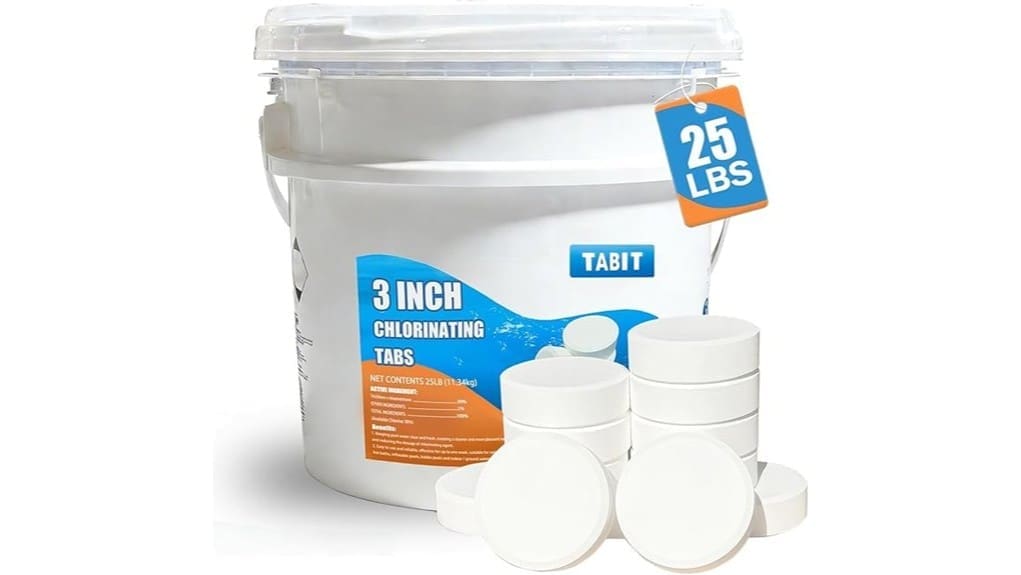
You’ll get 3‑inch stabilized trichloro‑s‑triazine tablets in a 25 lb TABIT bucket that deliver ~90% available chlorine and sun‑resistant, predictable multi‑day residuals for floaters or compatible feeders. They’re formulated for steady free‑chlorine, resist UV loss, and work well in spas and large pools but can raise CYA and stratify in poorly circulated deep water. Handle with gloves, store dry, and use within two years for peak potency—more specifics and comparisons follow.
Some Key Takeaways
- TABIT 3‑inch tablets (25 lb) are trichloro‑s‑triazine, ~90% available chlorine, stabilized for UV resistance and multi‑day residuals.
- They deliver steady free‑chlorine in floaters/feeders but can cause CYA buildup; test CYA regularly.
- Best for large pools and automated feeders; convenient floater dosing for homeowners seeking simple maintenance.
- Avoid adding tablets to skimmers; use compatible dispensers, wear gloves/eye protection, and store sealed and dry.
- Consider alternatives (calcium hypochlorite, liquid bleach, dichlor) when low CYA, rapid shock, or different feeder compatibility is needed.
Quick Verdict: Is TABIT 3 Chlorine Tablets (25 Lb) Worth Buying?
While no pool chemical is a cure‑all, the TABIT 3‑inch 25‑lb tri‑chlor tablets deliver reliable, stabilized chlorine release that makes them a practical choice for maintaining multi‑day residuals in pools and spas. You’ll find consistent, slow dissolution and 90% available chlorine yield suitable for routine sanitation. In a cost analysis you compare per‑tablet active chlorine, dispenser compatibility, and reduced dosing frequency—TABIT scores well for large volumes. User testimonials report dependable algae control and straightforward dosing in floaters. You’ll still monitor pH and cyanuric levels; tablets won’t replace routine testing or corrective adjustments. They’re a convenient option for homeowners who enjoy maintaining their outdoor spaces and using pool chlorine tablets as part of regular care.
What’s in the 25 Lb Bucket: Composition, Potency, and Shelf Life
Because TABIT’s 25 lb bucket contains 3‑inch slow‑dissolving tablets of trichloro‑s‑triazinetrione (stated 99% composition), you get a stabilized, sun‑resistant source of chlorine with approximately 90% available chlorine by weight designed for multi‑day residuals. The formulation delivers predictable chlorine release rates; label potency and assay data confirm available chlorine. You should note non‑perishable characteristics, yet recommended use within two years for peak efficacy. Manufacturer stability testing supports retention under normal storage when package integrity is maintained. Store sealed, dry, and away from heat to prevent hydrolysis and guarantee consistent dosing performance. Homeowners who enjoy outdoor spaces should consider shock treatment scheduling to maintain clear water and proper sanitizer levels, especially when using stabilized chlorine products.
How These 3 Tri‑Chloro Tablets Perform in Real Pools and Spas
Put into a floater or feeder, these 3‑inch TABIT tri‑chloro tablets deliver a steady, predictable chlorine residual that keeps pool and spa water sanitized for multiple days under normal conditions. You’ll observe uniform free‑chlorine decay rates in tested volumes; the stabilized trichloro formula resists UV loss and controls bacteria and algae without frequent dosing. Monitor for chlorine stratification in deep or poorly circulated pools—densities can create surface‑to‑bottom gradients requiring improved circulation. Use recommended dispensers and inspect regularly to prevent dispenser clogging from agglomerated fragments. In spas, lower volume speeds residual attainment; adjust circulation and placement for consistent sanitation. For homeowners maintaining outdoor spaces, pairing these tablets with regular algaecide use can help keep pools clear and reduce long‑term maintenance.
How to Use TABIT Tablets Safely and Get Steady Chlorine for Days
To get steady, multi‑day chlorine from TABIT 3‑inch tri‑chloro tablets, place them in a compatible floater, floating dispenser, or automatic feeder and follow labeled dosing for your pool volume and circulation. You’ll add tablets only to equipment designed for trichloro‑S‑triazine; never toss tablets directly into skimmer or pool. Measure free chlorine and stabilizer (CYA) daily until levels stabilize. Wear protective gear when handling: chemical‑resistant gloves and eye protection. Store unopened and opened containers in cool, dry area away from combustible materials; follow proper storage to prevent decomposition. Dispose per label; avoid mixing with other chemicals. Store pool chemicals in a cool, dry area away from living spaces and combustible materials.
Alternatives, Value Comparison, and Who Should (or Shouldn’t) Buy Them
While TABIT 3‑inch tri‑chloro tablets deliver steady, sun‑stabilized chlorine for multi‑day residuals, you should compare them against alternatives like unstabilized calcium hypochlorite, dichlor granules, and liquid sodium hypochlorite for cost, CYA buildup, ease of dosing, and compatibility with your feeder or floater. If you want low CYA and fast shock, calcium hypochlorite or liquid bleach is better. Dichlor offers faster dissolution but raises CYA. TABIT suits automated feeders and low‑maintenance routines. Do a cost analysis including application rate, storage, and feeder compatibility. Consider alternative brands if you need rapid chlorine boosts or lower CYA accumulation. Many homeowners use simple pool water test kits to monitor chlorine and CYA levels regularly, which helps guide the choice of sanitizer based on water test results.
Some Questions Answered
Are These Tablets Safe to Ship Internationally?
Yes — you can ship them internationally, but you’ll need to follow applicable shipping regulations and anticipate customs inspections. You’re handling a stabilized chlorine product with high active content, so carriers often classify it as hazardous, requiring proper labeling, SDS inclusion, packaging, and possibly limited quantities. Check destination country rules, carrier policies, and export declarations before shipment. Noncompliance can cause refusal, delays, fines, or return to sender.
Do Tablets Stain Swimsuits or Pool Liners?
They generally won’t stain swimsuits or pool liners if you use proper dosing and dispersal, but prolonged/high localized contact can cause chlorine fading and fabric damage. Avoid placing tablets directly on vinyl liners or inside pockets; use floaters, feeders, or automatic dispensers to guarantee even dissolution. Rinse swimwear after use and follow manufacturer concentration guidelines. Monitor free chlorine levels; keep them within recommended ranges to minimize bleaching and material degradation.
Can I Use Them With Bromine Systems?
No — you shouldn’t use them with bromine systems. Trichloro tablets are chlorinated, so bromine compatibility is poor; chlorine will oxidize and deplete bromide, disrupting bromine generation and destabilizing sanitizer mixing. If you switch, you’ll need to fully drain/neutralize residual chlorine, rebalance cyanuric acid and pH, then reestablish bromine levels. Use dedicated bromine products and feeders to avoid cross-contamination and unpredictable sanitizer interaction.
How Should I Store Unused Tablets Long‑Term?
Store unused tablets in a cool, drystorage area away from heat, sunlight and moisture. Keep them in original packaging or transfer to airtight containers labeled with manufacture date and contents. Stack bags upright on pallets; avoid concrete floors and combustible materials. Maintain ventilation, separate from acids and organics, and observe a two‑year recommended use window. Inspect periodically for degradation, odors or caking and follow local disposal rules for unstable product.
Are There Hazard Disposal Instructions After Bucket Is Empty?
Yes. You should follow proper neutralization and disposal steps: rinse bucket outdoors away from drains, keep residues dry, then neutralize remaining tablets per label (dissolve in large volume of water until chlorine residual is safe) only if instructions allow. Contact your local hazardous waste authority for specifics and take unused/uncertain residues to a local hazardous waste collection. Don’t mix with other chemicals; wear PPE and avoid releasing concentrated chlorine to sewers.