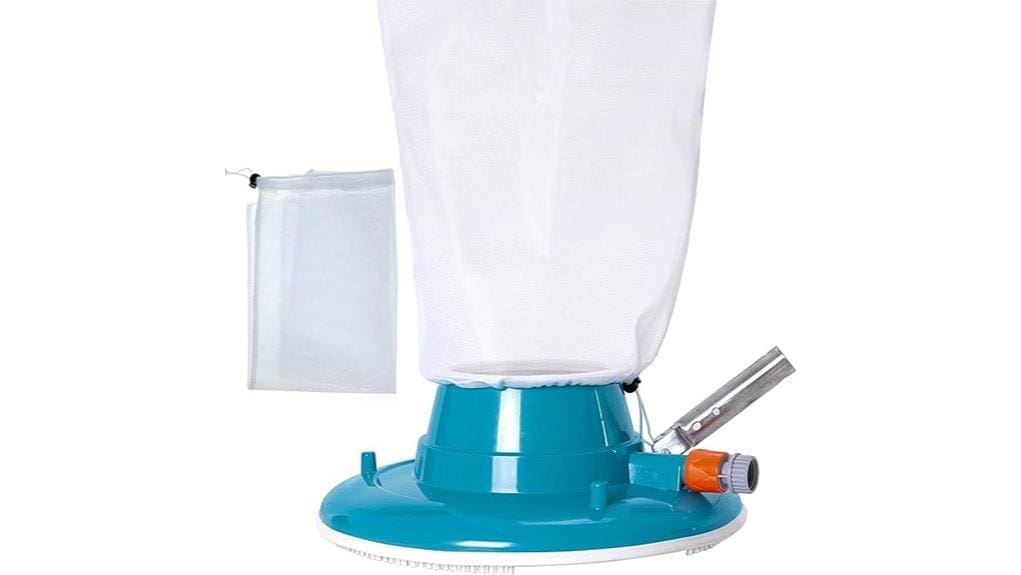
You’ll get a durable 15″ hose-powered vacuum that uses eight jets to pull medium leaves and grit into two large reusable mesh bags, so you’ll clean faster than with a hand net and skip robot upkeep. Wheels, perimeter brushes, and a mar-proof bumper let you steer confidently around surfaces without scratching. Setup is simple and maintenance is low, though very fine silt may need multiple passes. Keep going to see full performance, care tips, and value comparisons.
Some Key Takeaways
- Hose-powered 15″ vacuum uses eight jets to create vortex suction for efficient leaf and grit collection without motors or complex plumbing.
- Two large reusable mesh bags capture bulk debris, reducing pump trips and lowering emptying frequency.
- Performs well on medium leaves and flat surfaces; very fine silt may need multiple passes.
- Durable ABS body, aluminum handle, wheels, brushes, and mar-proof bumper protect surfaces and simplify steering.
- Affordable, low-maintenance alternative to robotic cleaners, backed by a one-year warranty.
Why the U.S. Pool Supply Leaf Terminator Is Worth Considering (Quick Verdict and Who It’s Best For)
While many pool vacuums promise speed, the U.S. Pool Supply Leaf Terminator delivers tangible results you’ll notice. You’ll find its 15″ body, strong jets, and large mesh bags outperform smaller consumer models, cutting cleaning time and effort. Compared to robotic or electric alternatives, it’s simpler to maintain and fits varied user demographics — backyard hosts, pool service pros, and seasonal owners. You’ll appreciate predictable upkeep if you follow a clear maintenance schedule, and the aluminum handle plus swivel wheels make it feel like part of your routine. In short, it’s practical, durable, and inclusive for shared pool care. It also pairs well with essential pool skimmer nets to keep your backyard space enjoyable with minimal effort.
How the Vacuum Works: Hose-Powered Jets, Bags, Wheels, and Cleaning Mechanics
Because it relies on garden-hose pressure rather than a motor, the Leaf Terminator turns simple water flow into strong suction: eight integrated jets create a vortex that lifts leaves and sediment into the 15″ body, where debris funnels into the two large reusable mesh bags. You’ll notice efficient jet dynamics that concentrate flow to pull debris without complex plumbing. Wheels and perimeter brushes let you steer and dislodge grime while the mar-proof bumper protects surfaces. Compared with electric units, it’s simpler, lighter, and community-friendly. Consider bag lifespan—these durable mesh bags are reusable, easy to empty, and cost-effective. Ideal for homeowners who enjoy maintaining outdoor spaces and keeping their pools pristine.
Real-World Performance: Suction, Debris Capacity, Maneuverability, and Pool-Surface Safety
Having covered how the hose-driven jets and bags create suction, let’s look at how that plays out in everyday use: you’ll find suction strong enough to lift medium-sized leaves and grit on flat surfaces, though very fine silt can take multiple passes. In practice, suction consistency is solid with steady hose pressure; you’ll outperform manual skimming. Debris retention in the dual mesh bags is impressive for bulk leaves, reducing trips to the pump. Wheel stability lets you steer confidently around obstacles, and the mar-proof bumper minimizes surface abrasion compared with metal scrubbers. Overall, it feels reliable and community-tested. For homeowners who use their outdoor spaces frequently, keeping the pump basket and leaf-capture system clean helps maintain pump efficiency and prolong equipment life.
Setup, Maintenance, and Troubleshooting: Assembly, Routine Cleaning, and Common Fixes
Before you run the vacuum, assemble and inspect components so you won’t waste time troubleshooting mid-clean: snap the aluminum handle onto the unit, secure the quick-disconnect hose fitting (hose sold separately), and attach the two mesh bags firmly to their collars. Use assembly tips like hand-tightening fittings, checking bag seams, and confirming wheel rotation. After each session, rinse bags and body, clear jets with a soft brush, and dry before seasonal storage. If suction drops, check hose connection, jets for blockage, or torn bags. These straightforward steps keep performance consistent and make maintenance feel like shared, reliable practice. Consider adding a pool caddy to keep hoses and accessories organized and protected when the vacuum is not in use.
Value Check: Price, Warranty, Comparable Alternatives, and Final Buy-or-Skip Recommendation
One solid way to judge value is to weigh the unit’s features and one-year warranty against expected price and alternatives; you’re getting a robust 15″ ABS body, eight pressure jets, two large reusable mesh bags, and full maneuverability for a modest investment compared with motorized robotic vacuums. For price comparison, it sits well below robotic cleaners while outperforming basic manual leaf nets in speed and capacity. Warranty details are straightforward: one-year coverage for defects, which matches competitors in this segment. If you want efficient, low-maintenance leaf removal without robotic complexity, buy; skip it only if you need full automation. This option is ideal for homeowners who enjoy their outdoor spaces and need an effective, low-effort way to maintain pool cleanliness with a robotic alternative available for those wanting full automation.
Some Questions Answered
Can It Handle Wet Debris Like Muddy Clumps or Pine Needles?
Yes — you’ll find muddy performance decent for loose wet debris; it’ll lift muddy clumps if they break apart under the jets, though very dense sludge may need pretreatment. Needle capture is strong for pine needles and similar debris, thanks to the jets and large mesh bags. Compared to simple skimmers, you’ll get faster, more inclusive cleaning, and you’ll feel confident joining others who expect reliable, practical results.
Is This Vacuum Safe for Vinyl-Lined Pools Specifically?
Yes — you can use it on vinyl-lined pools, but you’ll want to be cautious. Compared to lighter suction cleaners, its strong jets and hard ABS body make vinyl compatibility conditional; perform liner testing on a small area and run at lower pressure first. You’ll appreciate its maneuverability and bumper protection, yet treat pins and sharp debris carefully. Join other owners who test and adjust settings to protect their liners while enjoying efficient cleaning.
How Loud Is It When Connected to a Garden Hose?
You’ll hear noticeable water noise from the garden-hose connection, but it’s not overpowering. Compared to electric vacuums, it’s quieter overall, though pressure variation can change the tone and loudness. If your hose delivers steady pressure you’ll get a consistent hum; fluctuations create louder bursts. You’ll feel comfortable using it around family or neighbors, and it blends into typical backyard sounds while still sounding more active than a passive skimmer.
Are Replacement Mesh Bags Sold Separately?
Yes — replacement mesh bags are available separately. You’ll find replacement availability through the maker or retailers; bag pricing varies by seller and often by pack size. Compared to bundled spares, buying single bags can be pricier per unit, but it’s convenient if you need one fast. You’ll feel supported choosing where to buy, and you can compare prices to get the best value while keeping your cleaner ready for regular use.
Can It Operate With Low-Water Levels or Partial Pools?
Yes — you can run it in partial operation, but you’ll notice suction reduction as water level drops. Compared to full immersion, performance declines because jets need adequate water to create the vortex lift. You’ll still haul debris in lighter conditions, though cleaning takes longer and misses stubborn material. If you’re part of a pool-care group, you’ll appreciate planning fills or using supplemental water to keep suction strong and results consistent.